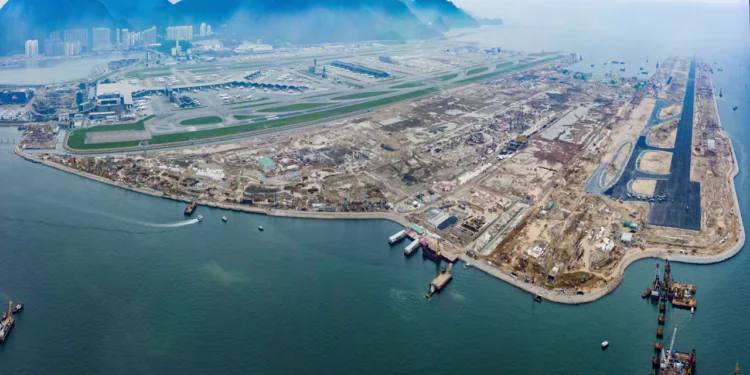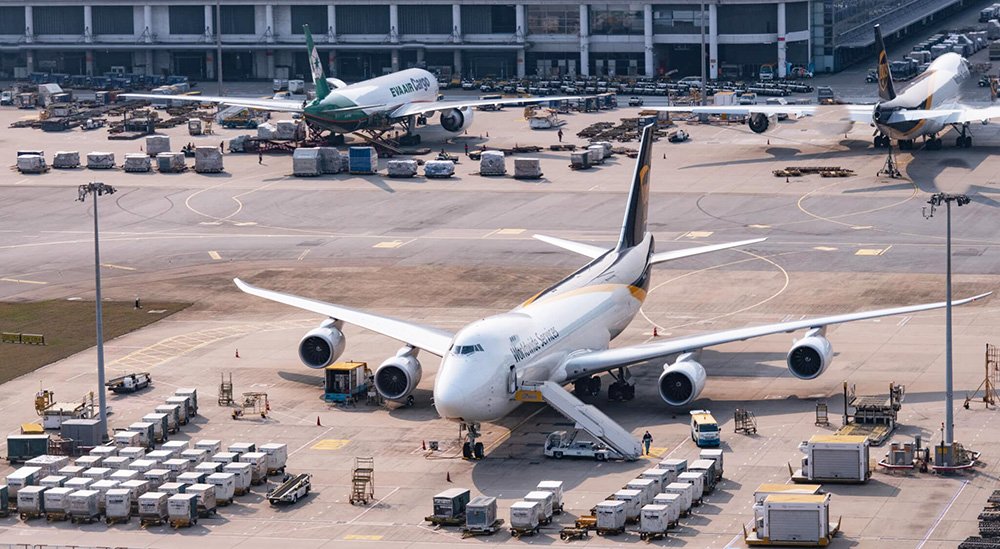
Hong Kong International Airport (HKIA) has once again secured its position as the world’s busiest cargo airport, handling 5.1 million tonnes of cargo and airmail during the fiscal year ended 31 March 2026. The achievement marks the 15th time since 2010 that the airport has topped global cargo rankings, highlighting the resilience of Hong Kong’s air freight sector despite ongoing geopolitical and trade uncertainties.
According to the Airport Authority Hong Kong’s (AAHK) Annual Report 2025/26, cargo throughput increased 2.7% year-on-year, while aircraft movements rose 7.1% to 399,450, providing additional capacity to support growing freight demand. Passenger traffic also continued its strong recovery, climbing 14.7% to 63 million travellers during the period.
The airport authority reported a post-tax profit of HK$2.043 billion, with the board declaring a HK$500 million dividend payable to the Hong Kong SAR Government.


Cargo Recovery Continues
HKIA’s cargo performance reflects a steady rebound following the pandemic years. Cargo and airmail volumes recovered from 4.1 million tonnes in FY2022/23 to 4.5 million tonnes in FY2023/24, reaching 5 million tonnes in FY2024/25 before setting a new milestone of 5.1 million tonnes in FY2025/26.
The sustained recovery reinforces the airport’s role as one of the world’s most important gateways for high-value, time-sensitive and e-commerce shipments.
Europe Remains the Largest Cargo Market
Europe retained its position as HKIA’s largest cargo market, accounting for 19% of total cargo throughput, excluding airmail. Southeast Asia and the United States & Canada each represented 15%, meaning the three regions collectively generated almost half of the airport’s cargo volumes.
Other key markets included:
- Chinese Mainland – 8%
- Japan – 7%
- Taiwan – 7%
- Australasia – 3%
- Other global markets – 26%
The diversified market mix highlights HKIA’s extensive international network and its continued strength across long-haul trade lanes.
Dongguan Logistics Park Strengthens Greater Bay Area Connectivity
A major driver of HKIA’s cargo strategy continues to be the HKIA Dongguan Logistics Park (HKIALP), which streamlines cross-boundary cargo movements between the Greater Bay Area (GBA) and Hong Kong.
The facility enables export cargo to undergo security screening, palletisation and acceptance in Dongguan before being transported directly by sea to HKIA’s restricted airside for international flights. The same logistics model also facilitates imports entering mainland China via Hong Kong.
By the end of FY2025/26, the logistics park served 30 airlines and 144 Hong Kong freight agents, representing year-on-year increases of eight airlines and 19 agents. Both cargo tonnage and cargo value handled through the facility increased by more than 90%.
According to AAHK, the intermodal operation reduces logistics costs by approximately 50% while cutting handling times by about one-third compared with conventional transport arrangements.
Phase 1 of the permanent logistics park, designed to handle one million tonnes annually, is expected to become fully operational in 2027.
The park also expanded its capabilities during the year, successfully handling trial imports of fruit before commencing regular chilled seafood shipments, broadening its support for temperature-sensitive cargo.
Faster Perishable Cargo Through Air-Land Fresh Lane
To further improve cross-border efficiency, HKIA introduced the Air-Land Fresh Lane in September 2025 following a successful pilot programme.
Developed jointly with Hong Kong and Guangdong authorities, the initiative accelerates the movement of fruit, chilled products and live seafood into the Greater Bay Area through the Hong Kong-Zhuhai-Macao Bridge. Under the new process, shipments can complete mainland customs clearance in Zhuhai within approximately three hours of arriving at HKIA.
Capacity Expansion Continues
Several infrastructure projects are expected to strengthen HKIA’s cargo handling capability over the coming years.
A new UPS cargo hub, scheduled for completion in 2028, will add nearly one million tonnes of annual handling capacity while supporting growing e-commerce demand.
Construction is also progressing on an airside intermodal cargo pier and transshipment handling facility, with phased completion beginning in 2026/27 to improve sea-air and air-air cargo transfers.
Meanwhile, the airport’s Precious Metals Depository is expanding its storage capacity to 1,000 tonnes by 2028.
The longer-term development of HKIA’s Three-Runway System will ultimately increase annual airport capacity to 120 million passengers and 10 million tonnes of cargo, significantly enhancing future growth potential.
Digitalisation Advances Cargo Operations
HKIA continued investing in digital cargo solutions during the year.
The import module of the HKIA Cargo Data Platform has now been deployed across all three cargo terminals, enabling fully digital processing of import shipments.
The airport also introduced HKIA Cargo Connect, described by AAHK as the world’s first airport-led digital airline partnership platform, designed to improve shipment visibility, connection planning and operational coordination.
Beyond operational digitalisation, AAHK expanded collaboration with financial institutions through the Hong Kong Monetary Authority’s Commercial Data Interchange initiative and joined the expert panel for Project CargoX, supporting the development of digital trade finance solutions.
Mainland Airport Investments Deliver Mixed Results
AAHK’s investments in mainland Chinese airports produced varied cargo performance during calendar year 2025.
Hangzhou Xiaoshan International Airport recorded 7.9% cargo growth, reaching 793,000 tonnes, while narrowing AAHK’s share of losses.
Zhuhai Airport achieved stronger cargo growth of 15.5%, handling 40,000 tonnes, although AAHK’s share of profit declined due to higher operating expenses.
Strategic Focus Remains on Cargo Leadership
Cargo continues to be a cornerstone of Hong Kong International Airport’s long-term strategy. The airport currently handles approximately three-quarters of the Greater Bay Area’s international air cargo, reinforcing its role as the region’s primary international freight gateway.
Supported by continued investments in infrastructure, digitalisation and cross-boundary logistics, HKIA is positioning itself to strengthen its role in global supply chains while supporting Hong Kong’s wider trade and economic development.