

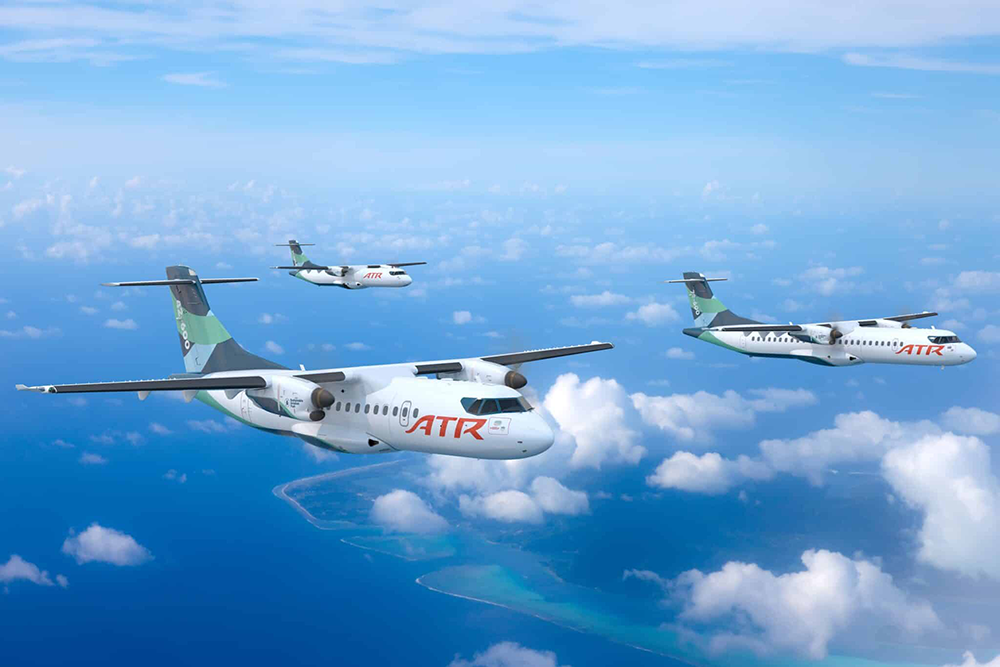
ATR’s latest Regional Aviation Market Forecast (2025–2044) presents a positive long-term outlook for the global turboprop sector, projecting sustained growth driven by fleet renewal, regional connectivity, sustainability objectives, and expanding air cargo demand. The report argues that turboprop aircraft will remain central to regional aviation by connecting underserved communities, supporting economic development, and helping airlines reduce emissions while maintaining profitability.
Strong Demand for Turboprops
ATR forecasts global demand for 2,100 new turboprop aircraft over the next 20 years. During the first decade, demand will largely be driven by the replacement of ageing aircraft as production constraints continue to affect the aerospace industry. In the second decade, growth will increasingly come from expanding regional networks and opening new routes.
The global turboprop fleet is expected to grow to approximately 2,530 aircraft by 2044, supported by increasing regional air travel and rising demand for efficient short-haul operations.
Asia Leads Future Growth
The report identifies Asia-Pacific as the fastest-growing regional aviation market, with India also emerging as a significant growth opportunity.
ATR estimates that:
- Asia-Pacific (excluding India) will require 835 new turboprop deliveries.
- India will require 210 aircraft, supported by rapid airport expansion and rising middle-class demand.
- Africa, the Middle East, Latin America and North America also present substantial opportunities as airlines seek to improve regional connectivity.
Sustainability Drives Fleet Decisions
The report positions turboprops as the most environmentally efficient aircraft for regional routes.
According to ATR:
- Turboprops can reduce CO₂ emissions by nearly 50% compared with similarly sized regional jets on comparable sectors.
- Their lower operating altitude significantly reduces contrail formation, further lowering climate impact.
- Hybrid-electric propulsion could reduce emissions even further, with new technology expected to enter service during the next decade.
- Lower fuel burn, reduced noise and lower emissions make turboprops well positioned to meet increasingly stringent environmental regulations.
Regional Aviation Supports Communities
ATR highlights the social and economic importance of regional aviation, particularly in remote and underserved areas.
The report notes that turboprops:
- Connect isolated communities with healthcare, education and employment.
- Support tourism and regional economic development.
- Operate efficiently from short runways and airports inaccessible to larger aircraft.
- Serve approximately 50% of socially important regional routes, including 80% of Public Service Obligation (PSO) flights within the European Union.
New Routes Will Continue to Expand Networks
ATR estimates that approximately 3,255 new regional routes could be created worldwide by 2044, requiring around 770 additional turboprop aircraft.
The manufacturer believes turboprops are ideally suited to opening thin regional markets before airlines upgauge to larger aircraft as passenger demand increases. Around 150 new turboprop routes are currently created each year globally.
India Represents One of the Largest Opportunities
India receives particular attention in the report.
ATR estimates:
- More than 300 million additional people could gain access to air travel by 2030 as airport infrastructure expands.
- Approximately 90% of inter-city journeys are within the operating range of turboprop aircraft.
- The country could develop around 380 new regional city pairs, representing a 150% increase in regional connectivity.
Airlines Can Improve Profitability
The report argues that turboprops provide airlines with a commercially attractive solution by:
- Lowering operating costs on short routes.
- Matching aircraft capacity to passenger demand.
- Supporting mixed-fleet strategies.
- Allowing airlines to test new markets with lower commercial risk before deploying larger aircraft.
ATR says turboprops require significantly fewer passengers to operate profitably than regional jets or narrowbody aircraft, making them particularly effective for developing regional networks.
Growing Air Cargo Opportunities
Beyond passenger transport, ATR forecasts continued expansion of the regional freighter market.
Key projections include:
- Demand for approximately 500 turboprop freighters over the next 20 years.
- Around 92% of today’s regional freighter fleet already consists of turboprop aircraft.
- E-commerce growth and time-sensitive logistics are expected to drive future demand, particularly across North America, Europe, Southeast Asia, India and Latin America.
Long-Term Outlook
ATR concludes that regional aviation will play an increasingly important role in global transport over the next two decades. The manufacturer believes rising environmental requirements, expanding regional connectivity, fleet renewal, and strong cargo demand will sustain long-term growth for turboprop aircraft. The report also emphasizes that turboprops offer a practical pathway to balancing economic development, accessibility and sustainability while supporting communities that rely on regional air services.