
Elroy Air has increased its private investment in public equity (PIPE) commitments to $175 million, strengthening the financial base for development, manufacturing and commercialisation of its autonomous Chaparral heavy-cargo aircraft as the company advances both defence and commercial logistics programmes.
The San Francisco-based developer announced the expanded funding in September, with existing investors including Lockheed Martin Ventures and Inflection Point participating in the enlarged commitment. Elroy Air said $75 million had already been funded ahead of the planned closing of its business combination with Inflection Point Acquisition Corp. VII.
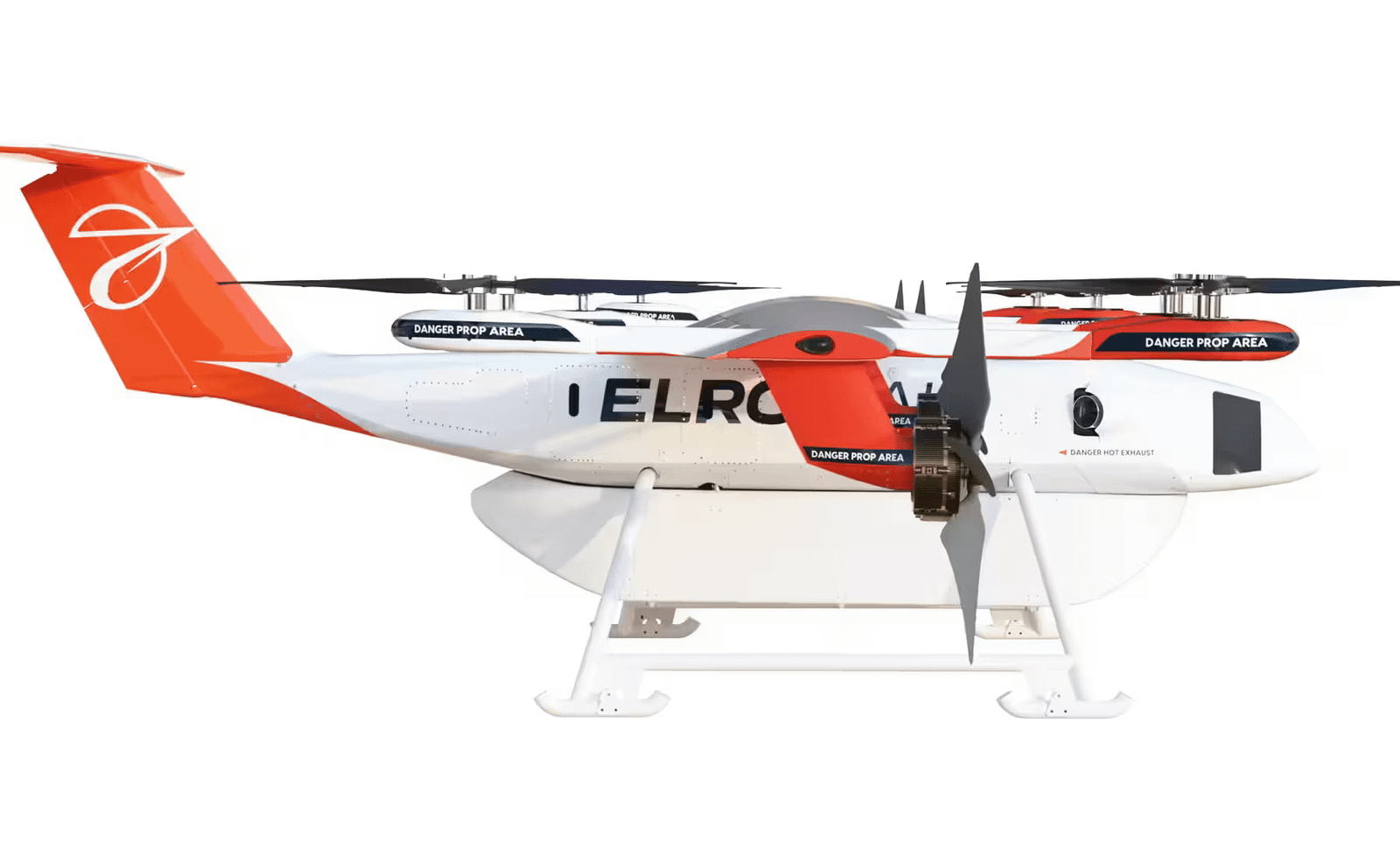
The financing comes as the company moves from technology development towards production and commercial deployment of Chaparral, its hybrid-electric vertical take-off and landing (VTOL) aircraft designed to transport heavy cargo without conventional airport infrastructure.
Related Post


Funding supports production scale-up
Elroy Air said the additional PIPE funding will help accelerate Chaparral production and support delivery of the aircraft to commercial and defence customers.
The company has been developing Chaparral as an autonomous logistics platform capable of operating in locations where conventional aviation infrastructure may be unavailable or impractical.
The aircraft uses a hybrid-electric powertrain and is designed to carry more than 500 pounds of cargo with a range of up to 450 miles, according to Elroy Air. The system does not require charging infrastructure for its intended operations.
The additional capital comes at a significant stage in the programme, with Elroy Air working with Kratos Defense & Security Solutions as its exclusive US manufacturing partner.
Kratos is developing production capability for Chaparral at its facility in Sacramento, California, with the first production aircraft planned for late 2026.
Defence and commercial applications
Chaparral’s development is being driven by demand across several markets, including defence logistics, rapid-response operations and commercial cargo transportation.
In August, Elroy Air announced a multi-year US Army contract worth up to $46 million to further develop Chaparral’s ability to operate alongside military personnel in contested and austere environments.
The programme includes enhancements to the aircraft’s modular multi-mission payload capabilities and delivery systems, as well as technologies supporting expeditionary operations, cyber-protected communications, navigation in GPS-denied or contested environments and increased autonomy.
The company has also developed three unattended delivery modes for the aircraft: precision airdrop from a hover, precision airdrop during forward flight and ground delivery. The systems are designed to allow cargo to be delivered without personnel or fixed infrastructure at the receiving location.
These capabilities illustrate the potential of autonomous heavy-lift aircraft beyond conventional last-mile drone delivery, particularly for middle-mile logistics and operations in remote or infrastructure-constrained environments.
Commercial flight testing advances
Alongside its defence programmes, Elroy Air has been progressing towards commercial autonomous cargo operations.
In September, the company completed the first autonomous, uncrewed flights authorised under the US Department of Transportation and Federal Aviation Administration’s eVTOL Integration Pilot Program (eIPP).
The flight demonstrations took place in Houma, Louisiana, in partnership with LIFTOFF Louisiana and Bristow Group. The programme demonstrated Chaparral’s potential for commercial cargo operations across energy and industrial corridors in Louisiana, Texas and Mississippi. Elroy Air
The eIPP activity represents an important step towards integrating autonomous heavy-cargo aircraft into the wider US aviation system and developing operational experience for future commercial deployment.
Bristow expands Chaparral commitment
Commercial interest has also strengthened.
Following the Louisiana flight demonstrations, Bristow Group reserved 10 additional early-delivery positions, taking its total to 15 aircraft.
Bristow had previously secured five early delivery positions and has an agreement covering the potential purchase of up to 100 Chaparral aircraft. Air
Bristow intends to use the aircraft for logistics, healthcare and energy-related applications, markets in which autonomous cargo aircraft could provide an alternative to conventional helicopter and fixed-wing operations.
The increased reservation programme provides Elroy Air with an early commercial customer base as it transitions from flight testing towards production.
Autonomous cargo moves beyond conventional drone delivery
Chaparral occupies a different segment of the autonomous aviation market from small parcel-delivery drones.
Its larger payload capacity and vertical take-off and landing capability are intended to address middle-mile cargo transportation, where operators may need to move substantial payloads between locations without investing in runways or other fixed aviation infrastructure.
The aircraft’s modular architecture also allows different payload configurations to be used for different missions.
Elroy Air has previously demonstrated the aircraft’s ability to conduct point-to-point cargo delivery, while its development programme has included work with defence organisations and commercial logistics companies.
Lockheed Martin deepens strategic relationship
The expanded PIPE financing also strengthens the relationship between Elroy Air and Lockheed Martin Ventures, which has been a strategic investor and collaborator.
The two companies intend to work together on advanced autonomous systems and pursue business opportunities across both commercial and defence markets.
For Elroy Air, the relationship provides access to an established aerospace and defence ecosystem as it seeks to scale production and develop autonomous logistics applications.
For the broader cargo industry, the development reflects growing interest in autonomous aircraft capable of moving heavier payloads over longer distances while reducing dependence on conventional infrastructure.
From technology demonstrator to production aircraft
Elroy Air’s progress in 2026 marks a transition from aircraft development and testing towards industrialisation.
The company has secured defence funding, expanded its commercial relationship with Bristow, completed autonomous flight demonstrations under the FAA’s eIPP and established a US manufacturing partnership with Kratos.
The expanded $175 million PIPE commitment adds financial capacity at a critical point in that transition. The company said the funding would support acceleration of Chaparral production and deployment to commercial and defence partners at scale.
The proposed business combination with Inflection Point is expected to provide another step towards Elroy Air becoming a publicly traded company, subject to regulatory and shareholder approvals. The transaction was announced in June 2026 and was expected by the company to close in the fourth quarter of 2026.
A new segment for air cargo logistics
The development of autonomous heavy-cargo aircraft could eventually create a new layer within the global logistics network.
Rather than replacing conventional freighters, aircraft such as Chaparral could serve routes and locations where traditional aircraft operations are constrained by infrastructure, cost or accessibility.
Potential applications range from energy and industrial logistics to healthcare, emergency response and defence resupply.
With production preparations under way and commercial flight testing advancing, Elroy Air is now moving into a phase in which the scalability, reliability and regulatory acceptance of autonomous heavy-cargo operations will become increasingly important.
The expanded funding gives the company additional resources to pursue that transition, while its growing network of defence, manufacturing and commercial partners provides a foundation for bringing autonomous cargo aircraft closer to operational deployment.