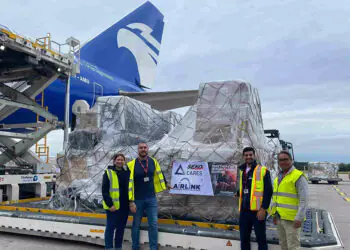

- LATAM Cargo has reported a 150 percent increase in pharmaceutical product transport from January to July 2026 between Europe and Brazil.
- GLP-1 based medications, a class used in type 2 diabetes treatments was a primary factor in the increase.
“The growth in pharmaceutical transport demonstrates how demand for specialized logistics solutions is gaining prominence between Europe and Brazil. Our priority is to support this evolution through a safe, efficient operation equipped for the specific requirements of each cargo type. At the same time, the 27 percent growth in total volume reinforces the importance of connectivity between both markets and our network’s capacity to serve diverse economic sectors,” said Jorge Carretero, Cargo Sales Manager Europe at LATAM Airlines Group.
Pharmaceutical cargo volumes carried by LATAM Cargo between Europe and Brazil increased by approximately 150% between January and July 2026, compared with the same period last year, as demand for temperature-sensitive healthcare products and GLP-1-based medicines continues to reshape the airfreight market.
According to LATAM Cargo, the increase was driven primarily by higher volumes of GLP-1-based medicines, a class of drugs used in the treatment of type 2 diabetes. During the first seven months of 2026, GLP-1 products represented approximately 15% of the carrier’s total cargo volume between Europe and Brazil.
Related Post




Across all cargo categories, LATAM Cargo transported nearly 32,000 tonnes between the two markets during the period, representing a 27% increase from the first seven months of 2025. General and consolidated cargo accounted for around 75% of the total, including automation equipment, mining machinery, textiles and commodities.
Demand for specialised pharmaceutical logistics
The increase highlights the growing importance of specialised handling capabilities for pharmaceutical supply chains linking Europe and Brazil.
Jorge Carretero, Cargo Sales Manager Europe at LATAM Airlines Group, said the growth in pharmaceutical volumes demonstrates the increasing demand for specialised logistics solutions between the two markets.
He said LATAM Cargo’s priority is to support that growth through a safe and efficient operation adapted to the requirements of different cargo categories, while the broader 27% increase in freight volumes demonstrates the importance of connectivity between Europe and Brazil.
LATAM Cargo’s pharmaceutical handling measures include temperature monitoring, climate-controlled rooms, cargo segregation, thermal covers and procedures designed to reduce the time shipments spend exposed on the airport apron. For active temperature-controlled containers, the carrier also monitors battery levels and temperature while ensuring the equipment remains connected to power during handling.
The carrier also operates a CEIV Pharma-certified hub in Miami, with temperature-controlled chambers covering different temperature ranges and dedicated infrastructure for the handling and storage of active pharmaceutical containers.
Germany, Belgium and Spain lead European origins
Germany, Belgium, Spain and Italy were the leading European origins for LATAM Cargo shipments to Brazil during the first seven months of 2026, followed by the Netherlands and France.
Passenger aircraft belly capacity was led by the Lisbon–São Paulo, Madrid–São Paulo and Frankfurt–São Pauloflows. On freighter services, Frankfurt–Viracopos and Brussels–Viracopos were among the key routes during the period.
Additional connectivity has expanded the range of options available to shippers. New passenger services from Brussels and Amsterdam to São Paulo added capacity, while the Brussels–São José dos Campos freighter service created another direct logistics option between Europe and Brazil.
The wider cargo operation is also expanding. LATAM’s official operating statistics show that the group transported 85,000 tonnes of cargo in July 2026, up 3.7% year on year, while cargo capacity measured in available tonne-kilometres increased 4.7%.
The latest figures underline the increasing role of air cargo in pharmaceutical supply chains between Europe and Brazil, while also reflecting broader trade flows across manufacturing, mining, textiles and other industrial sectors.