
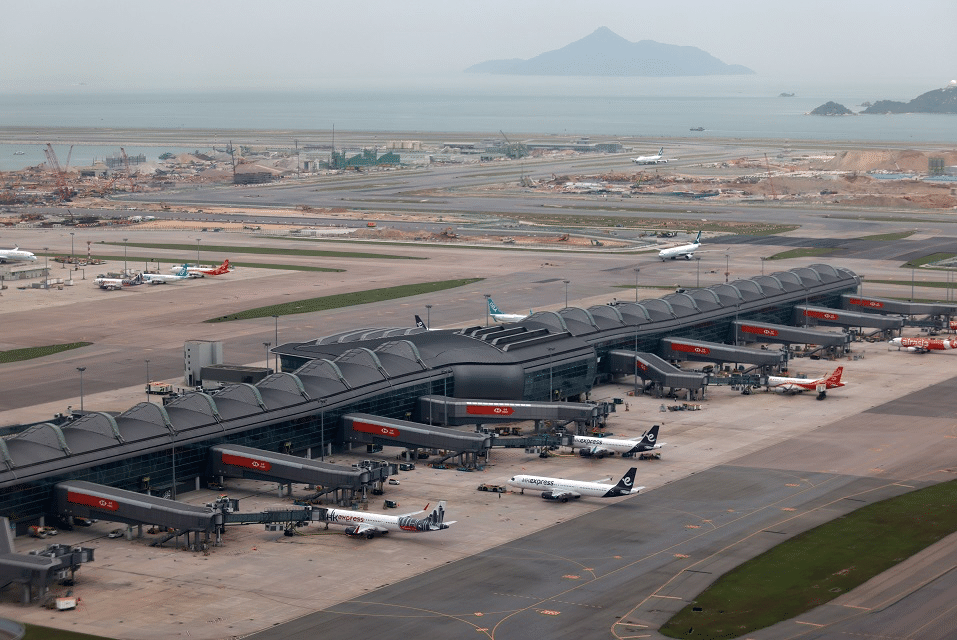
Hong Kong International Airport recorded a recovery in cargo volumes in September, ending two consecutive months of year-on-year declines, while Singapore Changi Airport also reported continued growth amid strong demand for technology-related shipments.
Hong Kong handled approximately 433,000 tonnes of cargo in September, up 6.3% compared with the same month last year, according to figures attributed to the Airport Authority Hong Kong (AAHK).
The rebound followed year-on-year declines of 1.9% in July and 1.2% in August. Growth was driven primarily by transhipments and imports, which increased by 26.9% and 9.2%, respectively.
Related Post




AAHK attributed the improvement to stronger cargo flows from Southeast Asia and the Chinese mainland, which offset weaker volumes on European trade lanes.
The European market faced additional uncertainty following the European Union’s removal of customs duty relief for low-value consignments. From 1 July 2026, the EU introduced a temporary €3 customs duty on qualifying items in consignments valued at up to €150, a measure aimed partly at addressing the rapid growth of low-value e-commerce imports.
Despite the recent monthly fluctuations, Hong Kong’s cumulative cargo performance remained positive. The airport handled approximately 3.8 million tonnes during the first nine months of 2026, representing a 3.1% increase compared with the same period in 2025.
Changi sustains cargo growth
Singapore Changi Airport also recorded a strong performance in September, with cargo throughput rising 9.7% year on year to approximately 191,000 tonnes, according to its published traffic statistics. For the first nine months of the year, Changi handled around 1.7 million tonnes of cargo, an increase of 8.7% compared with the corresponding period in 2025.
Demand for exports and imports, particularly shipments linked to artificial intelligence, semiconductors and electronics, supported the airport’s growth. These sectors continue to underpin air freight demand across major Asian manufacturing and technology supply chains.
China, the United States, Australia, Hong Kong and India were identified in the supplied report as key cargo markets for Changi during the period.
SF Airlines strengthens Singapore connectivity
Connectivity between China and Singapore also received a boost in September, when SF Airlines launched a new Shanghai–Singapore service, complementing its existing operations from Shenzhen.
The additional route is intended to strengthen links for high-value technology shipments and provide further options for cargo moving between China’s manufacturing centres and Southeast Asia.
The latest figures point to continued resilience across major Asian cargo gateways, although performance varies by trade lane. Stronger intra-Asian flows and demand for technology-related freight have helped offset weakness in some European-bound shipments, highlighting the importance of diversified markets and flexible air cargo networks.