
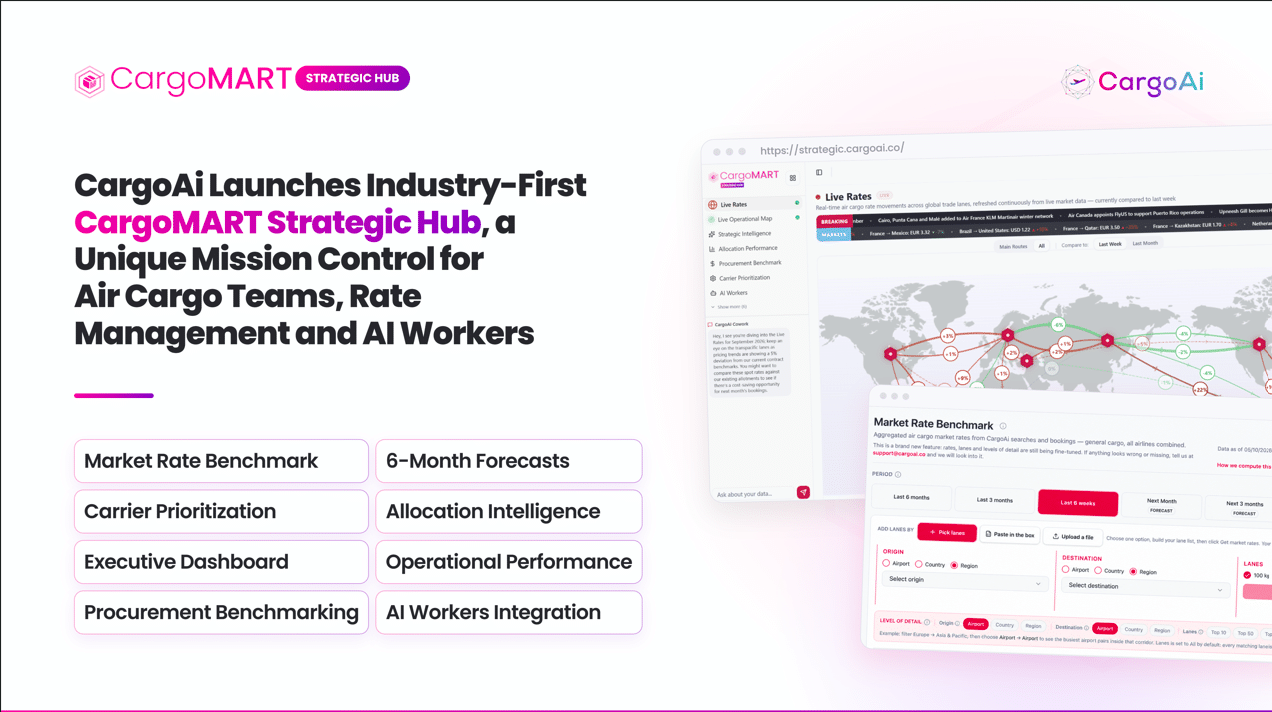
CargoAi, the vertical artificial intelligence (AI) company for air cargo and part of CargoTech, has launched CargoMART Strategic Hub, a business intelligence platform designed to connect strategic decision-making, rate management, operational performance and AI-powered workflows for global freight forwarders and airlines.
The platform brings more than 12 strategic modules into a unified environment, combining continuously refreshed commercial and operational data, global carrier visibility, historical market-rate analysis, predictive pricing intelligence and AI-generated recommendations.
Unlike conventional business intelligence dashboards, CargoAi says Strategic Hub is designed to link insights directly to operational decisions. Headquarters teams can establish carrier preferences and procurement priorities that are reflected in local CargoMART search results, helping align global commercial strategies with day-to-day capacity bookings.
Related Post



The company says the system operates within existing CargoMART environments without requiring additional IT setup, integration or data migration.
From market intelligence to operational execution
A central feature is Carrier Prioritisation, which allows procurement leaders to define preferred airlines and commercial priorities at global or route level. These preferences can then guide local teams when comparing options and searching for capacity, helping connect negotiated agreements with actual booking activity.
Market Rate Benchmark provides another core capability, combining aggregated historical rates with predictive pricing forecasts. Users can review the previous six months of market trends and examine forecasts for the next one, three or six months. Analysis can be broken down by route, airport, region and shipment weight category, supporting procurement planning and airline negotiations.
The platform also incorporates procurement benchmarking, enabling companies to compare negotiated and booked rates against market conditions, identify potential savings and monitor purchasing performance over time.
Shared Allocation Intelligence provides airlines and freight forwarders with a common view of allotment commitments, utilisation, booked-versus-flown weight and available capacity. The aim is to help both sides identify underused allocations, improve planning and make better-informed capacity decisions.
Strategic visibility for freight forwarders
For freight forwarders operating across multiple countries, regions and branches, Strategic Hub consolidates procurement, carrier, allocation and operational performance information in one environment.
Executive dashboards provide visibility into key performance indicators, rates, savings opportunities and service quality. Regional and local managers can examine performance at route and station level, while procurement teams can use market benchmarks and carrier data to prepare negotiations and business reviews.
Operational monitoring includes shipment milestones, carrier service quality and performance trends. The platform also provides AI-powered recommendations intended to help teams identify issues, prioritise action and reduce reliance on manually assembled reports.
CargoAi says the consolidated data can enable freight forwarders to prepare carrier meetings up to 80% faster. This is a company-reported performance claim; the actual time savings will depend on individual organisations’ processes and use of the platform.
Commercial intelligence for airlines
For airlines, Strategic Hub is designed to turn search activity, rates, bookings and customer-engagement data into actionable commercial intelligence.
The platform can help commercial teams assess demand patterns, identify pricing opportunities, review capacity allocation and monitor performance across routes and customer relationships. These insights are intended to support network planning, strategic account management and revenue-focused decision-making.
Shared allocation data also gives airlines and freight forwarders a more consistent view of capacity commitments and utilisation. By providing both parties with access to relevant performance information, CargoAi aims to improve commercial collaboration and help align capacity planning with booking activity.
Bringing AI workers into the workflow
Strategic Hub also connects business intelligence with CargoAi’s wider AI ecosystem, supporting the company’s ambition to automate parts of the quoting, booking and shipment-management process.
The approach is intended to give AI workers access to the same commercial and operational intelligence used by human teams, rather than relying on disconnected data sources. In principle, this can help link market searches, pricing information and operational workflows within a more integrated digital environment.
Additional features include executive summary dashboards, carrier and allocation performance reporting, a staff training hub, weekly executive briefings and integration with AI workers. These capabilities are intended to give leadership, procurement specialists and local operating teams a shared view of priorities while retaining information relevant to each role.
CargoAi chief executive Matt Petot said the industry’s challenge was no longer simply gaining access to more data, but ensuring that information influenced decisions throughout an organisation.
He said the platform connects decisions made by leadership teams with the tools employees use in their daily operations, bringing carrier strategy, rate management, operational execution and AI workers together around a common intelligence base.
A move towards connected air cargo operations
The launch reflects a broader industry focus on turning digital data into practical commercial and operational outcomes. For freight forwarders, the priority is to align procurement agreements with local booking decisions and improve visibility across distributed offices. For airlines, the opportunity lies in using market activity and capacity data to support pricing, customer management and network planning.
CargoAi says CargoMART Strategic Hub is available globally to freight forwarders and airlines. Its practical value will ultimately depend on the quality and relevance of the underlying data, the adoption of its recommendations and how effectively organisations incorporate the platform into existing workflows.