
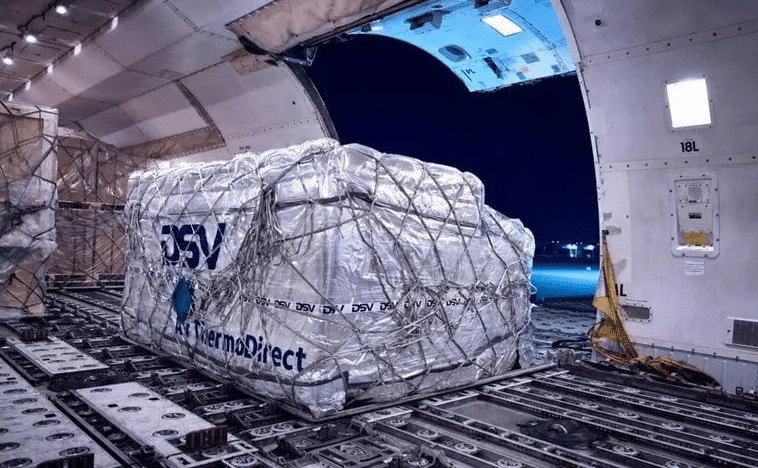
DSV’s airfreight business recorded lower volumes in the third quarter of 2026, as subdued activity in Europe and declining e-commerce shipments on the Asia-Pacific–Europe trade lane weighed on performance.
The Danish logistics group reported a 3% year-on-year decline in airfreight volumes to 560,890 tonnes during the quarter, compared with the same period in 2025. However, volumes for the first nine months of 2026 remained strong, increasing 15% year on year.
According to DSV, the quarterly decline was greater than anticipated, despite a positive volume trend during the period. Lower-than-expected activity in Europe, reduced e-commerce volumes on the Asia-Pacific–Europe corridor, and the company’s yield-management initiatives contributed to the downturn. Some shipments also shifted from airfreight to sea freight.

Growth in technology-related cargo, particularly in Asia-Pacific and North America, helped offset part of the weakness.
Geopolitical disruption adds pressure
Ongoing conflict in the Middle East continued to disrupt global airfreight networks, contributing to higher costs, greater market volatility, flight rerouting and reduced effective capacity. DSV said trade lanes connected to the region remained weak during the quarter.
Despite the decline in tonnage, the company’s airfreight business benefited from higher yields. DSV reported that airfreight gross profit increased by approximately 4% year on year to DKK 5.01 billion in the third quarter, while average gross profit yield per tonne rose 8% in constant currencies.
The results highlight the contrast between softer shipment volumes and stronger returns per tonne, supported by pricing discipline, higher freight rates and the recovery of surcharges.
Nine-month volumes remain ahead
The 15% increase in airfreight volumes during the first nine months of 2026 indicates that the quarterly contraction has not erased the business’s year-to-date growth. Nevertheless, DSV’s results point to continued pressure on selected trade lanes, particularly Europe-related routes and markets affected by geopolitical disruption.
Demand linked to technology and cloud infrastructure remained a source of support, particularly across Asia-Pacific and North America. However, the company’s third-quarter performance demonstrates how changes in trade-lane demand, shipper transport choices and yield-management strategies can affect airfreight volumes even when certain high-value cargo segments remain resilient.
DSV’s latest results underscore the mixed conditions facing the global air cargo market, with demand varying significantly by region and commodity while geopolitical instability continues to influence capacity, costs and routing decisions.