
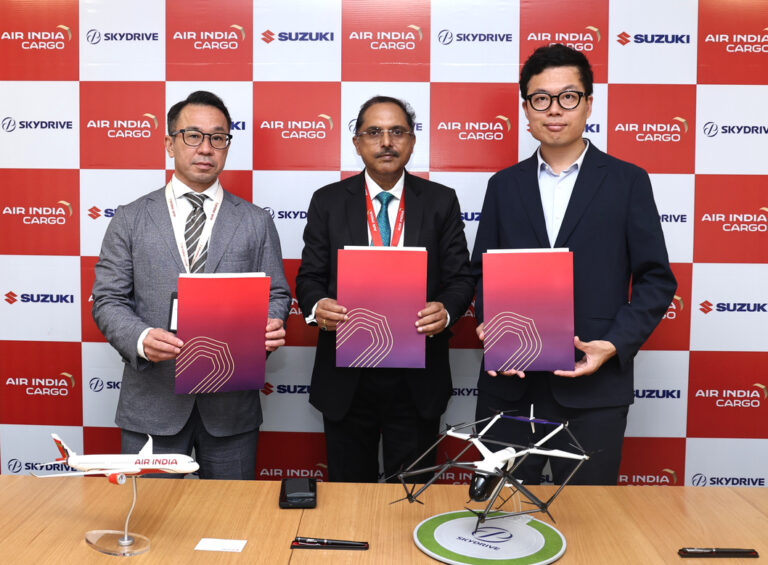
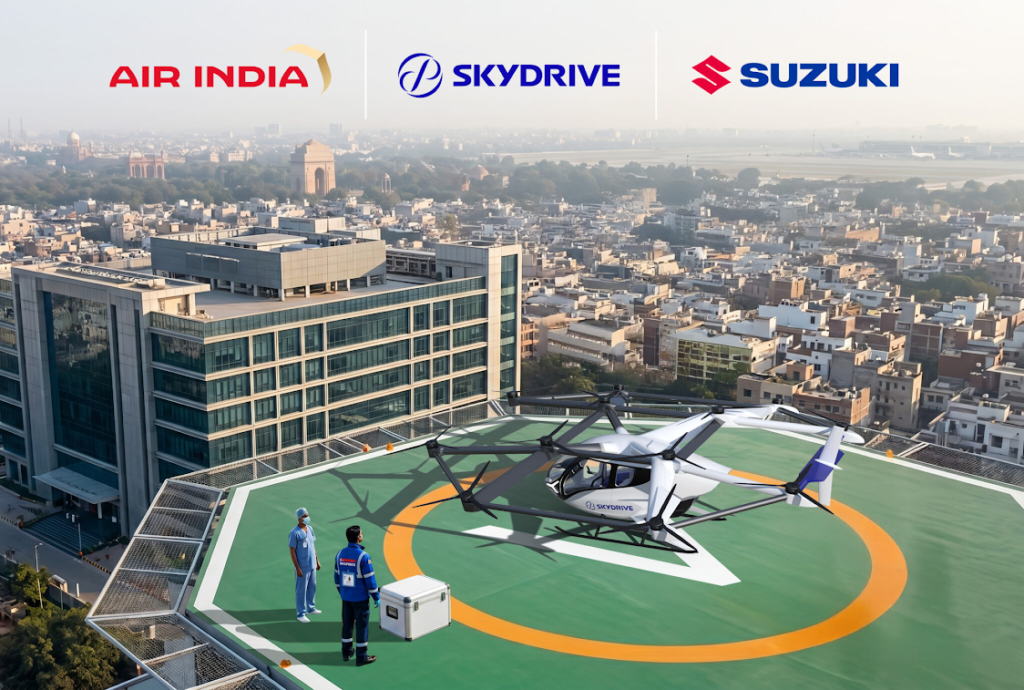
Air India, SkyDrive and Suzuki Motor Corporation have joined forces to explore the potential use of electric vertical take-off and landing (eVTOL) aircraft for medical air logistics in India, aiming to address challenges in the movement of time-critical healthcare supplies.
The three companies have signed a memorandum of understanding (MoU) to conduct a joint feasibility study focused on developing advanced air mobility solutions for medical logistics. The initiative will examine how eVTOL aircraft could support last-mile emergency deliveries in urban areas where severe road congestion often delays critical medical transportation.
By combining SkyDrive’s eVTOL aircraft technology, Air India’s aviation and cargo expertise, and Suzuki’s extensive experience in the Indian market, the collaboration aims to evaluate the creation of a safe, reliable and scalable framework for future medical air logistics operations.
Related Post




India’s rapidly growing cities face increasing pressure on existing transport infrastructure, with congestion creating significant obstacles for urgent healthcare movements, including the delivery of high-value medical supplies, emergency equipment and other time-sensitive cargo.
Ramesh Mamidala, head of cargo at Air India Limited, said advanced air mobility could become an important extension of India’s evolving transport ecosystem.
“India is today one of the world’s largest and fastest-growing aviation markets, and we see advanced air mobility as a natural extension of the country’s transport ecosystem,” Mamidala said.
He added that the potential use of eVTOL aircraft for medical logistics represents an opportunity to combine technology with real-world impact by reducing critical delivery times.
“Air India is pleased to contribute operational expertise, airport infrastructure knowledge and stakeholder relationships to help evaluate and develop a framework for safe, reliable and scalable eVTOL operations,” he said.
Tomohiro Fukuzawa, founder and chief executive officer of SkyDrive, said the partnership represents an important step towards applying aerial mobility technology to sectors where speed can directly affect outcomes.
“Since our founding, SkyDrive has been dedicated to transforming the future of transportation through the aerial mobility revolution,” Fukuzawa said.
He added that eVTOL aircraft could help reshape medical infrastructure in congested urban environments by enabling faster transportation of essential healthcare supplies.
“Utilising eVTOLs for advanced medical logistics, including the transport of high-value, time-critical medical supplies, will reshape medical infrastructure,” he said.
Suzuki Motor Corporation highlighted the potential of eVTOL technology as a new mobility solution aligned with its philosophy of creating efficient and accessible transportation systems.
Masao Fujitani, executive general manager of Next Generation Business Development at Suzuki Motor Corporation, said the technology reflects the company’s approach of developing mobility solutions that are smaller, lighter and more efficient.
The company believes eVTOL aircraft could contribute to strengthening urban medical infrastructure while supporting broader regional development.
Through the partnership, Suzuki aims to collaborate with mobility companies to develop “infrastructure mobility” solutions that are closely connected with everyday life and community needs.
The feasibility study marks another step in the development of advanced air mobility in India, where aviation companies and technology developers are increasingly exploring new methods of improving logistics efficiency, reducing transport delays and expanding access to essential services.
If successful, eVTOL-based medical cargo operations could provide a new logistics option for urgent healthcare deliveries, particularly in densely populated metropolitan regions where traditional ground transportation faces significant limitations.