
The Budapest-based charter specialist combines dedicated freighter operations, onboard courier services and next-flight-out options to move aircraft engines and critical components for airlines, manufacturers and maintenance providers.
CharterDesk is expanding its aerospace logistics activity by offering tailored transport solutions for shipments ranging from small, urgently needed spare parts to complete aircraft engines. The company’s approach combines dedicated aircraft charters with On-Board Courier (OBC) and Next Flight Out (NFO) services, matching transport options to cargo dimensions, handling requirements and delivery deadlines.
Aircraft-on-ground (AOG) shipments remain an important part of the business, as delays in obtaining replacement components can keep aircraft out of service. CharterDesk also supports planned maintenance, aircraft production and other scheduled movements where timely delivery is essential to maintaining operational schedules.
Related Post




The company’s aerospace portfolio includes engines, landing gear, avionics, spare parts, tooling and structural components. Each shipment requires an assessment of weight, dimensions, value, urgency and loading requirements before the most suitable transport option can be selected.
“Aerospace transport starts with understanding what the customer needs to achieve and how quickly the shipment must arrive,” said Emir Özdabak, managing director of CharterDesk. “We assess the cargo and deadline before recommending a dedicated charter, an On-Board Courier or Next Flight Out service. The objective is to minimise downtime or keep production moving.”
Ground coordination critical to engine transport
Arranging aircraft capacity is only one part of a time-critical aerospace shipment. Packaging, specialised loading equipment, permits, customs formalities and ground handling must also be coordinated to ensure the operation can proceed within the required timeframe.
These requirements become particularly important when transporting large engines, which may need dedicated main-deck space and specialised pallets. Smaller components present a different set of challenges, often requiring close coordination between flight connections, customs clearance and final delivery to maintenance personnel.
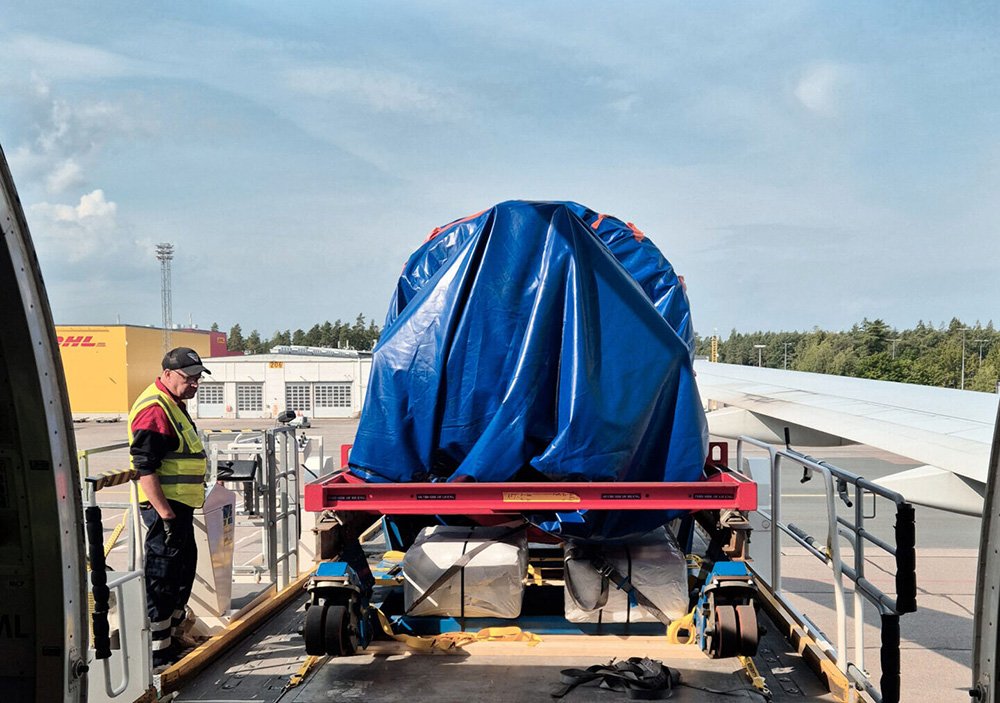
CharterDesk highlighted these operational demands through a shipment involving two CF6 aircraft engines transported from Helsinki to Casablanca aboard an Ethiopian Airlines Boeing 777 freighter. The company said delivery was completed within 48 hours of the confirmed requirement.
A key challenge was sourcing and positioning the necessary 20-foot main-deck pallets in Helsinki before departure. The operation required coordination between the charter provider, airline and ground-handling partners to ensure that the equipment was available in time for loading.
“The Helsinki operation showed how much depends on preparation on the ground,” Özdabak said. “We needed the right pallets in position before departure and worked closely with our partners to make that happen. Delivering the engines within 48 hours required everyone involved to work to the same operational timetable.”
The Helsinki–Casablanca movement illustrates how equipment availability and ground-side planning can be as important as securing an aircraft when arranging urgent engine shipments.
Different aircraft for different requirements
In another operation, CharterDesk arranged an Antonov An-12 flight from Brussels to Istanbul carrying a LEAP-1A engine. The assignment demonstrated the importance of selecting aircraft according to the component’s dimensions, weight, loading needs and route requirements.
The two movements highlight the range of solutions available to aerospace customers. Dedicated freighters can accommodate large or specialised cargo, while courier and next-flight-out options can provide alternatives for smaller components that need to reach engineers or maintenance facilities quickly.
CharterDesk evaluates each request individually, taking account of the urgency of the shipment, available capacity and practical arrangements at both the departure and destination airports.
Security and shipment visibility
The movement of high-value aerospace equipment also requires careful attention to security, shipment monitoring and information management. CharterDesk says it coordinates with airlines and ground handlers on appropriate handling arrangements and handover procedures throughout the transport process.
For commercially sensitive shipments, confidentiality must be balanced with the documentation and disclosures required by regulators. Limiting information to relevant parties can help protect customer data while maintaining the oversight needed for a compliant movement.
“Our customers need confidence in how we handle both their equipment and their information,” Özdabak said. “We agree clear handover procedures, monitor shipments and share operational details with the people who need them. Where a project requires confidentiality, we maintain that discipline while fulfilling every required regulatory disclosure.”
Flexible services support aerospace demand
CharterDesk reports receiving regular enquiries from airlines, maintenance providers, manufacturers and specialist freight forwarders. Requests range from urgent AOG parts to engines and components required for planned production or maintenance activity.
The company sees scope to develop its aerospace business as airlines and maintenance organisations manage increasingly complex operational requirements. Its service mix gives customers flexibility to select dedicated charter capacity for larger shipments or courier and scheduled-flight options for smaller, time-sensitive parts.
The central challenge is not simply moving cargo quickly, but coordinating every stage of the operation around the delivery deadline. For aerospace logistics, where a missing component can disrupt maintenance or production schedules, the availability of suitable transport, equipment and ground support remains essential.