
From Latin American flowers and Chilean seafood to pharmaceuticals, electronics and surging e-commerce volumes, Miami International Airport is expanding its role as a strategic logistics hub connecting the Americas with global markets.
Miami is widely recognised for its beaches, Art Deco architecture and vibrant cultural neighbourhoods. Yet beyond its tourism appeal, the city plays a pivotal role in international trade, with Miami International Airport (MIA) serving as a major gateway for goods moving between the United States, Latin America, the Caribbean and markets farther afield.
The airport handled a record 3.4 million US tons of freight in 2025, marking its sixth consecutive year of record cargo growth. Freight volumes increased by approximately 13.6% year on year, strengthening MIA’s position among the world’s leading cargo airports. The airport also reported that transit freight exceeded origin-and-destination freight for the first time in more than a decade, highlighting its growing importance as a connecting hub.
Related Post




For Ralph Cutié, Director and Chief Executive Officer of Miami International Airport, the changing cargo mix is central to the airport’s development strategy. Traditional perishables traffic remains a foundation of its business, while e-commerce, pharmaceuticals and technology-related shipments are creating new operational requirements.
Perishables remain at the heart of Miami’s cargo business
Flowers are among MIA’s most important import commodities, with Colombia and Ecuador supplying much of the cut-flower traffic moving through the airport. Seafood, particularly salmon from Chile, and fresh produce also contribute significantly to its perishable cargo business.
The scale of these flows makes temperature-controlled storage, rapid handling and dependable onward transportation essential. Flowers and food products can lose value when exposed to delays or unsuitable conditions, placing pressure on airlines, ground handlers, customs agencies and trucking providers to coordinate each stage of the journey.
MIA’s role in the US flower trade is particularly significant. The airport reported that it handled approximately 394,181 US tons of flower imports in 2025, valued at around $1.8 billion. It estimates that roughly 91% of US flower imports arriving by air pass through Miami.
Export flows have a different profile. Industrial machinery, electronic devices, plastics, pharmaceuticals and aircraft-related products feature among the airport’s key origin-and-destination export categories. These shipments connect Florida’s industrial and aviation sectors with customers across international markets.
However, the distinction between local trade and transit cargo is important. MIA reported that transit freight accounted for 55% of its total freight in 2025. Commodity figures based on origin-and-destination shipments therefore do not represent every product moving through the airport’s wider network.
E-commerce brings a new scale of operational demand
The growth of online shopping is changing how cargo gateways manage shipments. Instead of handling only large consignments moving between established trading partners, airports increasingly have to accommodate high volumes of individual parcels that require screening, customs processing and rapid onward distribution.
Miami’s geographic position makes it an important point for e-commerce flows serving Latin America and the Caribbean. Brazil and Colombia are among the markets highlighted in the supplied report, with goods entering the region from both US and Asian sources.
The rapid increase in low-value parcel traffic has placed additional demands on customs and cargo infrastructure. US Customs and Border Protection (CBP) must coordinate inspections and clearance while keeping goods moving through airport facilities and nearby freight stations.
MIA has supported plans for a Centralized Examination Station intended to consolidate inspections and reduce congestion associated with high-volume e-commerce shipments. The facility is designed to improve the efficiency of security screening and customs processing. The airport’s earlier planning material identified the station as a way to help manage the sharp increase in low-value parcel shipments.
The exact parcel-growth figures cited in the supplied report could not be independently confirmed from the official airport sources reviewed. Nevertheless, the airport’s planning documents identify e-commerce processing and customs efficiency as important areas for improvement.
Pharmaceuticals add value to the cargo mix
Pharmaceutical logistics has become another important part of MIA’s business. The airport was designated an IATA Pharma Hub in 2015, and its cargo community includes airlines and logistics providers with specialised capabilities for handling temperature-sensitive products.
Pharmaceutical shipments require more than aircraft capacity. Temperature control, appropriate storage, trained personnel and coordination across the supply chain are all critical to maintaining product integrity. These requirements make specialised infrastructure and industry certification important factors in attracting healthcare logistics business.
According to the supplied report, pharmaceutical trade through MIA reached a value of $8.96 billion in 2025. The airport’s official budget documentation recorded pharmaceutical shipments worth $6.82 billion in 2024, demonstrating the category’s established importance, although the 2025 figure was not independently confirmed in the sources reviewed.
The combination of pharmaceuticals, perishables and high-value manufactured goods gives Miami a diversified cargo profile. It also means that future growth will depend on facilities capable of serving different temperature, security and handling requirements.
New links strengthen Miami’s connection with Asia
Although Latin America and the Caribbean remain central to MIA’s role, the airport’s cargo network also connects with manufacturing and technology supply chains in Asia.
Electronic devices and semiconductor-related products are important components of the airport’s trade flows. These goods support consumer markets as well as industrial supply chains, while the growth of e-commerce increasingly links electronics imports with parcel distribution across the Americas.
In March 2026, Air China Cargo launched scheduled service between Shanghai Pudong and Miami, adding a direct cargo connection between China and South Florida. MIA’s official airport information lists Air China Cargo among the new cargo operators serving the airport in 2026.
The connection adds another option for shippers moving goods between Asian manufacturing centres and the Americas. It also reinforces Miami’s role as a gateway where long-haul international freight can connect with regional distribution networks.
Cold-chain investment links air and sea freight
Miami’s logistics ecosystem extends beyond the airport itself. PortMiami and the surrounding road network provide additional connections for importers, exporters and distribution businesses, although maritime and air freight serve different transport requirements.
A planned phytosanitary treatment and cold-chain processing facility is intended to support perishable cargo moving through the airport and seaport. The project is designed to combine cold storage, inspection and treatment capabilities, potentially helping cargo owners manage products that require careful temperature control or phytosanitary processing.
Official project information describes a facility of more than 340,000 square feet serving both MIA and PortMiami. The project has been presented as a way to improve the handling of agricultural and other perishable goods and strengthen connections between air, sea and road transport.
The development could provide shippers with additional options for moving perishables through South Florida. However, its eventual effect on cargo volumes, routing patterns and product shelf life will depend on the facility’s final capabilities and operational performance.
Infrastructure must keep pace with growth
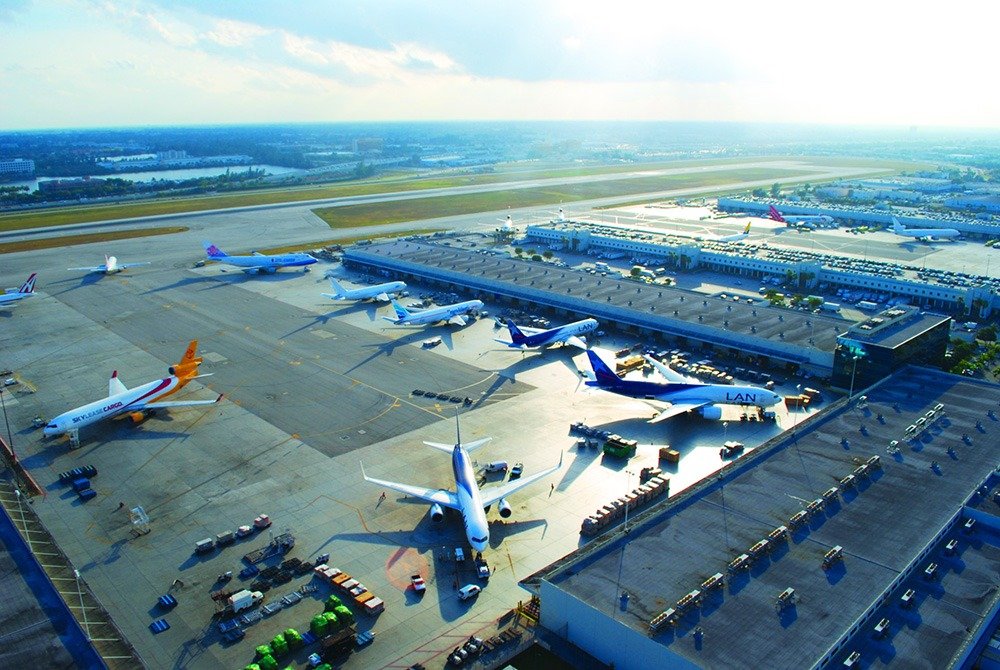
MIA’s sustained expansion has increased the need for additional warehouse space, aircraft parking and supporting infrastructure. The airport’s published development plans identify cargo capacity as a priority, with wider modernisation programmes intended to accommodate future freight and passenger growth. The airport currently lists approximately 2.8 million square feet of cargo warehouse space.
A proposed Vertically Integrated Cargo Community project, which was intended to add substantial cargo-handling capacity, did not proceed after its developer withdrew. Miami-Dade County documentation confirms that the project was discontinued in 2025 and that the county subsequently began evaluating other cargo development proposals.
The challenge for MIA is therefore not simply to handle more freight, but to provide the right infrastructure for an increasingly varied mix of cargo. Flowers and seafood depend on efficient cold chains; pharmaceuticals require specialised handling; electronics link the airport to global technology supply chains; and e-commerce is driving demand for faster parcel processing and customs clearance.
Miami’s cargo operation may be less visible than its tourism industry, but it is central to the city’s role in regional and international commerce. With freight volumes at record levels and new investment focused on capacity, cold-chain logistics and customs efficiency, MIA is preparing for a future in which its value will be measured not only by the amount of cargo it handles, but also by how effectively it connects producers, businesses and consumers across the Americas and beyond.