
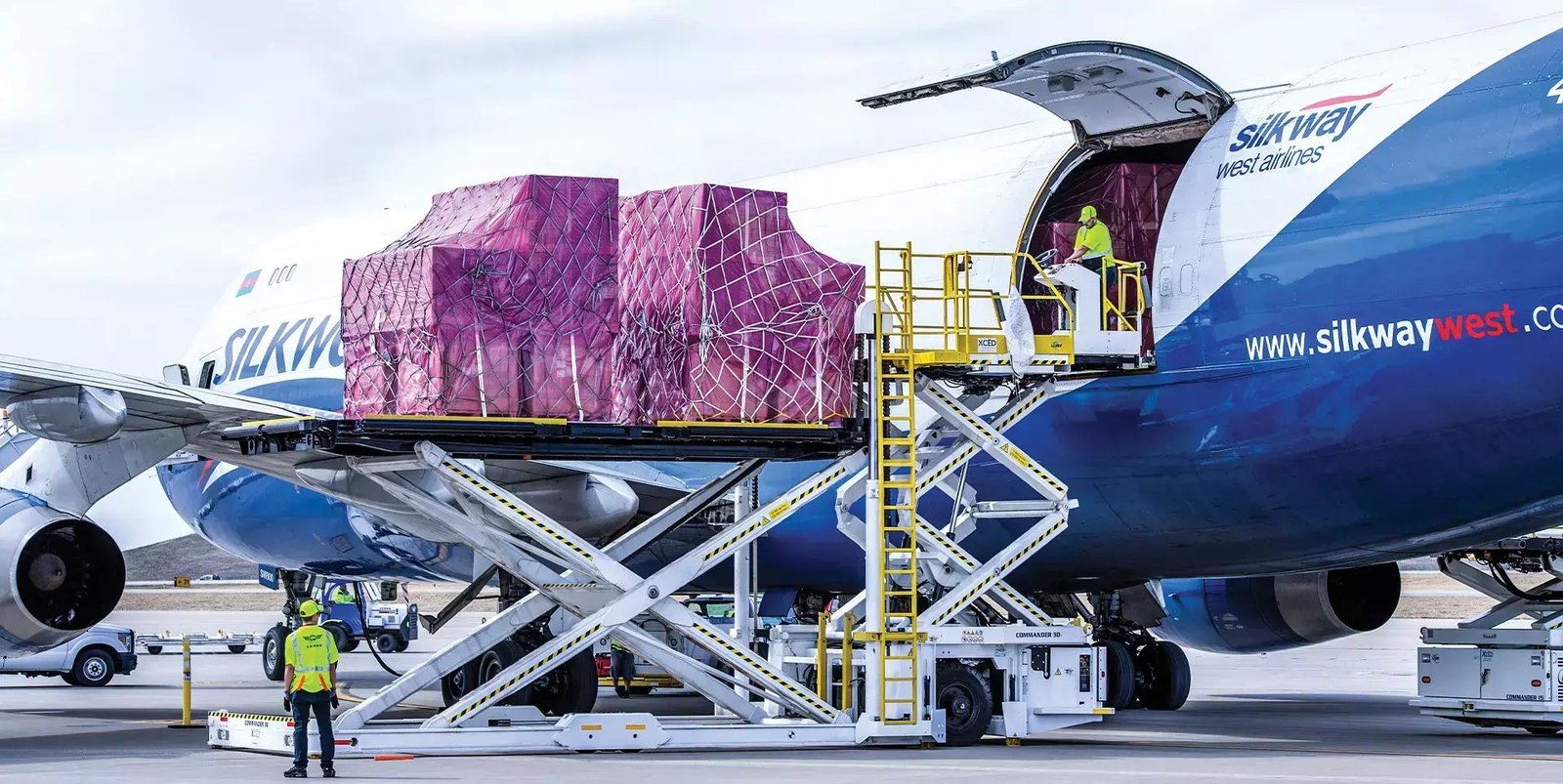
The ongoing Middle East conflict is prompting freight forwarders and airlines to reconsider traditional Asia-Europe air cargo routes, bringing Central Asian airports into sharper focus as potential alternatives. However, despite growing interest in the region, infrastructure limitations, fuel costs, regulatory requirements and operational reliability continue to restrict its ability to emerge as a major international cargo hub.
The challenge is becoming increasingly apparent during the 2026 peak shipping season, as airlines contend with elevated fuel prices, uneven demand, constrained capacity and disruption to established transit networks.
With Gulf hubs operating below their pre-conflict levels and ocean shipping still recovering its traditional routing through the Suez Canal, Central Asia is attracting attention as a possible alternative corridor. Yet industry assessments suggest that the region’s transformation from a collection of technical refuelling stops into a fully developed east-west cargo network will take time.
Related Post


Navoi International Airport in Uzbekistan is among the facilities seeking to capitalise on this opportunity.
Peak-season demand remains strong but uneven
The 2026 peak season is developing differently from previous years, with cargo demand concentrated in specific industries rather than spread broadly across consumer goods.
Neil Wilson, editor at TAC Index, said global air cargo rates, measured through the BAI00 index, had already moved above the levels recorded during the previous two peak seasons, even before the traditional Thanksgiving and Christmas demand surge had fully materialised.
According to Yngve Ruud, Executive Vice President of Air Logistics at Kuehne+Nagel, much of the current demand is being generated by artificial intelligence infrastructure, semiconductors, high-tech equipment, pharmaceuticals and perishables.
The growing movement of data-centre equipment from Taiwan, Vietnam and Thailand is placing particular pressure on transpacific capacity. Kuehne+Nagel operates 14 weekly flights between Vietnam and the United States to support this demand.
Dimerco’s November Asia Pacific Freight Report also identified extremely tight air cargo capacity between Taiwan and the US, advising shippers to secure bookings one to two weeks in advance.
The Asia-Europe market, however, is experiencing a different set of conditions.
Wilson estimated that volumes on major Asia-Europe routes, including Hong Kong, had declined by approximately 30% since July. The slowdown has been associated with changes to European Union customs arrangements for low-value e-commerce shipments, including the removal of the previous de minimis exemption and the introduction of an interim flat-rate customs duty.
The reduction in e-commerce volumes has weakened demand on certain Europe-bound routes, although airlines have responded by reallocating freighter capacity towards more profitable markets and withdrawing some older aircraft.
Dimerco reported a 7% week-on-week decline in China-Europe air freight rates as demand softened faster than freighter capacity was withdrawn. Nevertheless, pockets of strong demand remain, particularly for consumer electronics and fast fashion shipments from eastern China.
The winter airline schedule, which took effect on 25 October, has also reduced some passenger aircraft belly capacity at a time when retailers are preparing for Black Friday and Christmas.
Kathy Liu, Vice President of Global Sales and Marketing at Dimerco Express Group, said the absence of additional freighter capacity before year-end would limit the potential for significant rate reductions.
She also warned that quieter trade lanes could tighten quickly as seasonal stocking requirements and fuel costs influence capacity availability.
Middle East disruption continues to reshape cargo networks
For decades, major Gulf aviation hubs have served as important connecting points for cargo moving between Asia, Europe, Africa and the Americas.
The conflict and associated airspace restrictions have disrupted this established network, affecting not only shipments originating in the Middle East but also international cargo flows that depend on Gulf connections.
Judah Levine, Head of Research at Freightos, said the disruption began in March, when the conflict intensified and the Strait of Hormuz was closed. Air freight rates increased sharply before easing during April and May, although they remained above pre-conflict levels.
Freightos booking data indicated that cargo activity recovered to growth by the third quarter, but the major Gulf carriers experienced the greatest impact.
Ruud estimated that approximately 18% of global aviation capacity was affected by cancellations at the height of the disruption, demonstrating how quickly international cargo networks can be affected by restrictions involving major airspace corridors and transit hubs.
Recovery has progressed, but the network remains below its previous operating levels.
Citing Rotate’s analysis, Ruud estimated that throughput at major Middle Eastern hubs had recovered to approximately 80% to 90% of pre-conflict levels, while regional carriers had restored around 90% to 100% of their former capacity.
The disruption has been particularly significant for Indian exporters, many of whom traditionally relied on Gulf hubs to connect with European and other international markets.
TAC Index data indicated that air freight rates on selected India-related routes had increased by approximately 70% to 80% year on year. Certain Europe-to-Middle East routes, including Amsterdam and London, recorded increases of around 100% or more.
Stephanie Pöhn-Helbig, Head of Region Middle East, Africa, South Asia and CIS at Lufthansa Cargo, said longer routings were increasing operational complexity and diverting cargo flows from markets that traditionally depended on Middle Eastern connections.
Lufthansa Cargo has responded by deploying additional freighter capacity on selected routes, particularly from India, and increasing frequencies under its winter schedule. Additional freighter operations from Egypt to Europe are also planned to support the perishables season.
For freight forwarders, the disruption has reinforced the importance of network diversification.
Kuehne+Nagel has expanded its carrier diversification strategy, secured capacity on important routes and reduced dependence on individual transit hubs. The company has also used air-road solutions during airport disruptions and relocated its sea-air hub from Dubai to Los Angeles.
Ruud said customers increasingly needed to balance cost, delivery urgency and reliability when selecting transport options, with direct connections becoming more attractive when the financial consequences of delays outweighed the additional freight premium.
Central Asia attracts attention, but growth remains gradual
The geographical position of Central Asia makes it a potentially attractive alternative for cargo moving between China and Europe.
Airports in Uzbekistan, Kazakhstan and other countries in the region have been exploring opportunities to develop beyond their traditional roles as technical stopover locations.
However, the expected diversion of cargo away from the Middle East has not yet produced a substantial increase in Central Asian air freight activity.
Levine said Freightos data did not show a significant surge in bookings through Central Asian hubs following the Middle East disruption.
He cautioned that the available data covered only part of the market, but suggested that the region’s development as an east-west transhipment network was likely to be gradual.
The transformation involves moving beyond technical stops, where aircraft land for refuelling while cargo remains onboard, towards genuine cargo transfer operations that allow shipments to be unloaded, processed and transferred between flights.
Central Asia is also facing competition from other emerging logistics hubs. Saudi Arabia, for example, is investing in its ambition to become a major east-west aviation and logistics gateway.
Middle Corridor offers opportunities but faces operational barriers
The Middle Corridor, which connects China and Europe through Central Asia and the Caspian region, is also receiving attention as businesses seek alternatives to traditional routes through Russia and the Middle East.
Thomas Kowitzki, Vice President and Global Head of China Rail/Multimodal and ICC Europe at DHL Global Forwarding, said the Middle East disruption had generated increased interest in rail and multimodal logistics solutions, including DHL’s OceanExpress service.
Some customers have also explored the Middle Corridor, particularly where sanctions-related restrictions or concerns about Russian transit have influenced routing decisions.
One example involved an Electrolux block train carrying 50 containers from Turkey to China through Central Asia, completing the journey in 35 days.
Nevertheless, Kowitzki said the movement of cargo through the corridor had not yet translated into a significant shift in China-Europe trade volumes.
Operational obstacles, limited capacity and uncertainty surrounding predictable door-to-door delivery times remain major challenges.
The recovery of ocean shipping through the Suez Canal could also reduce some of the urgency behind alternative transport solutions. Dimerco estimated that approximately 63% of Far East-Europe ocean capacity had returned to Suez routing, with a full recovery expected by the first quarter of 2027.
As established shipping routes become more reliable, some cost-sensitive cargo could return to ocean freight and conventional logistics networks.
Time-critical and high-value shipments, however, are likely to remain the strongest potential market for alternative corridors.
Navoi International Airport positions itself for Asia-Europe cargo
Among the Central Asian facilities seeking to attract diverted cargo, Navoi International Airport in Uzbekistan is pursuing an ambitious strategy to establish itself as an alternative logistics gateway between Asia and Europe.
Alisher Klichev, Airport Director at Navoi International Airport, said Middle East airspace restrictions and longer flight routings had generated increased enquiries from airlines and freight forwarders seeking alternative connections.
He indicated that approximately 30% to 35% of new enquiries had progressed to practical planning stages, primarily involving urgent, high-value shipments moving from China to Europe.
Navoi’s geographical position offers a potential advantage, providing an intermediate location on the Asia-Europe route that could help airlines optimise flight distances and fuel consumption.
The airport has already attracted interest from several operators.
Fly Meta has launched services between Zhengzhou and Budapest via Navoi, with plans to increase frequencies to seven or eight flights per week. Galistair is operating twice-weekly services involving technical stops, while charter operators including Abakan, Camex and Volga-Dnepr are also beginning to use the airport.
The target cargo segments include electronics, e-commerce shipments, clothing and seasonal consumer goods originating from major Chinese manufacturing and export centres such as Shanghai, Guangzhou and Zhengzhou.
To attract additional operators, Navoi is promoting its fifth- and seventh-freedom traffic rights, which provide opportunities for eligible airlines to transport cargo between multiple international points.
The airport is also highlighting reduced customs charges for courier shipments until the end of 2028, its free economic zone and connections with regional road and rail networks.
Operational improvements are underway, including recruitment of cargo loaders and unit load device operators, equipment renewal and the development of additional aviation fuel reserves.
Uzbekistan sets ambitious development targets
The country’s longer-term ambitions are supported by Presidential Resolution PP-50, signed on 9 February 2026, which outlines measures to improve the operational and commercial performance of Navoi International Airport.
The development programme establishes several targets for 2030, including:
Increasing annual aircraft movements to 7,000.
Raising annual passenger traffic to 150,000.
Increasing annual cargo throughput to 45,000 tonnes.
Developing aircraft maintenance, repair and painting facilities by the end of 2028.
Expanding cargo infrastructure and strengthening the airport’s multimodal logistics capabilities.
The strategy is intended to position Navoi as an international logistics hub integrating air, rail and road transport while attracting domestic and foreign airlines.
Certification and fuel costs remain major obstacles
Despite its geographical advantages and development plans, Navoi faces several challenges before it can become a fully established alternative for international cargo operators.
One of the most important requirements is European Union aviation security recognition.
According to Klichev, the airport had not yet obtained RA3 certification, which is required for its intended secure cargo handling and supply-chain operations involving shipments to the European Union. He said the certification process was at an advanced stage and that approval was expected within the following months.
Until the necessary approval is secured, the airport’s ability to handle certain Europe-bound cargo operations remains restricted, although technical stops can continue.
Fuel economics present another challenge.
Uzbekistan imports petroleum products, resulting in aviation fuel costs that are higher than those in some neighbouring markets. While the development of additional fuel reserves is intended to improve supply security, it does not necessarily resolve the underlying price disadvantage.
For airlines operating long-haul freighters, fuel pricing is a critical consideration when assessing the commercial viability of alternative routings.
Central Asia’s opportunity will depend on reliability
The Middle East conflict has strengthened the case for developing alternative Asia-Europe cargo corridors, but Central Asia is not yet positioned to replace the established Gulf aviation network on a large scale.
Major Middle Eastern hubs have recovered a substantial proportion of their previous throughput, while the decline in certain e-commerce flows has reduced some of the immediate demand for alternative Asia-Europe capacity.
Navoi and other Central Asian airports nevertheless have an opportunity to establish themselves in specialised market segments, particularly urgent, high-value and time-sensitive shipments requiring alternatives to conventional routings.
The region’s long-term success will depend on more than geographical location. Airlines and freight forwarders will need dependable operating schedules, competitive fuel prices, adequate cargo handling infrastructure, regulatory compliance and consistent service quality.
For now, Central Asia represents a developing contingency option rather than a fully established alternative to the Gulf’s global cargo network.
The current disruption has created an opportunity for the region to strengthen its position in international logistics. Turning that opportunity into sustainable commercial growth will depend on its ability to deliver reliability at competitive cost.