
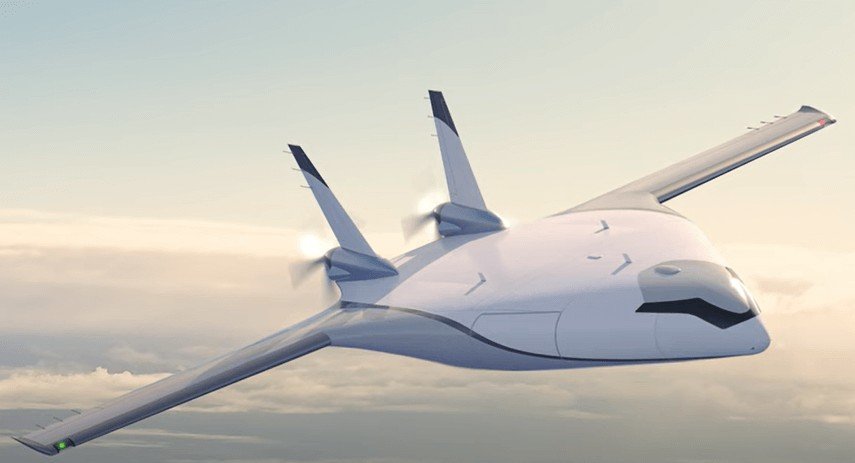
The partnership marks a significant manufacturing milestone for Natilus’ blended-wing-body regional cargo aircraft, with carbon-fibre wings scheduled for delivery in spring 2027. The development follows a US Air Force investment of $3.5 million in research and development funding to accelerate KONA towards full-scale flight testing.
Natilus, the US-based aerospace manufacturer developing blended-wing-body (BWB) aircraft, has commissioned Composites Universal Group (CUG) to manufacture the wings for the full-scale prototype of its KONA regional freighter.
Announced on November 11, 2026, the agreement represents an important step in advancing KONA’s development for commercial cargo and defence logistics applications. The wings will be manufactured at Composites Universal Group’s facility in Oregon, with delivery to Natilus’ San Diego facility targeted for spring 2027.
Related Post



The announcement follows the US Air Force’s recent award of $3.5 million in research and development funding to support the development of KONA and accelerate its progress towards full-scale flight testing.
Composites Universal Group brings aerospace manufacturing experience from programmes involving Airbus Defence & Space, Boeing, Archer Aviation and SpaceX. The company plans to apply established composite manufacturing techniques and a streamlined tooling process intended to reduce production costs and shorten manufacturing lead times.
Conventional Engineering For An Unconventional Aircraft
Although KONA’s blended-wing-body configuration represents a departure from conventional aircraft architecture, Natilus is adopting established engineering principles for the wing structure.
The design incorporates a conventional arrangement of spars and ribs, similar to those used in certified transport and cargo aircraft for decades. The manufacturing approach will draw on established production methods associated with conventional tube-and-wing aircraft, including the Beechcraft King Air series produced by Textron Aviation.
The wings will incorporate aerospace materials meeting FAA standards and use a conventional cable-and-pulley flight-control system. They will also feature a dry-wing configuration, meaning they will not contain integral fuel tanks, reducing structural and manufacturing complexity.
A key feature of the programme is the use of carbon-fibre composites instead of conventional aluminium construction. According to Natilus, carbon fibre offers improved resistance to corrosion and fatigue over time, while potentially reducing the number of components and fasteners required during assembly.
The composite construction is also expected to minimise the need for multiple riveted panels and thousands of drilled holes, simplifying the manufacturing process and supporting weight and maintenance efficiencies.
By combining established structural engineering with the aerodynamic advantages of a blended-wing-body configuration, Natilus aims to develop an aircraft that is both commercially viable and operationally efficient.
Testing Programme To Validate Structural Performance
Following delivery to Natilus’ San Diego hangar, the wings will undergo a comprehensive structural testing programme before being integrated into the full-scale demonstration aircraft.
The initial phase will include coupon testing of composite material samples and bonded-joint testing to evaluate material properties and the integrity of structural connections.
This will be followed by limit-load testing to assess the wings’ ability to withstand the structural loads anticipated during aircraft operations.
The testing programme is intended to validate the structural design, establish durability and demonstrate the performance of the composite wing assembly ahead of KONA’s full-scale demonstration flight.
Steve Ruege, co-founder, president and chief executive officer of Composites Universal Group, said the partnership combines Natilus’ innovative aircraft design with the company’s experience in advanced aerospace manufacturing, including electric vertical take-off and landing aircraft and unmanned systems.
He highlighted the opportunity to contribute to an aircraft programme targeting substantial reductions in fuel consumption and operating costs.
KONA Targets Greater Payload And Operating Efficiency
Natilus is developing KONA as a regional blended-wing-body freighter designed to improve cargo-carrying efficiency and offer greater payload capacity than comparable conventional aircraft.
The company claims its blended-wing architecture can deliver up to 40% additional payload capacity, alongside reductions in fuel consumption and operating costs.
KONA is designed to carry approximately 3.8 metric tonnes of cargo over a range of up to 900 nautical miles, making it suitable for regional freight distribution, logistics operations and specialised defence transportation requirements.
The aircraft is also being developed as an optionally piloted platform, providing operational flexibility for both conventional and autonomous cargo missions.
Natilus chief executive officer Aleksey Matyushev said that while KONA’s blended-wing design differs significantly from aircraft currently operating in the market, the company is relying on established, commercially available engineering technologies for the wing manufacturing programme.
He emphasised the company’s commitment to meeting the quality and performance standards expected by commercial freight operators and the US Air Force.
Advancing The Commercial And Defence Cargo Opportunity
The wing manufacturing agreement adds momentum to Natilus’ broader effort to commercialise blended-wing-body aircraft for the global aviation and logistics sectors.
The company has positioned KONA as a potential solution for regional cargo transportation, military logistics and operations requiring efficient access to smaller or less-developed airfields.
The US Air Force’s $3.5 million investment further highlights the potential defence applications of the platform, particularly in logistics and supply-chain operations where flexibility and operational efficiency are critical.
For the aerospace supply chain, the agreement also demonstrates how established composite manufacturing capabilities can support the development of unconventional aircraft configurations without requiring entirely new structural engineering approaches.
With wing delivery targeted for spring 2027, the next major milestones will involve structural validation, integration with the full-scale prototype and progression towards flight testing.
While significant development and certification work remains before commercial operations can begin, the partnership represents a tangible step in moving KONA from aircraft design towards full-scale hardware development.