
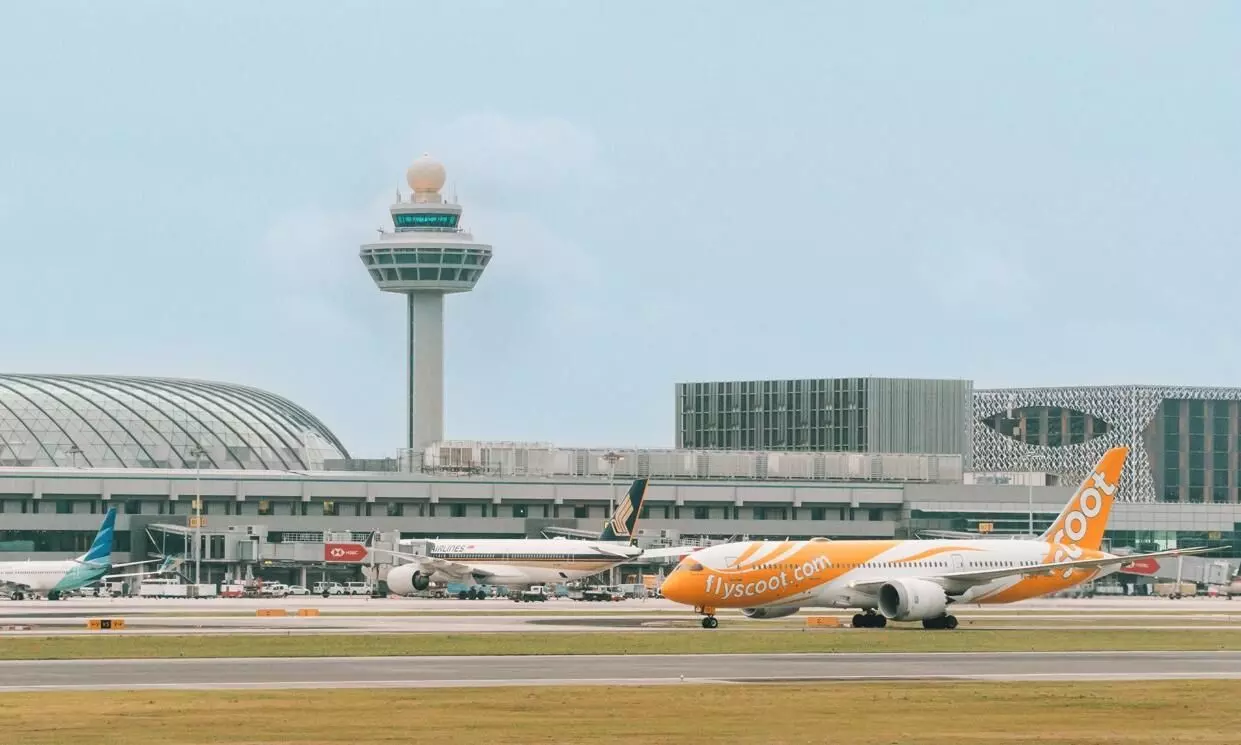
Singapore Changi Airport delivered one of its strongest air cargo performances in recent years in 2025, handling 2.08 million tonnes of freight, representing a 4.5 percent year-on-year increase and reinforcing the airport’s position as a major global cargo hub.
The growth reflects a steady recovery in international trade flows and rising demand from high-value technology sectors. Cargo volumes at Changi were supported by strong performance across exports, imports and transhipment traffic, with much of the activity front-loaded during the first three quarters of the year.
High-value technology supply chains drive demand
Industry demand in 2025 was significantly shaped by global supply chains linked to advanced technology manufacturing. Robust shipments of semiconductors, electronics components and other high-value goods were among the key contributors to Changi’s cargo throughput.
The continued expansion of industries tied to artificial intelligence infrastructure, electric vehicles and cleantech technologies further strengthened cargo flows through the airport. These sectors rely heavily on time-critical logistics and secure transportation, making air freight a preferred mode for high-value shipments.
As a result, Changi maintained its role as a strategic consolidation and distribution hub for cargo moving between Asia, North America and Europe.
China and the United States remain key markets
In terms of trade lanes, China remained the largest air cargo market for Changi Airport in 2025, reflecting the scale of manufacturing exports and e-commerce flows between China and Southeast Asia.
Other major cargo markets included the United States, Australia, Hong Kong and India.
Among these, the fastest-growing markets were China, the United States and Taiwan, highlighting increasing cross-border trade in technology components and advanced manufacturing products.
This performance underscores Changi’s growing importance as a regional logistics gateway, facilitating cargo consolidation in Asia before redistribution to global markets.
Expansion of freighter connectivity
Cargo growth at Changi was also supported by an expansion of freighter operations and long-haul capacity during the year.
Chinese carrier JD Airlines launched three weekly freighter services between Shenzhen and Singapore, strengthening e-commerce and manufacturing supply chain links between southern China and Southeast Asia.
Meanwhile, Turkish Cargo reinstated its weekly freighter route connecting Istanbul, Ho Chi Minh City and Singapore, enhancing connectivity between Europe and Southeast Asia while providing additional uplift for cargo moving between the regions.
Express integrator FedEx Express further expanded long-haul connectivity by launching new non-stop freighter services linking Singapore with Anchorage, strengthening the airport’s position on the critical Singapore–United States air cargo corridor.
Positioning for continued growth in 2026
The diversified mix of cargo flows, combined with expanded freighter capacity and sustained demand from high-value industries, has helped Changi maintain resilience despite ongoing volatility in global trade.
With strong demand for time-sensitive and high-technology goods, the airport is well positioned to sustain cargo momentum into 2026.
As international supply chains continue to evolve—particularly in semiconductor manufacturing, advanced electronics and e-commerce—Changi’s strategic location and connectivity are expected to reinforce its role as one of the Asia-Pacific region’s leading air cargo gateways.