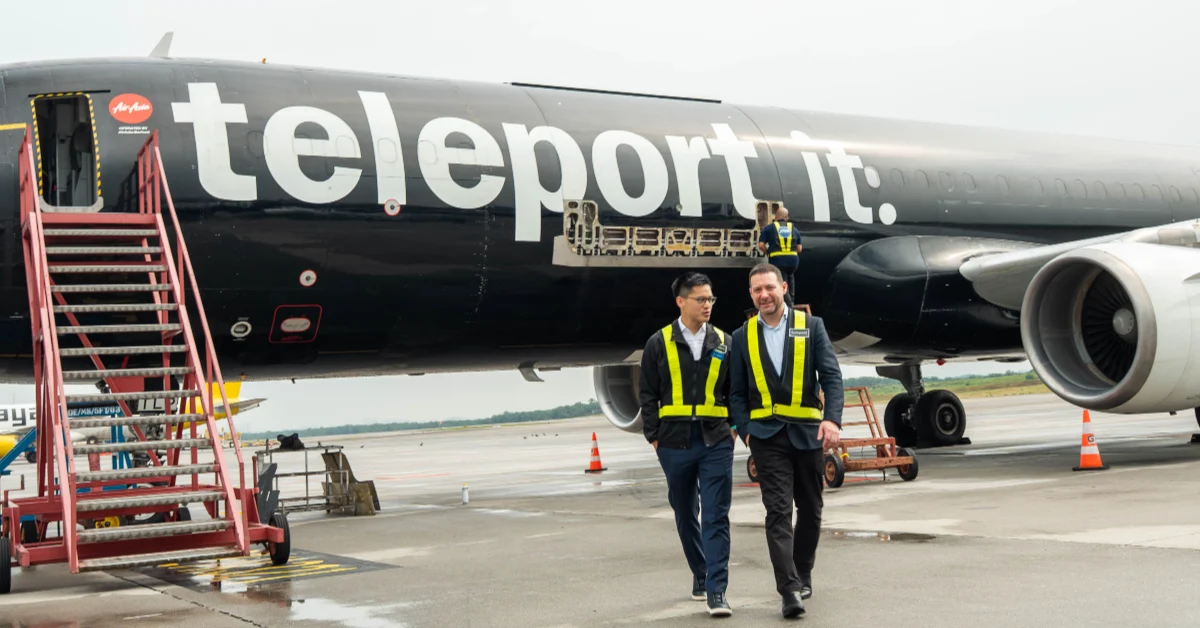
- Teleport will establish a new strategic operations hub at Avalon Airport in the second half of 2026, creating an additional international cargo gateway for Victoria and strengthening the company’s Oceania network.
- The first phase will focus on e-commerce shipments from China, with the new hub designed to provide faster processing and more flexible connectivity for growing China-Australia parcel flows.
- Avalon’s existing freight infrastructure offers 24/7, curfew-free operations, an 8,500 sq m cargo warehouse and annual capacity of up to 100,000 tonnes, providing Teleport with a platform for future network expansion.
Teleport selects Avalon for new Oceania cargo hub
Teleport is set to establish a new cargo operations hub at Avalon Airport in Melbourne during the second half of 2026, strengthening the airport’s role as an international freight gateway and creating additional capacity for rapidly expanding cross-border e-commerce between China and Australia.
The partnership between Teleport and Avalon Airport is expected to expand Teleport’s air logistics network across Oceania while providing an alternative entry point for international cargo moving into the Australian market.
The first phase of operations will focus on e-commerce shipments originating in China, with the facility expected to support faster processing and more efficient movement of parcels into Australia.



The move comes as Teleport continues to expand beyond its Southeast Asian origins and build a broader Asia-Pacific cargo network supported by a combination of dedicated freighters, passenger aircraft belly capacity and third-party airline partnerships.
Avalon offers a different proposition for international cargo
The selection of Avalon reflects the airport’s ability to provide dedicated freight infrastructure away from the constraints of a conventional passenger-focused gateway.
Avalon Airport’s freight operation is equipped to handle general cargo as well as specialised shipments including pharmaceuticals, perishables, dangerous goods, livestock, high-value cargo and oversized freight. The airport also operates without a curfew and offers 24/7 freight-handling availability.
Its Melbourne Freight Terminal includes an 8,500 sq m warehouse, with stated annual capacity of up to 100,000 tonnes. The facility has direct on-airport access and is positioned close to major road and port infrastructure.
Avalon is approximately 15 minutes from the Port of Geelong, 35 minutes from the Port of Melbourne and 45 minutes from Melbourne Airport, according to the airport’s freight information.
For an e-commerce operator, the combination of dedicated cargo infrastructure, rapid aircraft turnaround and unrestricted operating hours can provide greater flexibility when scheduling international freight movements.
China-Australia e-commerce at the centre of the strategy
The initial focus on China reflects the scale and importance of the China-Australia e-commerce corridor.
Australian consumers have increasingly embraced online marketplaces, while Chinese e-commerce platforms have become important sources of cross-border parcel traffic.
Teleport’s new Avalon operation is designed to connect that demand with an alternative air freight gateway, potentially shortening processing times and providing greater capacity during periods of peak e-commerce activity.
The company already has extensive experience handling cross-border e-commerce flows from China and across Asia.
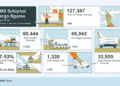
Teleport’s 2025 performance illustrates the scale of that business. The company moved a record 347,885 tonnes of cargo, an 18% increase year on year, while parcel volumes almost doubled to 167 million, up 99% from 2024. Revenue reached RM1.2 billion, an 11% increase, according to Capital A’s full-year results.
The sharp increase in parcel volumes demonstrates the growing importance of e-commerce to Teleport’s overall cargo strategy.
Pete Chareonwongsak: Avalon strengthens the Oceania network
Teleport CEO Pete Chareonwongsak said establishing the Avalon operation was a deliberate move to strengthen the company’s network in Oceania.
The company’s strategy is built around providing faster and more reliable connectivity for cross-border e-commerce, while retaining the flexibility to handle conventional cargo.
Avalon’s ability to operate without a curfew was highlighted as an important advantage, particularly for e-commerce logistics where shipment flows can be highly time-sensitive and schedules need to respond rapidly to demand.
The airport’s existing infrastructure also allows Teleport to handle e-commerce alongside general freight rather than relying exclusively on a specialised parcel facility.
An additional gateway for Victoria
For Avalon Airport, the Teleport partnership represents another step in its development as an international cargo gateway.
The airport has been investing in its freight infrastructure, including a modern cargo shed and cold-chain capabilities. Its freight terminal is equipped for both narrowbody and widebody operations and includes cargo screening, temperature-controlled facilities and dedicated areas for specialist freight.
The airport says its freight operation is designed to provide exporters and importers with access to major freight corridors and agricultural production areas.
The addition of Teleport creates another potential source of international cargo traffic, particularly from Asia.
For Victoria, an expanded international cargo operation at Avalon could also diversify the state’s freight gateway options and provide additional capacity as e-commerce and international trade volumes grow.
Teleport already connects Australia with major Asian markets
The Avalon hub will build on an existing Teleport presence in the Australian market.
The company currently moves cargo to major Australian gateways including Melbourne, Sydney, Brisbane and Perth, connecting them with Asian markets such as China, Hong Kong, India, Malaysia and Vietnam.
The new Avalon operation therefore represents an expansion of an existing network rather than a standalone entry into Australia.
It also fits Teleport’s broader approach of creating multiple points of connectivity across Asia-Pacific.
In 2024, Teleport deepened its partnership with VietJet Air Cargo, commercially managing cargo capacity on the airline’s Delhi-Ho Chi Minh City route. The partnership was designed to extend connectivity beyond the direct route, including onward access to destinations such as Melbourne, Sydney and Auckland.
The strategy demonstrates how Teleport uses airline partnerships to build connectivity beyond its own directly operated aircraft.
An asset-light network model
Teleport’s network has evolved significantly since it was established as AirAsia’s cargo and logistics platform.
The company now combines AirAsia passenger belly capacity, dedicated freighter aircraft and capacity from third-party airline partners.
The model allows Teleport to expand its network without having to rely exclusively on a large owned aircraft fleet.
Its dedicated freighter operation has also expanded over time. Teleport previously introduced Airbus A321 freighters to strengthen its intra-ASEAN network and connectivity to markets including China and India.
More recently, the company has continued to broaden partnerships with external carriers.
In 2025, for example, Teleport was appointed exclusive General Sales Agent for China Central Longhao Airlines’ Chennai and Delhi freighter services to Zhengzhou, further expanding its access to dedicated cargo capacity between India and China.
Avalon could become more than an e-commerce gateway
Although the initial phase at Avalon will concentrate on Chinese e-commerce, the partnership could ultimately provide Teleport with a broader cargo platform in Australia.
Avalon’s infrastructure is designed to accommodate a wide variety of cargo types, including perishables, pharmaceuticals, high-value shipments and oversized freight.
That creates the potential for the hub to evolve alongside Teleport’s network requirements.
As additional Asian trade lanes are developed, Avalon could serve as a consolidation and distribution point for multiple cargo categories.
The airport’s proximity to Melbourne’s broader logistics ecosystem is another advantage, particularly for importers and exporters looking for alternatives to the city’s established primary international gateway.
Teleport’s Oceania expansion gathers pace
The Avalon announcement is part of a wider geographical expansion for Teleport.
The company’s roots are in Southeast Asia, where it has built an extensive network using AirAsia’s passenger operations and its own cargo capabilities.
However, its recent partnerships increasingly connect that regional network with markets in China, India, Australia, Europe and the Middle East.
In April 2025, Teleport and Emirates SkyCargo signed a preferred partnership designed to combine their networks and strengthen trade and e-commerce flows. The agreement included plans for expanded interline options and block-space arrangements, giving Emirates access to AirAsia belly capacity while providing Teleport with access to Emirates’ distribution network into Europe, Africa and the US.
Such partnerships are becoming increasingly important to Teleport’s strategy as it develops a wider international cargo network without relying solely on direct flight operations.
Record parcel growth provides the backdrop
The timing of the Avalon investment is significant.
Teleport’s 2025 results showed a dramatic increase in parcel volumes, with 167 million parcels moved during the year, compared with approximately 84 million in 2024. Total cargo volume rose to 347,885 tonnes.
The company attributed the performance to the continued expansion of its e-commerce business and its asset-light combination of passenger and freighter capacity.
That growth is creating demand for additional gateways and processing capacity.
Establishing a dedicated operations hub at Avalon gives Teleport another location from which to manage those volumes as its Australian business expands.
Building resilience into Australia’s air cargo network
The new hub could also contribute to greater diversification within Australia’s international freight infrastructure.
Heavy concentration of international cargo at a small number of major gateways can create operational challenges when capacity is constrained or demand spikes.
An additional cargo-focused gateway provides another option for airlines, forwarders and logistics providers.
For e-commerce in particular, flexibility is increasingly important because shipment volumes can fluctuate rapidly according to promotional campaigns, consumer demand and seasonal peaks.
Avalon’s curfew-free operating environment provides Teleport with greater scheduling flexibility, while its dedicated freight facilities reduce dependence on passenger-terminal infrastructure.
The next phase for Teleport in Australia
The first phase of Teleport’s Avalon operation is expected to begin in H2 2026, initially focusing on e-commerce shipments from China.
From there, the hub could become an important component of Teleport’s wider Oceania strategy, supporting the company’s ambitions to connect Australian markets with an expanding network across Asia and beyond.
The move combines two developments occurring simultaneously in the air cargo market: the rapid growth of cross-border e-commerce and the emergence of more flexible, multi-airline logistics networks.
For Teleport, Avalon provides a dedicated platform from which to address both.
For Victoria, the partnership strengthens the state’s international freight infrastructure and creates another link with major Asian trade markets.
As e-commerce continues to reshape the movement of small parcels across borders, the ability to provide fast processing, flexible flight operations and reliable onward connectivity will become increasingly important.
Teleport’s new Avalon hub is positioned to play a role in that evolution, beginning with the high-growth China-Australia e-commerce corridor and potentially expanding into a broader Oceania cargo gateway.