

The recent US-Israel airstrikes on Iran, coupled with Tehran’s retaliatory missile attacks across the Middle East, have cast serious doubt on container shipping returning to Red Sea and Suez Canal routes in 2026.
Earlier this year, carriers had begun cautiously resuming Suez Canal operations following a temporary lull in Houthi missile attacks targeting Red Sea shipping lanes. However, the resurgence of regional hostilities has prompted shipping lines to reconsider, with Xeneta chief analyst Peter Sand describing the situation as a “weaponisation of trade” that has shattered hopes of a large-scale return of container shipping to the Red Sea this year.
“If Houthi militia resume attacks, as now seems likely, carriers will reverse the decision to return services to the Red Sea and prioritise the safety of crew, ship, and cargo,” Sand explained. “Any plans for a phased return of container shipping in 2026 will be shelved until the security situation stabilises.”
Related Post


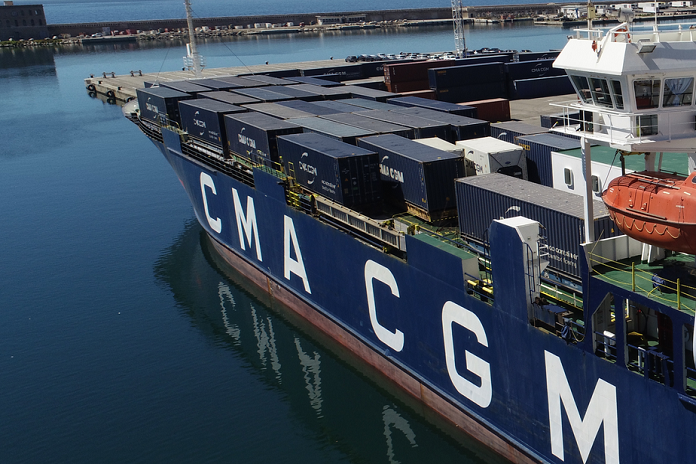
Recent moves by major lines illustrate the heightened caution. CMA CGM last month reversed its decision to return its FAL1, FAL3, and MEX services to the Red Sea, citing the “complex and uncertain international context.” Meanwhile, Maersk announced that its ME11 and MECL services will be rerouted via the Cape of Good Hope due to ongoing security concerns.
The disruption of Red Sea routes continues to affect the airfreight market, particularly in air-sea operations. Longer sailings around the southern tip of Africa, necessitated by security risks, have absorbed roughly 2.5 million TEU (twenty-foot equivalent units) of global container capacity and increased demand on the global fleet. Certain time-sensitive cargo segments have benefitted from airfreight alternatives, although the advantage has eased over the past year.
Sand added: “A large-scale return of container shipping to the Red Sea would free up capacity, reduce transit times, and likely trigger a sharp drop in global freight rates. With that return now unlikely in 2026, freight rates on major global trade lanes will continue to soften but not decline as sharply as previously anticipated.”
The evolving security landscape underscores the fragility of maritime routes in geopolitically sensitive regions, and shipping lines appear prepared to maintain longer, safer alternatives until stability returns.