
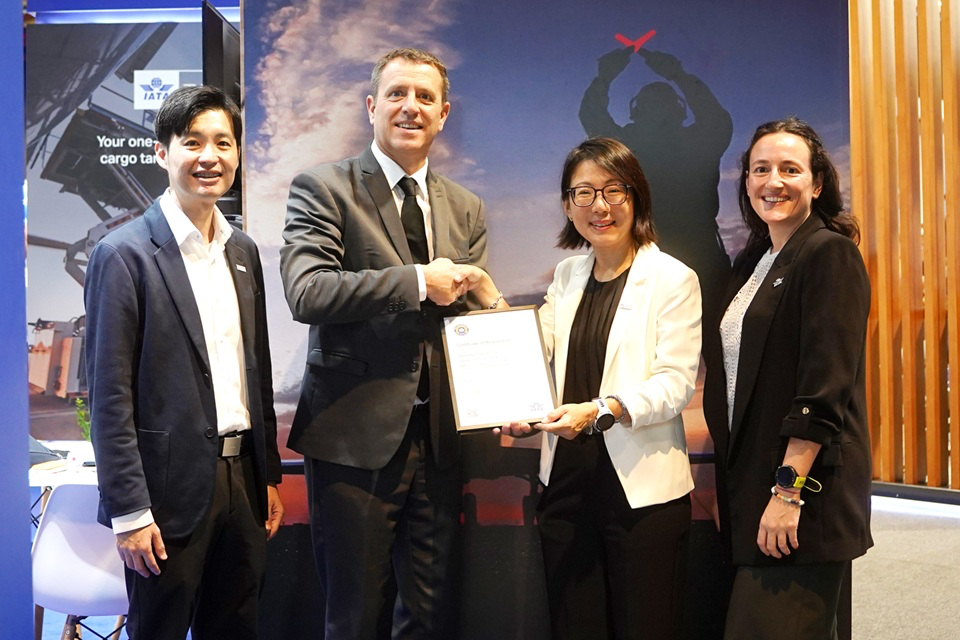
Hong Kong-based Asia Airfreight Terminal (AAT), a subsidiary of SATS Ltd., has achieved the International Air Transport Association’s (IATA) Environmental Assessment certification, marking a significant milestone in its sustainability journey and reinforcing its adherence to globally recognised environmental standards.
The certification—formally known as IATA Environmental Assessment (IEnvA) under IATA’s Sustainability and Environment Programme (ISP)—is an independent evaluation framework that assesses how effectively sustainability principles are embedded across an organisation’s governance, operational controls, and management systems. It places particular emphasis on structured environmental management, regulatory compliance, and continuous performance improvement.
For AAT, the recognition underscores years of investment in building a robust environmental governance model tailored to the complexities of 24/7 cargo terminal operations.
Related Post




“Given the scale and round-the-clock nature of our operations, we are uniquely positioned to drive meaningful change by integrating sustainability into everyday processes at every level,” said Mike Chew. “This certification validates the maturity of our environmental management systems and reflects measurable progress across decarbonisation, infrastructure modernisation, and corporate governance.”
Governance-Driven Sustainability
Central to AAT’s sustainability framework is a multi-tiered governance structure designed to ensure accountability and strategic alignment across the organisation. Oversight is distributed from board level through senior management to a dedicated cross-functional sustainability committee, supported by execution teams operating across departments.
This layered approach enables the company to monitor environmental compliance, manage climate-related risks, and track performance against emissions reduction targets, embedding sustainability into both strategic decision-making and day-to-day operations.
Operational Transformation and Emissions Reduction
AAT’s environmental strategy is anchored in tangible, terminal-wide initiatives aimed at reducing its carbon footprint while maintaining operational efficiency. These include:
- Deployment of energy-efficient infrastructure across cargo handling facilities
- Progressive electrification of ground support equipment fleets
- Introduction of Autonomous Electric Tractors to optimise airside logistics
- Adoption of Hydrotreated Vegetable Oil (HVO) as a lower-emission alternative fuel
Collectively, these measures have delivered a 33% reduction in carbon emissions compared with a 2018 baseline, positioning the company on a defined pathway toward achieving net-zero emissions by 2050.
Industry Recognition
The achievement has also been acknowledged by International Air Transport Association, which views structured environmental frameworks as critical to the aviation sector’s long-term resilience.
“By adopting an internationally aligned and systematic environmental management approach, AAT demonstrates how sustainability can be implemented in a practical and measurable manner,” said Marie Owens Thomsen, senior vice president sustainability and chief economist at IATA. “Such initiatives are essential in supporting efficient, resilient air cargo operations while advancing industry-wide climate goals.”
Positioning for a Low-Carbon Future
As regulatory pressure intensifies and supply chain stakeholders demand greater transparency on environmental performance, certifications such as IEnvA are becoming increasingly influential benchmarks within the air cargo sector.
For AAT, the milestone not only validates its current sustainability framework but also strengthens its positioning as a responsible cargo handler within Asia’s competitive logistics landscape—demonstrating that operational excellence and environmental stewardship can advance in parallel.