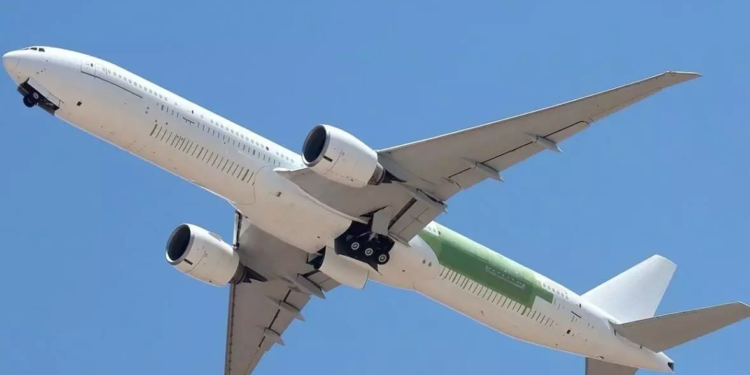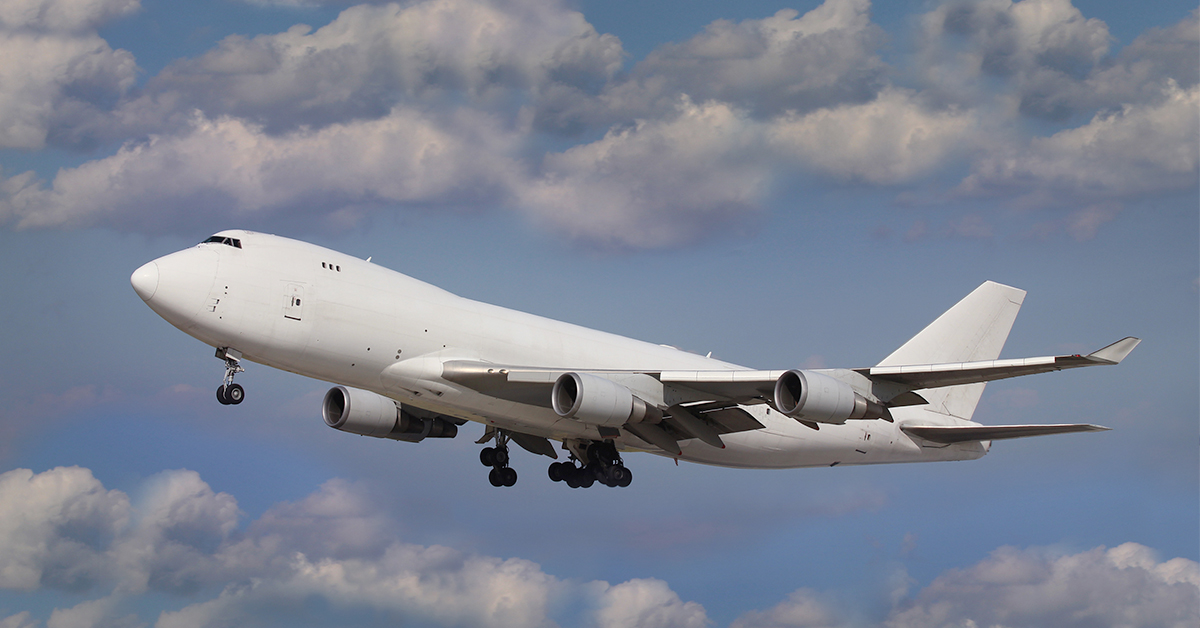
Rising jet fuel prices are placing renewed pressure on the economics of legacy freighter fleets, with the Boeing 747-400F increasingly challenged to remain viable under current market conditions. Fresh analysis from Rotate underscores a widening performance gap between older, fuel-intensive aircraft and newer-generation freighters such as the Boeing 777F.
According to the data, a combination of higher yields and fuel surcharges has helped offset escalating operating costs across the air cargo sector. However, the degree of resilience varies sharply by aircraft type. While the B777F continues to demonstrate strong operating margins, the Boeing 747-400F is approaching a critical threshold where profitability becomes increasingly difficult to sustain.
Rotate’s modelling shows that yield increases in the range of 10% to 40% materially improve the financial performance of the B777F, allowing it to remain profitable even as fuel prices climb. On a representative 8,800 km sector, a modest 10% rise in yields supports profitability at approximately $0.65 per kilogram, while a 40% increase can push returns to as high as $1.37 per kilogram. These figures highlight the aircraft’s relative efficiency and cost advantage on long-haul routes.
Related Post



In contrast, the B747-400F’s economics deteriorate rapidly under the same conditions. With jet fuel prices reaching a peak of USD 4.45 per gallon on March 20, margins for the aircraft eroded significantly. At a 60% increase in fuel costs, profitability for the B747-400F slips into negative territory, requiring yield increases of at least 30% to 40% merely to break even. The aircraft’s four-engine configuration and higher fuel burn place it at a structural disadvantage in a high-cost environment.
The implications extend beyond individual aircraft economics to broader network planning and capacity deployment. Rotate’s analysis identifies the transpacific corridor as the most exposed trade lane should elevated fuel prices persist. Currently, the B747-400F accounts for approximately 22% of total capacity on transpacific routes—the highest share across major global markets.
This reliance on older freighter aircraft creates a vulnerability, particularly given the long stage lengths characteristic of transpacific operations. Sustained fuel price pressure could prompt carriers to scale back capacity, mirroring trends seen in 2022 when a similar spike in fuel costs led to a 12% reduction in B747-400F deployment on these routes.
Other key trade lanes—including Asia–Europe, intra-Asia, and Africa–Europe—also maintain notable exposure to the B747-400F, each with around 13% of capacity tied to the aircraft type. However, none face the same level of risk as the transpacific market, where operational economics are most sensitive to fuel price volatility.
The findings reinforce a broader structural shift underway in the air cargo industry, as operators increasingly prioritize fuel-efficient, twin-engine freighters to safeguard margins. While the B747-400F has long been a workhorse of global air freight, current market dynamics are accelerating the case for fleet modernisation and strategic redeployment.
As fuel prices remain unpredictable, the balance between yield management, surcharge strategies, and fleet composition will continue to define competitiveness in the long-haul cargo sector.