
Partnership aims to boost cross-border commerce, digital logistics adoption, supply chain resilience and global market access for millions of small businesses across ASEAN
DHL Express and the ASEAN Business Advisory Council (ASEAN-BAC) have entered into a strategic partnership designed to accelerate regional trade integration, strengthen supply chain resilience and empower micro, small and medium-sized enterprises (MSMEs) across Southeast Asia. Through a comprehensive framework focused on trade facilitation, digital transformation, sustainability and policy harmonisation, the collaboration seeks to remove barriers to cross-border commerce and enable smaller businesses to participate more effectively in global supply chains.
Strategic Partnership to Drive ASEAN Trade Growth
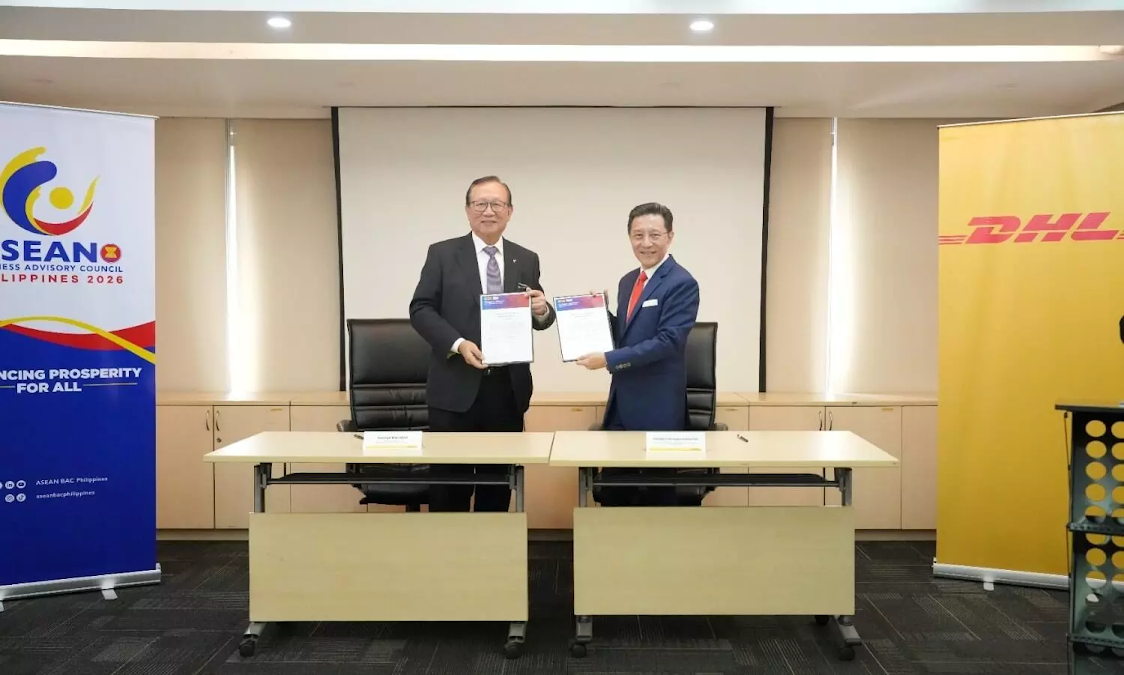
As Southeast Asia continues to emerge as one of the world’s most dynamic economic regions, DHL Express and the ASEAN Business Advisory Council (ASEAN-BAC) have formalised a new partnership aimed at strengthening the region’s trade ecosystem and supporting the growth of MSMEs.
Related Post


The Memorandum of Understanding (MoU), signed in Manila, establishes a collaborative framework that focuses on four key pillars: expanding MSME participation in international trade, enhancing supply chain resilience through digital logistics solutions, supporting decarbonisation initiatives, and advancing harmonised digital trade standards through policy advocacy.
The agreement reflects a shared commitment to improving regional economic integration while helping businesses navigate an increasingly complex global trade environment.
Empowering MSMEs at the Heart of ASEAN Economies
Micro, small and medium-sized enterprises form the backbone of ASEAN economies, accounting for the overwhelming majority of businesses across the region and serving as major contributors to employment, innovation and economic development.
However, despite their importance, many MSMEs continue to face significant barriers when attempting to access international markets. Challenges such as limited logistics expertise, regulatory complexity, customs procedures, financing constraints and digital capability gaps often restrict their ability to participate in global trade.
The DHL–ASEAN-BAC partnership aims to address these obstacles by providing businesses with greater access to logistics expertise, digital tools, training programmes and market opportunities.
Jose Ma. Concepcion III, Chair of ASEAN Business Advisory Council, emphasized the importance of inclusive economic growth across the region.
“ASEAN’s strength will not be measured by the success of a few, but by the number of people we bring into the circle of growth and opportunity. Advancing Prosperity for All means building an ASEAN where businesses of all sizes can grow and innovate. Through stronger regional collaboration and this partnership with DHL, we want to ensure that no one—especially MSMEs and small entrepreneurs—is left behind,” he said.
DHL Expands GoTrade Programme to Support Cross-Border Expansion
A key component of the partnership is the expansion of DHL’s GoTrade programme, a global initiative designed to help small and medium-sized enterprises gain access to international markets and navigate the complexities of cross-border trade.
Through GoTrade, participating businesses will receive training, mentorship and practical guidance covering areas such as digitalisation, logistics management, international trade compliance, financing and supply chain best practices.
The programme is intended to help businesses overcome common barriers that limit global expansion while equipping them with the knowledge and resources needed to compete internationally.
DHL believes that supporting MSMEs is essential for sustaining economic growth and strengthening the resilience of regional supply chains.
Herbert Vongpusanachai, Senior Vice President Commercial, Asia Pacific at DHL Express, highlighted the critical role of small businesses in shaping ASEAN’s future economic landscape.
“Global trade has proven its resilience time and again, and ASEAN continues to stand out as a critical pillar of that growth. MSMEs are at the heart of ASEAN economies, and their ability to compete internationally will define the region’s next phase of development,” he said.
“DHL has been a constant enabler of cross-border trade by providing the infrastructure, expertise and reliability that businesses depend on. Our partnership with ASEAN-BAC and our GoTrade programme demonstrate our continued commitment to helping MSMEs scale confidently beyond their domestic markets.”
Strengthening Regional Supply Chains Through Digitalisation
Beyond enterprise development, the partnership places significant emphasis on improving supply chain resilience through greater adoption of digital logistics technologies and harmonised trade processes.
As global supply chains become increasingly interconnected, digitalisation is emerging as a critical enabler of efficiency, transparency and competitiveness. The collaboration seeks to encourage wider adoption of digital trade platforms, automated logistics solutions and standardised documentation processes across ASEAN member states.
By promoting greater alignment in customs procedures and trade standards, the initiative aims to reduce friction in cross-border trade, improve cargo flows and enhance the movement of goods throughout the region.
The partnership will also support policy dialogue with governments and regulatory authorities to encourage greater standardisation and interoperability across ASEAN’s trade and logistics networks.
ASEAN’s Growing Role in Global Trade
The collaboration comes at a time when ASEAN is playing an increasingly influential role in global manufacturing, trade and supply chain diversification.
According to DHL, ASEAN currently handles merchandise trade valued at approximately USD 4.4 trillion, making it one of the world’s most important trading blocs. The region has become a preferred destination for manufacturing investment and supply chain expansion as companies seek to diversify sourcing and production networks.
As trade volumes continue to rise, improving logistics efficiency and enabling greater participation by smaller businesses will be critical to sustaining long-term economic growth.
Industry analysts note that stronger MSME integration into international supply chains can create broader economic benefits, increase export competitiveness and contribute to more resilient regional trade networks.
Research, Innovation and Future Collaboration
The DHL–ASEAN-BAC partnership extends beyond training and logistics support.
Both organisations plan to collaborate on research initiatives aimed at identifying the key challenges facing MSMEs in international trade. The findings are expected to inform future policy recommendations and help shape initiatives that improve market access and trade facilitation.
In parallel, ASEAN-BAC plans to expand its ASEAN Mentorship for Entrepreneurs Network (AMEN), originally launched in 2017, into a digital platform that will provide entrepreneurs with greater access to mentorship, innovation support, regional networks and new market opportunities.
The partnership also sets the stage for broader industry engagement ahead of the DHL GoTrade Summit, scheduled to take place in Manila later this year. Supported by ASEAN-BAC and the Philippines Department of Trade and Industry, the summit will bring together policymakers, logistics providers, exporters and business leaders to explore practical solutions for enhancing cross-border trade opportunities across Southeast Asia.
Building a More Connected and Inclusive Trade Ecosystem
The DHL–ASEAN-BAC alliance represents a significant step toward building a more inclusive, digitally connected and resilient regional trade ecosystem.
By combining DHL’s global logistics expertise with ASEAN-BAC’s regional policy leadership and business networks, the partnership seeks to empower MSMEs, strengthen supply chains and support ASEAN’s long-term ambition of becoming a more integrated and competitive economic community.
As international trade continues to evolve, initiatives that improve market access, simplify trade processes and foster digital transformation are expected to play a crucial role in enabling businesses of all sizes to participate successfully in the global economy.