
UK-based freighter airline European Cargo Limited has entered administration, marking a significant development for the British air cargo sector and raising questions over the future of one of the country’s specialist long-haul cargo operators.
According to an official notice issued by the company, European Cargo entered administration on 3 June 2026, with Stuart Morris, Robert Fishman and David Soden of Teneo Financial Advisory Limited appointed as Joint Administrators to oversee the company’s affairs, business operations and assets.
The move follows a challenging period for the airline and signals a major setback for a carrier that had established itself as a specialist operator of converted freighter aircraft, while playing a notable role in supporting critical supply chains during the COVID-19 pandemic.




Administrators Take Control of Operations
In a statement published following the appointment, the Joint Administrators confirmed that they had assumed responsibility for managing the company’s affairs, business and property.
As licensed insolvency practitioners, the administrators are tasked with assessing the company’s financial position, protecting creditor interests and evaluating options regarding the future of the business and its assets.
While no detailed explanation regarding the causes of the administration has been publicly disclosed, the development effectively places the future of the airline’s operations under review.
Industry observers note that administration proceedings often involve efforts to restructure operations, seek new investment, facilitate a business sale, or maximise returns for creditors.
At the time of writing, no announcement had been made regarding the continuation of flight operations or the potential sale of company assets.
Workforce Impact and Reported Redundancies
The administration has also created uncertainty for employees.
Reports indicate that staff members were informed of redundancies during a virtual meeting held shortly after the appointment of the administrators.
Although the company and administrators had not formally disclosed the total number of affected employees, the development has generated concern across the aviation and logistics community, particularly among personnel associated with the airline’s operational, engineering and cargo handling activities.
The extent of workforce reductions and their long-term implications are expected to become clearer as the administration process progresses.
A Specialist Freighter Operator in the UK Market
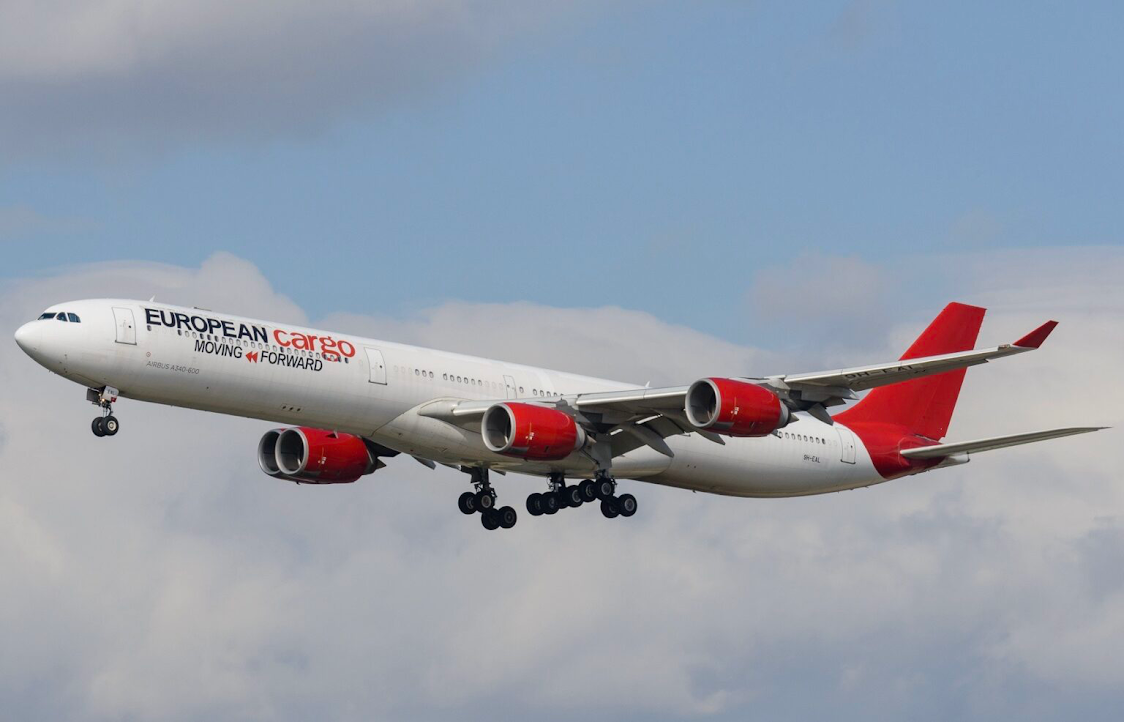
European Cargo built its reputation by converting former passenger aircraft into dedicated freighters, creating a niche position within the UK’s air cargo landscape.
The carrier became particularly well known for operating Airbus A340 freighter aircraft on long-haul cargo routes, serving international freight markets from its operational base at Bournemouth Airport.
The airline’s business model focused on maximizing the utility of widebody passenger aircraft through cargo conversion programmes, allowing it to offer substantial payload capacity while supporting a range of freight sectors, including e-commerce, industrial cargo, healthcare logistics and general freight.
Over recent years, European Cargo became one of the most prominent cargo operators associated with Bournemouth Airport’s ambition to expand its position within the UK air freight market.
Key Role During the Pandemic
European Cargo gained national recognition during the COVID-19 pandemic when it played a critical role in transporting personal protective equipment (PPE) and other essential medical supplies into the United Kingdom.
At a time when global supply chains faced unprecedented disruption and passenger aircraft capacity collapsed, dedicated cargo operators became essential to maintaining the flow of healthcare products and critical goods.
The airline’s contribution to the emergency logistics response helped establish its profile within the UK aviation and logistics sectors and demonstrated the strategic importance of dedicated air cargo capacity during times of crisis.
Implications for Bournemouth Airport
The administration is also expected to have implications for cargo activity at Bournemouth Airport, where European Cargo has been a cornerstone of the airport’s freight operations.
In recent years, Bournemouth Airport has invested in developing its cargo capabilities and positioning itself as an alternative logistics gateway within the UK market.
The presence of European Cargo provided the airport with a dedicated long-haul cargo operator capable of supporting international freight services and contributing to cargo volume growth.
With the airline now under administration, questions remain regarding the continuity of those services and the potential impact on future cargo development plans at the airport.
Industry analysts suggest that any prolonged suspension of operations could affect cargo throughput, infrastructure utilisation and commercial activity linked to the airport’s freight business.
Challenging Environment for Air Cargo Operators
The administration of European Cargo highlights the ongoing challenges facing airlines operating in an increasingly competitive and volatile market environment.
While global air cargo demand has shown resilience in several sectors, operators continue to face pressures including fluctuating freight rates, rising operating costs, aircraft maintenance expenses, regulatory requirements and evolving trade patterns.
For airlines operating specialised fleets, maintaining sustainable profitability often requires a careful balance between network utilisation, customer demand and operational efficiency.
The coming weeks are expected to be critical in determining the future of European Cargo, its fleet, workforce and customer commitments, as administrators assess available options and engage with stakeholders.
For the UK air cargo industry, the development represents the loss of a significant specialist operator and serves as a reminder of the challenges confronting carriers in a rapidly changing global logistics landscape.