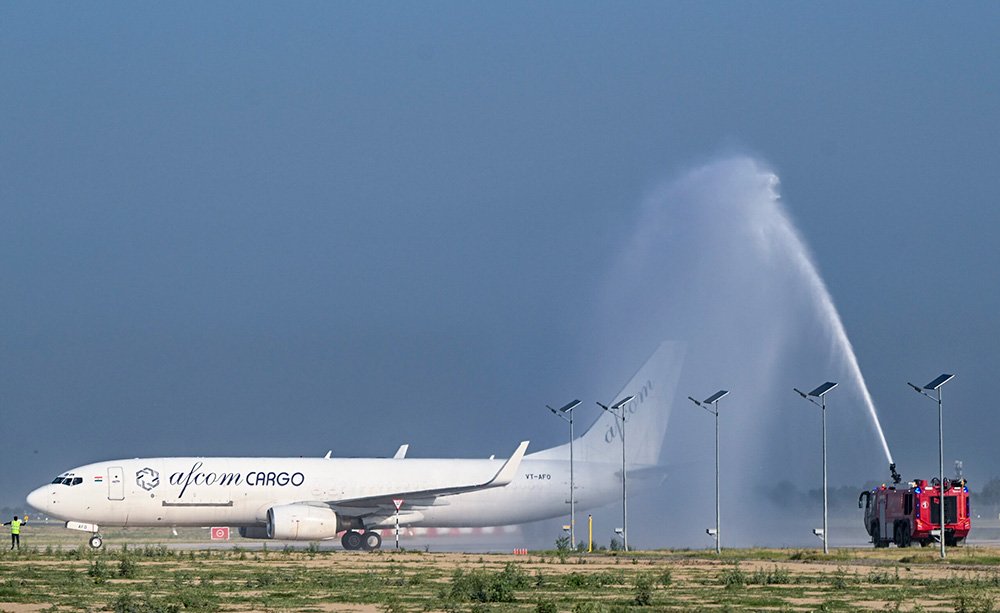
Boeing 737-800 freighter service from Chennai marks the beginning of cargo operations at Noida International Airport, showcasing its advanced multimodal infrastructure and future growth potential
Noida International Airport (NIA) is set to mark a major milestone in India’s aviation and logistics landscape with the commencement of its first cargo flight, operated by Afcom Cargo. The inaugural movement, scheduled for June 17, will establish the airport’s entry into cargo operations shortly after the launch of passenger services on June 15, signalling the next phase of development for one of India’s most ambitious greenfield airport projects.
The maiden cargo service will operate on the Chennai–Noida–Chennai route using an Afcom Cargo Boeing 737-800 freighter carrying domestic e-commerce shipments. Beyond being a routine commercial operation, the flight will serve as a comprehensive live demonstration of the airport’s cargo ecosystem, testing its handling capabilities, digital systems, warehousing infrastructure, and multimodal connectivity designed to support future growth in domestic and international trade.



Strategically located in Jewar, Uttar Pradesh, Noida International Airport is expected to emerge as a critical aviation and logistics gateway serving western Uttar Pradesh, the National Capital Region (NCR), and surrounding industrial corridors. The airport has been developed to complement existing aviation infrastructure in Delhi by creating additional passenger and cargo capacity while supporting the region’s rapidly growing manufacturing, e-commerce, and export sectors.
Afcom Cargo, headquartered in Chennai, operates a fleet of three Boeing 737-800 freighters serving destinations across Asia and the Middle East. The airline has developed expertise in flexible cargo operations, including charter services that helped maintain supply chain continuity during disruptions to Middle Eastern airline operations in the fourth quarter of the 2025–26 financial year. During this period, Afcom operated 415 charter flights, including key sectors such as Chennai–Colombo and Colombo–Malé, ensuring uninterrupted movement of critical cargo.
The launch of cargo services at Noida Airport is supported by a strategic collaboration between Afcom Cargo, Noida International Airport, and Air India SATS Airport Services (AISATS). The partnership evolved from an initial Memorandum of Understanding signed between AISATS and Afcom in September 2025 and was further strengthened through a tripartite agreement involving Noida International Airport in May 2026, aimed at building a robust and scalable cargo operation at the new airport.
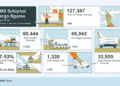
A key pillar of the airport’s cargo strategy is the extensive infrastructure developed by AISATS during Phase 1 of the project. Spread across nearly 80 acres, the facility has been designed with an initial annual handling capacity of 200,000 metric tonnes, with expansion plans that will increase capacity to 1.5 million metric tonnes in subsequent phases.
At the heart of the development is the state-of-the-art Multimodal Cargo Hub, integrating an Integrated Cargo Terminal with a dedicated Warehousing and Logistics Zone to enable seamless road-to-air and air-to-road cargo movement. The infrastructure includes approximately 22,000 square metres of warehouse space, dedicated domestic, international and express cargo terminals, and two dedicated freighter parking bays capable of supporting round-the-clock operations.
The cargo ecosystem is powered by advanced digital and operational technologies, including COSYS+, e-Acceptance platforms, and cargo community systems that provide enhanced transparency, faster processing, and improved coordination between stakeholders. Additional infrastructure features include 19 truck docking bays, nine X-ray screening machines, and 12 Unit Load Device (ULD) roller decks, enabling efficient cargo handling and quicker turnaround times.
The commencement of Afcom Cargo’s inaugural flight represents more than the launch of a new route; it marks the beginning of Noida International Airport’s ambition to become a major logistics and air cargo hub for India. By combining modern infrastructure, digitalised cargo processes, strategic road connectivity through the Yamuna Expressway, and scalable capacity expansion, the airport is positioned to play a crucial role in strengthening supply chains, supporting e-commerce growth, and enhancing India’s position in global trade.
As cargo volumes continue to rise and supply chains demand greater speed and reliability, Noida International Airport’s entry into the sector is expected to provide airlines, freight forwarders, e-commerce companies, and exporters with a powerful new gateway connecting North India with domestic and international markets.