Canadian hybrid-electric aircraft developer strengthens next-generation VTOL programme with certification-ready flight control technology
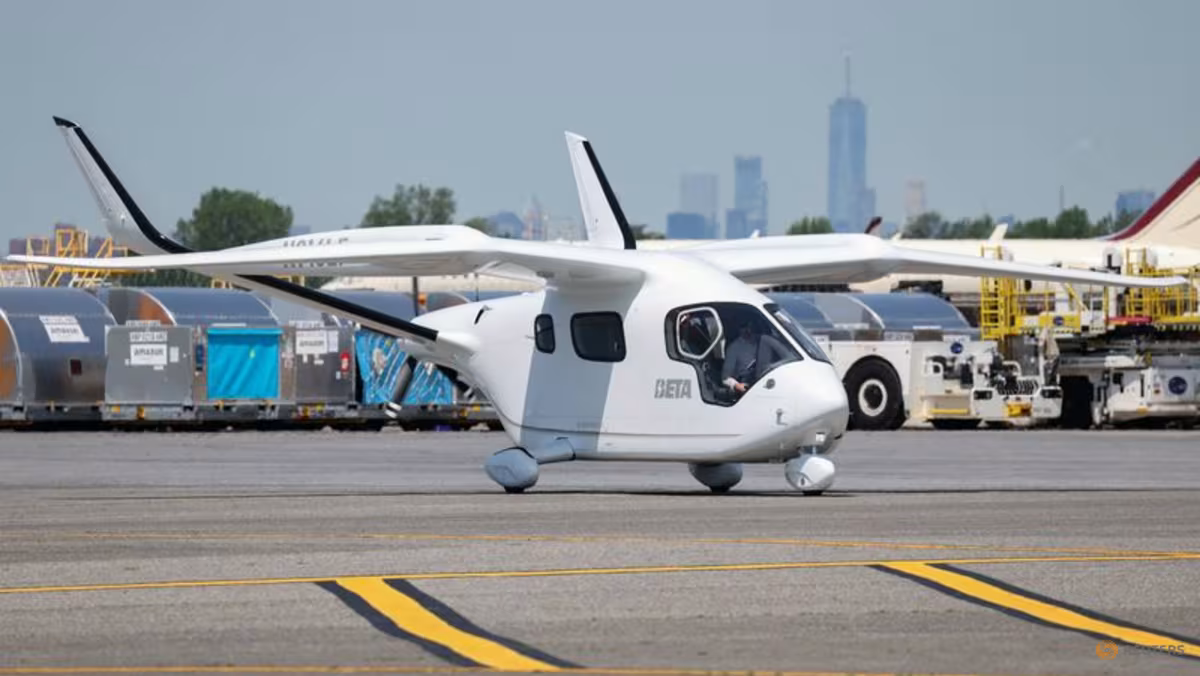
Canadian advanced aerospace company Horizon Aircraft has selected BETA Technologies to supply the advanced fly-by-wire (FBW) flight control computers for its full-scale Cavorite X7 hybrid-electric vertical take-off and landing (VTOL) aircraft, marking a significant milestone in the aircraft’s development, testing and certification programme.
The agreement will see Horizon integrate BETA’s flight control hardware and customised software into the Cavorite X7, a hybrid-electric aircraft designed to carry one pilot, up to six passengers and as much as 1,500 pounds of payload. The partnership comes as advanced air mobility manufacturers accelerate preparations for regulatory certification and commercial deployment, responding to growing demand for faster, lower-emission alternatives to conventional regional and urban air transport.
The collaboration brings together two innovators in the advanced air mobility (AAM) sector, with Horizon leveraging BETA’s certification-focused flight control platform as it advances the aircraft through development, flight testing and regulatory approval.
Related Post




Supporting Certification and Flight Testing
Flight control systems are among the most safety-critical technologies in modern aircraft, particularly for hybrid-electric and VTOL platforms, where they govern aircraft stability, handling, transition between vertical and forward flight, and overall operational safety. These systems are also among the primary components scrutinised by aviation regulators during certification.
According to Tom Brassington, Chief Technology Officer of Horizon Aircraft, the partnership with BETA represents a critical step in integrating the aircraft’s flight control architecture.
Speaking to Reuters, Brassington said Horizon’s piloted demonstrator aircraft is expected to begin its flight testing programme in 2027, with the new fly-by-wire system playing a central role in achieving certification milestones.
“Flight controls are at the heart of our aircraft, so selecting the right partner was a methodical process,” Brassington said.
“We were attracted to BETA because of its sophisticated VTOL-specific fly-by-wire platform, a shared engineering philosophy and its ability to support the rigorous long-term requirements of aircraft certification.”
Certification-Ready Technology
BETA Technologies’ fly-by-wire platform has been specifically developed for modern powered-lift aircraft and incorporates safety-critical software, system redundancy and a flexible architecture designed to satisfy the stringent certification requirements of the US Federal Aviation Administration (FAA).
The flight control computer has been engineered to support certification under FAA Part 21.17(b) powered-lift regulations, together with Part 23 and Part 25 standards. The system is also designed to comply with future certification requirements from Transport Canada and the European Union Aviation Safety Agency (EASA).
Kyle Clark, Founder and Chief Executive Officer of BETA Technologies, said the partnership reflects growing industry confidence in the company’s advanced aerospace technologies.
“At BETA, our ambition has always been to build the key technologies that move the aviation industry forward,” Clark said.
“Horizon Aircraft has a strong team capable of designing and flying the X7, and they chose our flight control computers because we built them to meet the most rigorous standards in the industry. They are compact, purpose-built for powered-lift aircraft and developed with the certification discipline required for Development Assurance Level A software and hardware.”
Shared Hardware, Lower Costs
A notable aspect of the agreement is Horizon’s decision to adopt the same flight control computer hardware currently used on BETA’s own aircraft fleet.
By sharing a common hardware platform, both companies expect to benefit from greater manufacturing scale, lower component costs and improved supply-chain efficiencies while maintaining the highest levels of system reliability.
BETA develops its flight control computers entirely in-house, alongside electric propulsion systems, batteries and other safety-critical aerospace components. The systems are engineered to Development Assurance Level A (DAL-A), the FAA’s highest software and hardware safety classification for mission-critical aircraft systems.
The platform is also designed to support future autonomous flight capabilities, enabling manufacturers to integrate mission management systems as advanced air mobility technologies continue to evolve.
Growing Industry Momentum
The agreement adds to a series of strategic partnerships announced by Horizon Aircraft as it advances the Cavorite X7 programme. Earlier collaborations include RAMPF for manufacturing the aircraft’s primary fuselage structure, UK engineering specialist Motion Applied for developing a bespoke motor drive inverter, and Pratt & Whitney Canada, whose turbine engine forms part of the aircraft’s hybrid-electric propulsion system.
Meanwhile, BETA Technologies continues to strengthen its position as one of the advanced air mobility sector’s leading technology suppliers. Earlier this year, the company was selected alongside Archer Aviation and Joby Aviation to participate in a US government pilot programme aimed at accelerating the deployment of electric air taxi operations.
Advancing Sustainable Aviation
The partnership highlights the rapid pace of innovation across the advanced air mobility industry, where aircraft manufacturers are increasingly partnering with specialist technology providers to accelerate certification, reduce development risks and bring next-generation aircraft to market more efficiently.
For Horizon Aircraft, integrating BETA’s proven fly-by-wire platform represents a major step towards commercialising the Cavorite X7, positioning the company to deliver a hybrid-electric aircraft capable of combining vertical take-off capability with the speed, range and operational flexibility of a conventional fixed-wing aircraft.
As regulatory frameworks mature and demand grows for sustainable regional aviation, partnerships centred on certified, safety-critical technologies are expected to play an increasingly important role in shaping the future of advanced air mobility.