
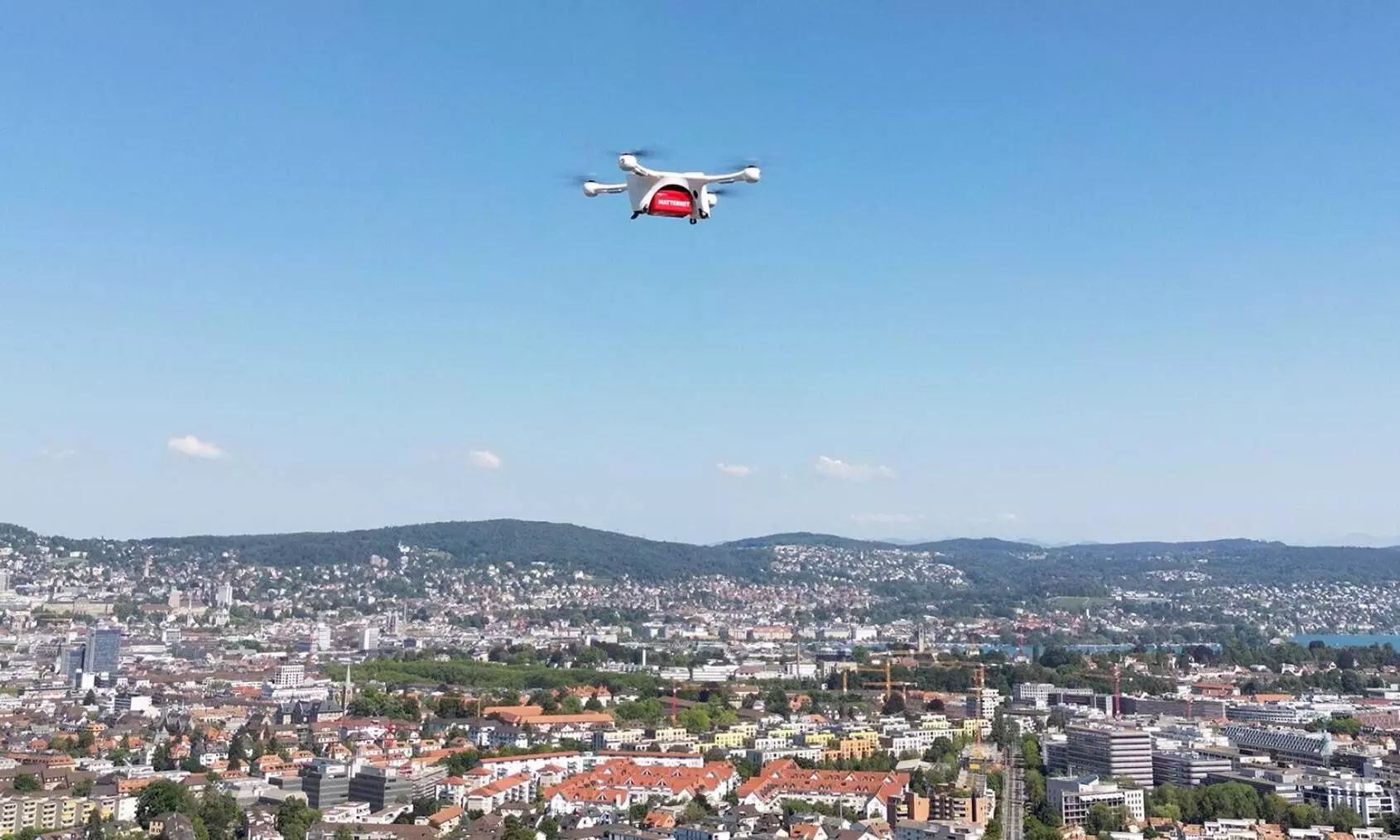
Matternet has begun trading on the OTCQB Venture Market under the ticker symbol MTTN, marking a new phase for the autonomous aerial logistics company as it prepares to expand commercial drone delivery across healthcare, retail, food and industrial applications.
The Mountain View, California-based company said its common stock qualified for OTCQB trading on September 21, making Matternet, according to the company, the first publicly traded pure-play drone delivery company. The commencement of trading was also disclosed in a Form 8-K filed with the US Securities and Exchange Commission.
Matternet said the public-market listing is expected to broaden its visibility among investors and improve access to capital markets as it prepares to introduce its next-generation drone delivery platform and scale commercial operations.




Building a commercial drone logistics network
The OTCQB debut follows a series of developments aimed at expanding Matternet’s commercial footprint.
The company recently announced drone delivery operations for the UK’s National Health Service, a strategic partnership with SoftBank Robotics America, and the expansion of its network of FAA Part 135 operating partners.
Its US operating network includes UPS Flight Forward, Ameriflight and Beeline UAS, according to Matternet. The company develops the Matternet M2 drone, Matternet Station and its software platform, and operates through a combination of direct customer relationships and logistics partnerships.
For the air cargo and logistics sector, the development represents a further move towards integrating autonomous aircraft into short-distance, time-critical delivery networks.
FAA-certified platform
Matternet highlights its regulatory position as a key differentiator in the commercial drone market. The company says it is the only drone delivery platform to have received standard Type Certification and Production Certification from the US Federal Aviation Administration.
The company has operated commercially for more than a decade, beginning with humanitarian drone delivery missions in 2014. It subsequently expanded into business-to-business healthcare deliveries in Europe and the US before launching consumer-oriented operations in Silicon Valley.
Matternet said its technology has now enabled more than 60,000 commercial flights across dense urban and suburban environments in the US and Europe.
Public listing follows private financing
The OTCQB commencement follows an oversubscribed private placement and comes as Matternet prepares to scale its next-generation aircraft and commercial network.
Founder and chief executive Andreas Raptopoulos said the company views 2026 as an important stage in the development of drone delivery in the United States.
“As we enter the era of physical AI, we believe 2026 is an inflection point for drone delivery in the United States,” Raptopoulos said.
He said public trading would allow investors to participate as Matternet develops what the company believes could become an important layer of transportation infrastructure.
Raptopoulos also pointed to the potential logistics advantages of autonomous aerial delivery for small, time-sensitive shipments, particularly where conventional road transport can involve relatively large vehicles, traffic delays and additional handling.
Healthcare remains a key application
Healthcare logistics remains one of Matternet’s established commercial applications. The company began business-to-business healthcare operations in Europe in 2017 and in the United States in 2019, according to its corporate history.
Drone delivery can be particularly suited to shipments that are small, time-sensitive and require predictable point-to-point transportation, including medical supplies and other healthcare materials.
Matternet’s expansion into retail, food and industrial logistics indicates that the company is seeking to extend the same operating model beyond healthcare and into a broader range of last-mile and on-demand applications.
Drone delivery moves closer to mainstream logistics
The OTCQB listing gives Matternet a public-market platform at a time when autonomous aerial logistics is moving from pilot programmes towards larger commercial networks.
The company’s strategy combines certified aircraft, dedicated ground infrastructure, autonomous flight technology and third-party Part 135 operators. If scaled successfully, such networks could provide an additional transportation option for relatively small shipments where speed and direct routing are more important than vehicle capacity.
For the cargo and logistics industry, the development highlights the growing convergence between aviation technology, automation and last-mile distribution, particularly in healthcare and other time-critical supply chains.
Matternet said its next phase will focus on launching its next-generation platform while expanding commercial operations across food, retail, healthcare and industrial logistics.