
Aktau International Airport is positioning itself for a larger role in Central Asia’s evolving cargo network, with plans to expand air freight capacity and strengthen links between air, rail, road and maritime transport across the Caspian region.
Located on Kazakhstan’s western coast, Aktau occupies a strategic position between Central Asia, the Caspian Sea and the wider Europe-Asia trade corridor. The airport’s development strategy reflects a broader shift in regional logistics, as cargo operators and infrastructure providers look for more flexible routes connecting Asian production centres with European markets.
The planned development includes a new cargo handling facility, aircraft maintenance capabilities and aviation training infrastructure. The wider objective is to establish Aktau as an integrated logistics and aviation centre rather than simply an airport serving local cargo demand.
Related Post



Expanding cargo infrastructure
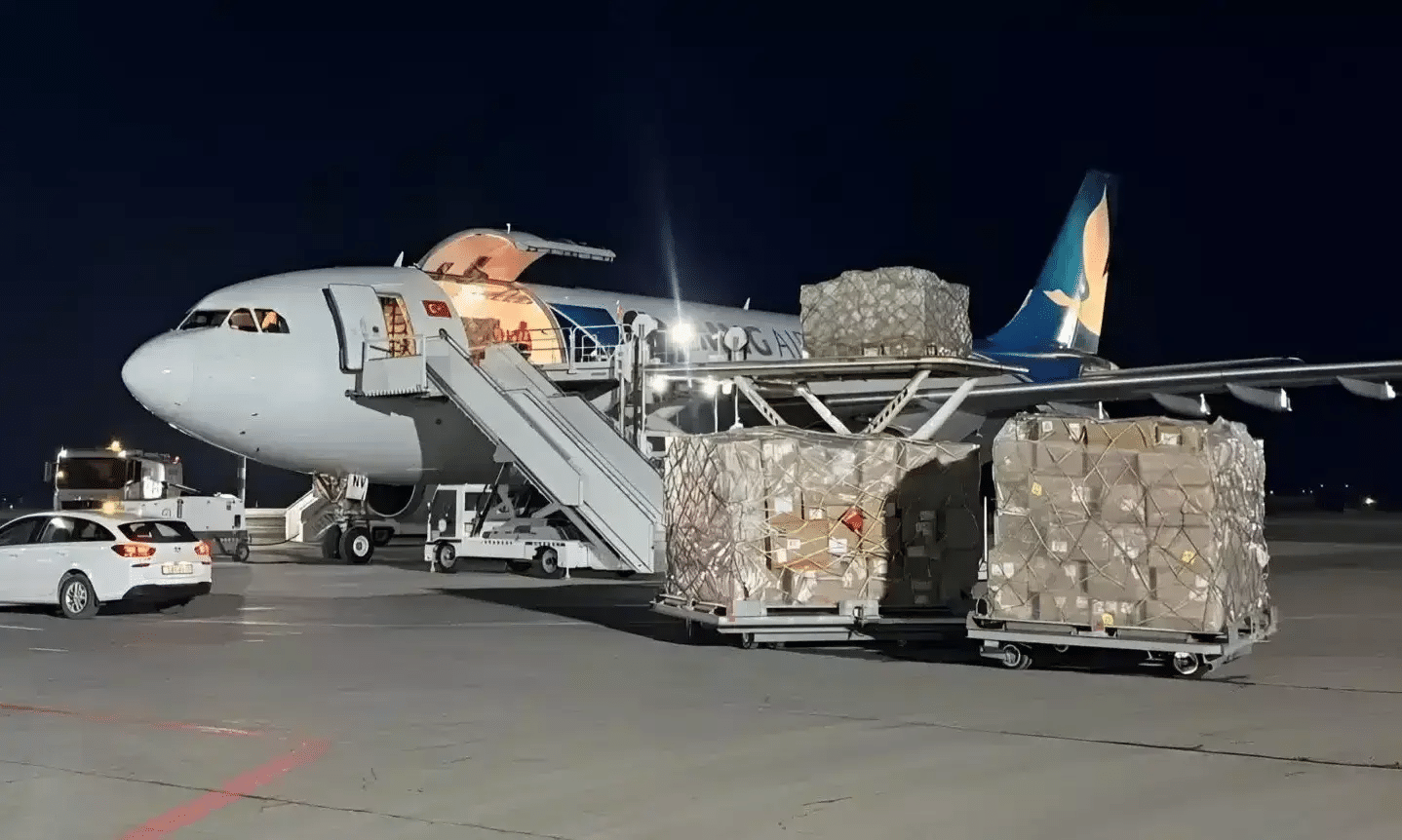
Aktau currently operates a cargo terminal of approximately 2,500 square metres, supported by customs and border-control facilities operating around the clock.
The airport is planning a substantially larger cargo facility as part of an investment programme estimated at around $600 million. The proposed development includes a 10,000-square-metre cargo handling facility, alongside an MRO centre, training centre and civil aviation academy.
Construction is planned to begin in early 2027, with completion targeted within approximately 18 months, according to information provided by airport management.
The longer-term objective is to build annual cargo-handling capability to approximately 80,000–100,000 tonnes.
Air, rail and sea connectivity
The central element of Aktau’s strategy is multimodal connectivity.
The airport’s location close to the Caspian Sea provides access to maritime routes, while Kazakhstan’s extensive rail network creates opportunities to move cargo across the country before transferring selected shipments to air transport.
A planned railway connection into the airport’s cargo area could further integrate the different modes. Under the proposed model, cargo arriving by rail from China could be transferred directly into the airport’s cargo facility and then moved by air to European destinations.
Such a model could be particularly relevant for e-commerce, pharmaceuticals, perishables and other time-sensitive cargo, where air freight can provide the final high-speed segment of a longer multimodal journey.
The strategy does not seek to replace sea or rail transport. Instead, it aims to use each mode according to the characteristics of the shipment, balancing cost, transit time and reliability.
Strategic position on the Caspian
Aktau’s location gives the airport a distinctive role within Kazakhstan’s transport infrastructure.
The Mangystau region is the country’s only region with access to the Caspian Sea, placing Aktau at an important intersection between maritime, land and aviation networks.
This creates opportunities for cargo moving through the Trans-Caspian International Transport Route, which connects China and Central Asia with markets in the Caucasus and Europe.
For certain shipments, cargo can move by rail or road towards Aktau before being transferred to air freight for the European leg. This could provide an alternative to moving an entire shipment by air from farther east in Central Asia.
The multimodal approach also provides additional flexibility when weather or operational conditions affect maritime movements across the Caspian.
Supporting specialised cargo
Aktau’s cargo market has traditionally been closely associated with the oil and energy industries in the Caspian region.
Industrial equipment, spare parts and other project cargo continue to generate demand for charter operations, although these movements are largely driven by individual industrial requirements rather than regular scheduled traffic.
The airport is also upgrading its airfield infrastructure to accommodate larger freighter aircraft, creating additional opportunities for oversized and heavy cargo.
At the same time, the future cargo strategy is expected to broaden beyond energy-related traffic, with pharmaceuticals, perishables, e-commerce and high-value shipments identified as potential growth segments.
Building an aviation ecosystem
The proposed investment extends beyond cargo handling.
The planned MRO centre would add aircraft maintenance capability, while the training centre and civil aviation academy would support the development of aviation skills in the region.
Kazakhstan’s aviation authorities have also identified Aktau as one of the country’s potential aviation hubs as part of a broader programme to strengthen airport infrastructure and logistics connectivity.
This approach could allow the airport to develop a wider aviation ecosystem involving cargo, aircraft maintenance, training and logistics services.
Competing for Europe-Asia cargo
Aktau is entering a competitive Central Asian cargo market in which airports including Almaty, Astana and Tashkent are also seeking to strengthen their roles as regional logistics hubs.
Aktau’s proposition is different because of its combination of Caspian Sea access, rail connectivity and air cargo infrastructure.
The airport’s strategy is therefore based less on competing solely for conventional air freight and more on creating a multimodal platform capable of combining different transportation modes.
For shippers, such flexibility could become increasingly important as supply chains evolve and companies seek alternatives that provide a balance between speed, cost and resilience.
Towards a larger regional cargo role
The proposed expansion represents a significant ambition for Aktau. Moving towards annual capacity of 80,000–100,000 tonnes would require more than additional warehouse space.
The airport will need to develop reliable airline connections, efficient cargo handling, strong trucking and rail links, customs processes and a broader ecosystem of freight forwarders, logistics companies and specialised cargo operators.
If these elements develop alongside the planned infrastructure, Aktau could strengthen its position as a gateway connecting Central Asia with Europe through a combination of air, rail, road and maritime transport.
For Kazakhstan, the development also supports a wider ambition to leverage its geographical position between Asia and Europe. For the international cargo industry, Aktau offers another potential gateway within an increasingly diversified Central Asian logistics landscape.