
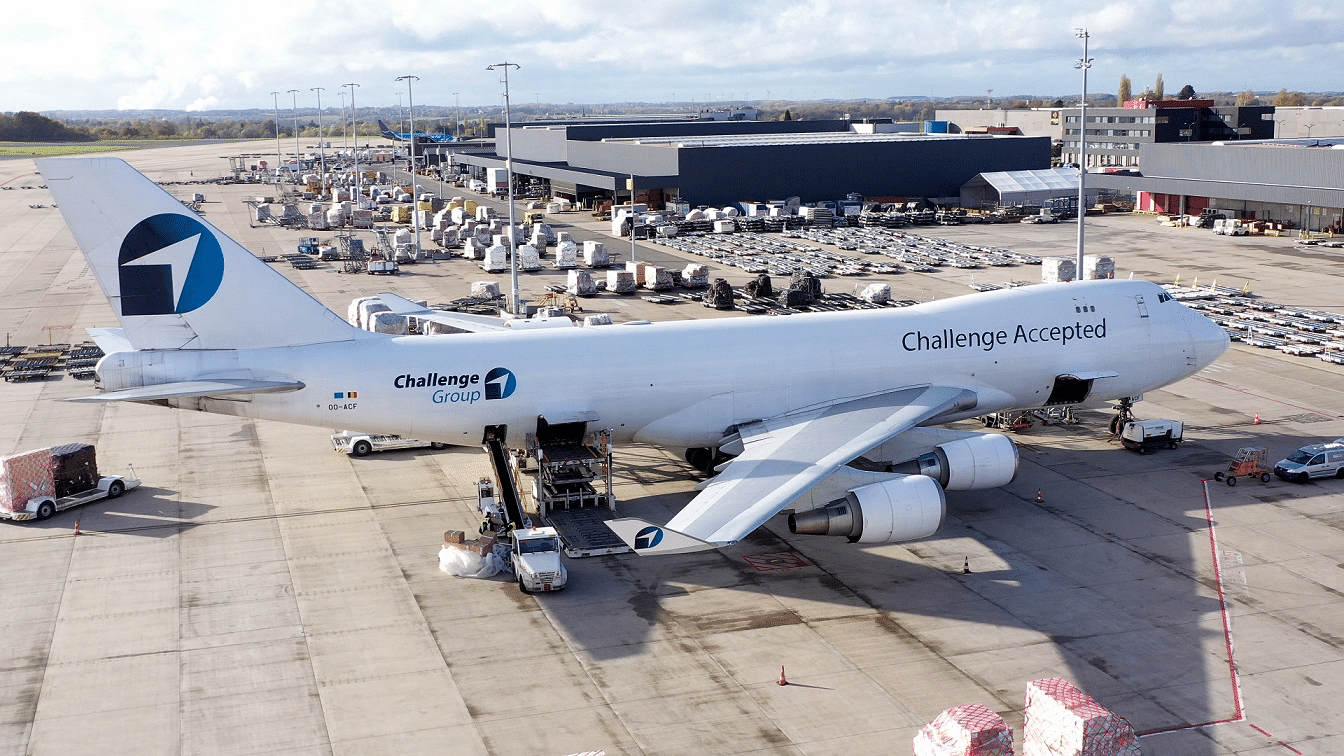
Challenge Group has temporarily suspended its freighter operations at Navi Mumbai International Airport (NMIA), citing operational conditions that do not yet provide the reliability and certainty required to support its cargo services. The decision adds pressure to an airport that has been absorbing freighter activity displaced from Mumbai’s Chhatrapati Shivaji Maharaj International Airport (CSMIA).
The freighter operator said its current service setup at Navi Mumbai does not allow it to maintain the level of operational reliability required for its customers and their supply chains. Challenge Group said it is evaluating alternative options to preserve connectivity between India and its international network and expects to announce a new service arrangement shortly.
The company stressed that its commitment to the Mumbai market remains unchanged and that it intends to resume operations at Navi Mumbai when the necessary conditions are in place.

Challenge Group’s decision comes as NMIA continues to build its cargo operation following the transfer of freighter services from CSMIA.
Reliability concerns emerge at new Mumbai gateway
Navi Mumbai International Airport opened to commercial traffic in December, but dedicated freighter operations began later, with the first freighter service commencing on 1 August 2026.
The new airport has been positioned as an alternative operating location while cargo infrastructure work is undertaken at CSMIA. The transfer of freighter activity was expected to continue while the work at Mumbai’s existing airport progressed.
The transition, however, has generated concerns among parts of the local cargo community over infrastructure, operational processes and accessibility.
For cargo operators, the challenge extends beyond aircraft movements. Reliable cargo operations depend on coordinated customs processes, warehouse and handling capacity, landside access, trucking connections and predictable turnaround procedures.
Challenge Group evaluates alternative connectivity
Challenge Group has not indicated that it is withdrawing from the Mumbai market. Instead, the carrier said it is assessing alternative options to maintain connectivity between India and its international network.
The group operates an integrated air-cargo logistics model covering airfreight, handling, logistics and maintenance. Its network currently includes Mumbai among its destinations, while the company maintains operations and commercial infrastructure across multiple global markets.
Challenge Group’s official network information lists Mumbai as BOM and identifies its local sales representation in the city, underlining the continuing importance of the Indian market to the group.
The operator’s decision also reflects the importance of operational consistency for complex cargo flows. Challenge Group describes its business as focused on integrated, end-to-end logistics solutions for complex air cargo and operates specialised products across areas including pharmaceuticals, fresh cargo, valuable cargo and oversized shipments.
Freighter network shifts reshape Mumbai cargo landscape
The move follows a broader relocation of freighter operations from CSMIA to NMIA as Mumbai’s established airport undertakes cargo-related infrastructure work.
Several international freighter operators have already moved or announced plans to operate from the new airport, making NMIA an increasingly important component of the Mumbai air cargo system.
The transition is strategically significant because Mumbai is one of India’s principal international cargo markets, serving a large industrial and commercial catchment extending beyond the city itself.
For carriers, however, the success of a new cargo gateway depends not only on available runway and terminal infrastructure but also on the efficiency of the complete cargo ecosystem.
Landside connectivity remains a key consideration
One of the issues surrounding the shift to Navi Mumbai has been its distance from Mumbai’s traditional commercial and industrial centres.
The new airport is located across the harbour from central Mumbai, meaning cargo operators and logistics companies must factor additional road transportation requirements into their operations.
For time-sensitive airfreight, the reliability of the landside journey can be as important as the aircraft schedule itself. Any uncertainty affecting trucking, warehouse transfers, customs processing or cargo release can have a direct impact on the overall supply-chain proposition.
This makes the development of an efficient cargo ecosystem at NMIA particularly important as more freighter operators establish operations there.
India remains strategically important to Challenge Group
Challenge Group has continued to expand its Indian network in recent years. In September 2024, the group announced two weekly freighter services to Delhi, taking its total Indian operation to five weekly flights, including three to Mumbai at the time. The company highlighted pharmaceuticals, automotive, textiles and other time-sensitive and specialised cargo as important markets for its Indian expansion.
The group’s current network continues to identify both Mumbai and other Indian gateways, reinforcing India’s role in its international cargo strategy.
Challenge Group’s latest move therefore appears to be an operational adjustment rather than a strategic retreat from Mumbai.
As Navi Mumbai develops its cargo infrastructure and operating processes, the airport’s ability to deliver predictable handling, connectivity and landside access will be critical to attracting and retaining international freighter capacity.