
DHL Group is marking 35 years of operations in Poland as it expands its logistics infrastructure, strengthens air cargo connectivity and invests in technology to support the country’s growing role in European trade.
Since entering the Polish market in 1991, DHL has expanded from an express delivery operation into a nationwide logistics network spanning five business divisions: DHL Express, DHL eCommerce, DHL Freight, DHL Global Forwarding and DHL Supply Chain.
The group now employs more than 10,000 people in Poland, making the country one of its ten largest markets worldwide by workforce. Its operations connect Polish businesses with customers in 220 countries and territories through international express, air, ocean and road freight, e-commerce and contract logistics services.
Related Post



The anniversary comes as Poland strengthens its position as a manufacturing, distribution and trade hub in Central and Eastern Europe. Companies are increasingly considering the country for nearshoring and offshoring, supported by its location on major European transport corridors and access to regional markets.
DHL’s latest investment plans reflect this trend. On 8 October, the group announced plans to invest more than €400 million across Central and Eastern Europe through 2030, with funding directed towards logistics infrastructure, transport networks, technology and workforce development.
Major logistics hub supports growth
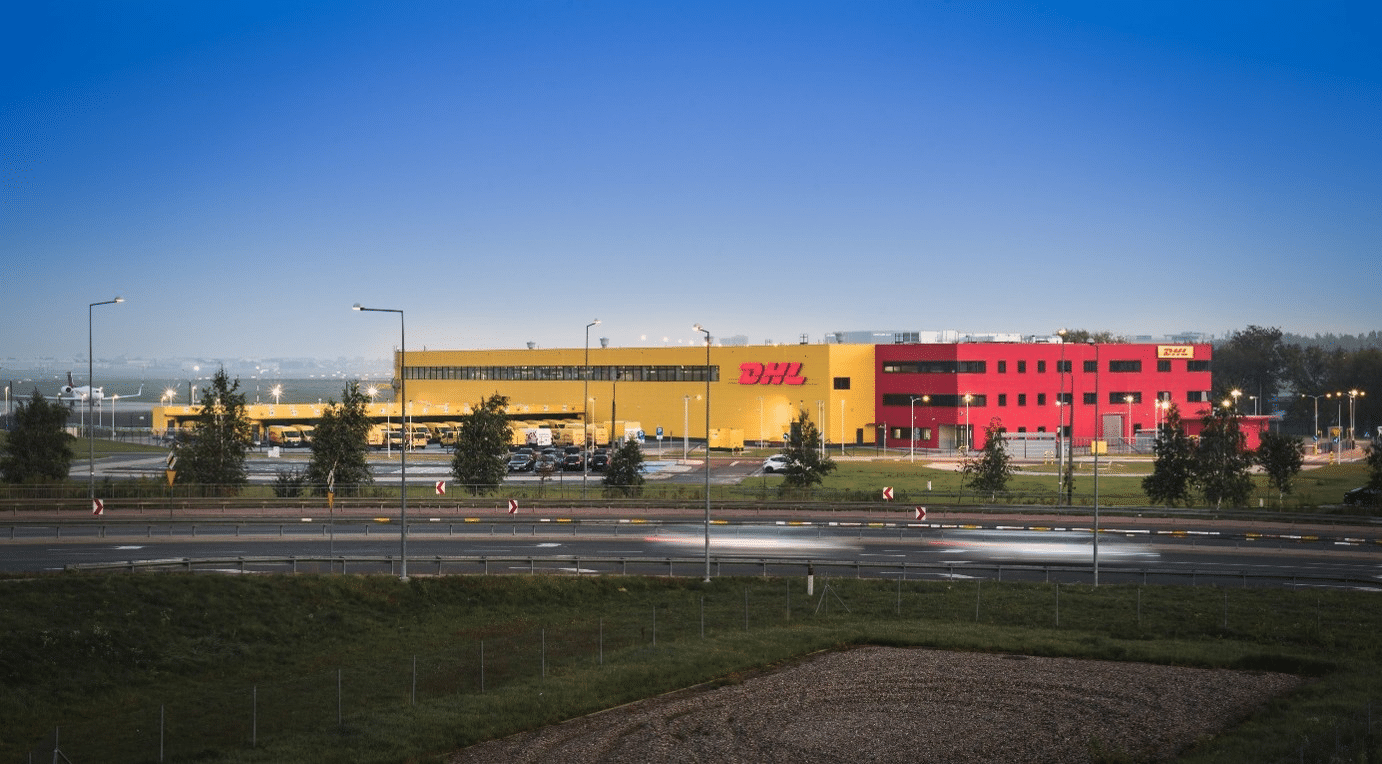
A key milestone in DHL’s Polish operations was the opening of its €180 million International Logistics Center in Robakowo, near Poznań, in 2024.
The facility can sort up to 45,000 parcels per hour and process as many as one million parcels per day during peak periods. Its location near major transport corridors supports the movement of shipments through Poland and into wider European distribution networks.
The investment reflects the growing importance of Poland in regional supply chains, particularly as manufacturers and retailers seek to diversify sourcing, shorten delivery routes and improve supply chain resilience.
DHL says its integrated logistics capabilities allow businesses to coordinate transport, warehousing, customs documentation and international distribution across multiple markets.
New air cargo facility planned at Katowice
Air freight is another focus of the group’s expansion plans. DHL Express is planning a new air cargo terminal at Katowice Airport, strengthening export connectivity for businesses in one of Poland’s major industrial regions.
The project forms part of DHL Group’s wider investment programme for Central and Eastern Europe and is intended to support growing demand for international express services.
Katowice’s industrial base and access to manufacturing centres make the airport an important location for time-sensitive shipments, including components and other goods moving through international supply chains.
The planned facility is expected to strengthen DHL Express’s regional operating capacity and improve connections between Polish exporters and international markets.
Digitalisation reshapes logistics operations
DHL is also investing in digital tools to improve shipment processing, visibility and operational efficiency.
Greater integration of supply chain data can help businesses complete documentation and customs requirements earlier in the transport process, reducing the risk of administrative delays and allowing shipments to move through handling and transit stages more efficiently.
The company is using technology to coordinate activities across its logistics network, from collection and processing to international transport and final delivery.
This approach is increasingly important for manufacturers and exporters handling time-sensitive shipments, where delays can affect production schedules and customer commitments.
Poland’s role in European trade expands
DHL’s 35-year presence in Poland has coincided with a substantial transformation of the country’s economy and its integration into European and global supply chains.
The group’s latest Globalization Tracker analysis found that Poland’s goods trade grew 2.1 times faster than global trade between 2016 and 2025. Looking ahead, DHL forecasts that Polish goods trade will grow 28% faster than world trade between 2026 and 2029.
The figures underline the opportunities for logistics providers as Poland attracts manufacturing investment and businesses adjust their production and distribution strategies.
With further investment planned in air cargo, parcel processing, freight networks and technology, DHL is positioning its Polish operations to support the next phase of the country’s export and logistics growth.