

The International Air Cargo Association (TIACA) reported record airline participation at its 2026 Air Cargo Forum in Miami, with representatives from more than 100 airlines joining over 3,000 industry professionals for discussions on artificial intelligence (AI), supply chain disruption, digital transformation and talent development.
Held from 26 to 29 October at the Miami Beach Convention Center, the event brought together airlines, airports, freight forwarders, ground handlers, technology providers and other stakeholders from across the global air cargo industry.
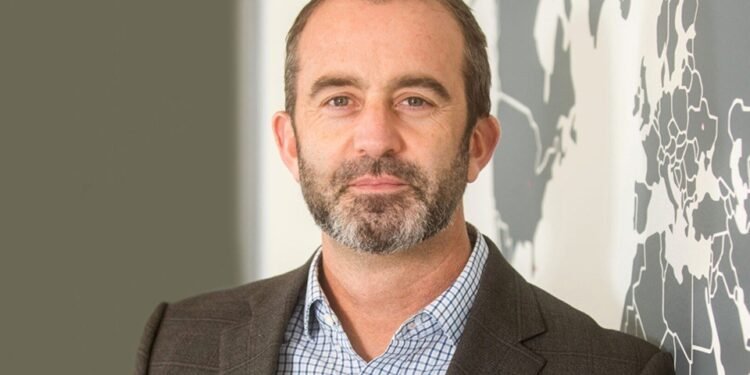
According to outgoing TIACA Director General Glyn Hughes, airline participation reached its highest level in the event’s history. Carriers were represented through exhibition stands, hospitality suites and visiting delegations, reflecting the growing importance of the forum as a platform for industry collaboration and commercial engagement.
Related Post




The 2026 edition also marked a leadership transition at TIACA, with Mammen Tharakan taking over as director general following Hughes’s tenure, which began in 2021. Tharakan brings extensive international aviation experience, including senior positions at Edmonton International Airport and King Salman International Airport in Riyadh.
Roos Bakker also attended her first Air Cargo Forum as TIACA chair, marking a new chapter in the association’s leadership.
AI and digital transformation take centre stage
Artificial intelligence and its expanding applications across air cargo operations emerged as major themes throughout the conference.
Hughes highlighted how the industry was moving beyond the traditional use of AI for pricing optimisation, increasingly exploring its potential in route planning, resource allocation and operational management.
He expressed confidence that further applications would emerge over the coming year as companies continued integrating AI into their business processes.
A significant technology development announced during the event was Miami International Airport’s (MIA) launch of its new Airport Cargo Community System (ACCS), developed in partnership with technology provider Kalé.
The digital platform provides a shared online environment for freight forwarders, airlines, cargo handlers and trucking companies, enabling more efficient information exchange and coordination across the airport’s cargo ecosystem.
The system is designed to improve truck scheduling, reduce waiting times and ease congestion while minimising reliance on manual communications. It also offers opportunities to establish digital connections with partner airports, supporting more efficient cargo movements across international trade routes.
People remain central to the industry’s digital future
While technology dominated many discussions, the importance of workforce development and employee engagement remained a recurring theme.
Tharakan observed that discussions about technological innovation were frequently accompanied by conversations about the people responsible for implementing and managing these developments.
He welcomed this emphasis, highlighting the importance of balancing technology adoption with workforce considerations as the air cargo industry prepares for its next phase of transformation.
The conference programme included an Executive Leaders Exchange addressing economic uncertainty, capacity constraints and digital transformation. Participants included CHAMP Cargosystems Chief Executive Manuel Galindo, alongside senior representatives from SolitAir Cargo Airline, Southwest Airlines and SATS.
Other industry participants included LATAM Cargo, Avianca Cargo, Cathay Cargo and Etihad Cargo. Airport and ground-handling perspectives were represented by Changi Airport Group, Brussels Airport, Swissport and Hactl.
Ocean freight disruption highlights air cargo opportunities
The impact of disruption in ocean shipping and its implications for air freight was another important topic at the forum.
A session moderated by Journal of Commerce Europe editor Greg Knowler examined the challenges facing shippers considering a shift from ocean to air transport.
The discussion explored the operational requirements involved in transferring cargo between transport modes, including repacking, documentation, capacity availability and the ability of logistics providers to respond to sudden changes in demand.
Representatives from DSV, the Miami-Dade Aviation Department and Kalé discussed whether airports, freight forwarders and digital platforms were adequately prepared to manage unexpected increases in shipments diverted from ocean freight.
Hughes noted that the reliability and speed offered by air cargo continued to hold significant value for customers, helping explain their willingness to pay a premium when supply chain conditions become uncertain.
Attracting the next generation of air cargo professionals
Workforce development and attracting younger talent also featured prominently on the agenda.
TIACA Chair Roos Bakker highlighted the importance of introducing students to the opportunities available across the air cargo industry. More than 100 students participated in the event’s dedicated student day, providing opportunities to meet industry professionals, explore career pathways and understand the sector’s contribution to global trade.
Bakker stressed that the industry needed to communicate its achievements and career opportunities more effectively to younger generations.
The conference format also allowed additional time for business engagement, with the main morning programme concluding around lunchtime to encourage delegates to explore the exhibition and participate in meetings.
Networking activities included the Etihad Cargo Golf Cup, a pickleball mixer and a Cargo Crawl reception, providing further opportunities for participants to strengthen industry relationships.
Leadership transition marks new chapter for TIACA
The Miami forum also provided an opportunity to recognise Hughes’s contribution to TIACA after more than five years as director general.
Tharakan acknowledged his predecessor’s leadership and service to the association, while Hughes expressed confidence in TIACA’s future under its new leadership and an engaged board.
The outgoing director general also highlighted the distinctive culture of the air cargo sector, where companies compete commercially while maintaining strong cooperation on shared industry challenges.
Describing the industry’s approach, Hughes said it remained “fiercely competitive but fiercely united”.
The 2026 Air Cargo Forum concluded with a strong emphasis on collaboration, technological innovation and talent development, reinforcing TIACA’s role as a platform for bringing together stakeholders to address the evolving priorities of global air cargo.