

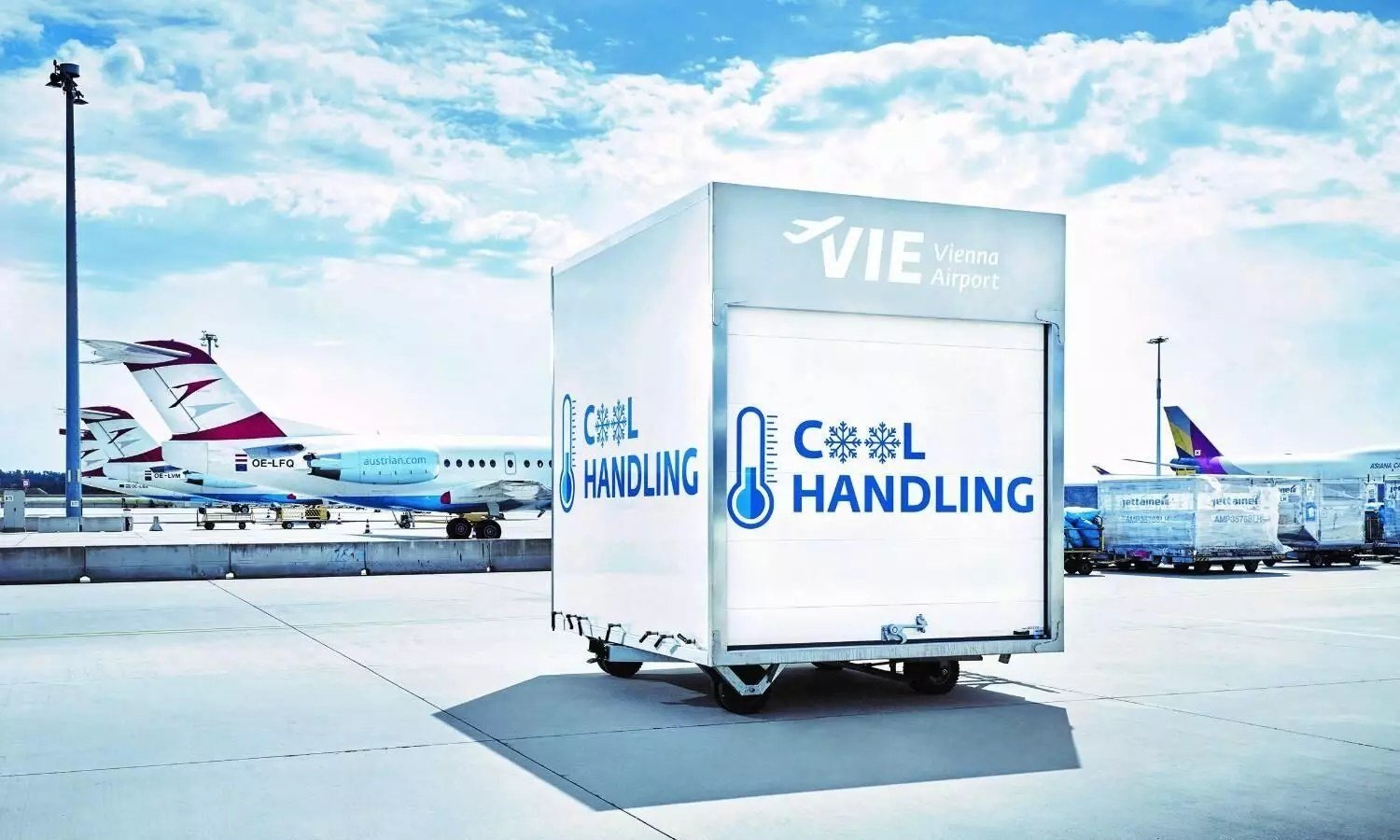
Predictive analytics is helping pharmaceutical logistics providers identify temperature risks before they threaten product integrity. However, fragmented data, inconsistent operational updates and gaps in coordination between supply chain partners continue to limit the technology’s potential.
The pharmaceutical air cargo sector is moving towards a more proactive approach to cold chain management, using artificial intelligence (AI), Internet of Things (IoT) sensors and predictive analytics to identify potential disruptions before they compromise sensitive shipments.
The shift comes as a growing proportion of pharmaceutical products transported by air requires temperature-controlled handling. Data from the International Air Transport Association (IATA) shows that the share of pharmaceutical air cargo classified as temperature-controlled rose from 59% in 2019 to 82% in 2024. It reached 90% during January-July 2025, according to IATA’s CDD Enhanced CargoIS data.
Related Post




Traditionally, temperature monitoring has relied on data loggers that record conditions during transit and establish whether a shipment has remained within its specified temperature range. While essential for quality assurance, this approach can reveal a problem only after it has occurred.
Predictive cold chain management seeks to close that gap. By combining historical shipment data with live temperature readings, weather information, airport dwell times, flight schedules and carrier performance, logistics teams can assess where a shipment may encounter difficulties and intervene before a temperature excursion occurs.
The transition, however, is not uniform across the industry. Some providers are introducing AI into their monitoring operations, while others are concentrating on improving data quality, risk assessment, packaging performance and coordination between supply chain partners.
From monitoring to early intervention
A Pharma.Aero white paper published in April 2026, IoT Devices and Platforms in Healthcare Logistics, identifies a growing shift towards predictive, data-driven decision-making in pharmaceutical supply chains. It notes that IoT technologies are increasingly used across healthcare logistics, but that much of the information generated is still used to understand what has happened rather than anticipate and prevent future problems.
Dorothee Becher-Schmacke, VP Global Air Logistics Healthcare at Kuehne+Nagel, said one of the biggest risks for healthcare customers was discovering a shipment problem too late.
“A temperature excursion or disruption that goes unnoticed can compromise product integrity and, in some cases, result in the loss of highly valuable or time-critical medicines,” she said.
Kuehne+Nagel uses active monitoring systems and IoT sensor technology to provide visibility across the shipment journey, including temperature conditions and other indicators of product integrity. Its dedicated 24/7 Healthcare HyperCare team monitors potential disruptions and coordinates with airlines, ground handlers and other partners to implement mitigation measures.
The company is also introducing AI into its Healthcare HyperCare operation. Becher-Schmacke said AI agents were being used to contact carriers, obtain temperature and battery readings, confirm storage conditions and check whether shipments had departed on their planned flights. The systems can also identify delays, shipment splits and rebookings.
By automating repetitive information-gathering tasks, the technology allows healthcare specialists to focus on more complex decisions and interventions.
Route selection is another area where predictive risk assessment can make a difference. For temperature-sensitive pharmaceuticals, the fastest connection is not necessarily the safest option. Logistics teams must also consider transit time, historical route performance, temperature deviation risks and carrier reliability.
When a connection is threatened or a delay develops, healthcare teams can work with airlines and ground handlers to arrange alternative temperature-controlled storage, dry-ice replenishment or rerouting.
Becher-Schmacke said predictive analytics could help identify recurring risks and inform future decisions on routes, carriers and packaging. However, she stressed that technology was intended to support rather than replace specialist judgement.
Identifying risks before a shipment moves
For pharmaceutical manufacturers, temperature risks begin well before cargo reaches an airport. Products move through manufacturing facilities, local warehouses, shipping docks, international transportation networks, destination warehouses and final distribution points. Each stage can introduce a potential point of failure.
The World Health Organization’s Technical Report Series 961, Annex 9, provides model guidance for the safe storage and distribution of time- and temperature-sensitive pharmaceutical products. Its recommendations underline the importance of maintaining appropriate conditions throughout the distribution chain.
Vipul Jain, Associate Vice President – Supply Chain Strategy and Analytics at Intas Pharmaceuticals, said temperature management needed to cover the entire distribution channel rather than focus on an individual stage.
The risks vary according to the mode of transportation, service provider capabilities, available infrastructure and the skills of personnel handling the shipment. An excursion could occur during local transportation to an airport, while cargo is awaiting international departure or during delivery from a destination warehouse to the final customer.
Jain said technology was helping companies track environmental conditions and product quality throughout the journey. Data loggers remained important, but the reliability of the information they generated and the speed with which alerts reached operational teams were equally significant.
Shipment planning must also account for potential delays and disruptions. Packaging, transportation partners and storage infrastructure need to be assessed to ensure that products remain within their required conditions if transit times change.
Historical shipment data can help identify suitable routes and vulnerable points in the supply chain. Information on geopolitical developments, route conditions and weather can further support planning, while comparisons between scheduled and actual performance can help refine future movements.
Product characteristics shape cold chain decisions
Predictive cold chain management cannot follow a single model for every pharmaceutical product. Medicines differ in their temperature requirements, tolerances and sensitivity to handling conditions. These characteristics influence the choice of packaging, route, monitoring equipment and contingency arrangements.
Khyati Desai, Senior Manager, Global Trade Compliance at Thermo Fisher Scientific, speaking in her individual capacity, said predictive analytics could help assess the likelihood of a temperature excursion based on the route, packaging and seasonal conditions.
Models trained on historical shipment data, weather patterns, airport dwell times and carrier performance can estimate risk before departure. The findings can help companies adjust packaging configurations, select more reliable routes or flights, and arrange standby handling at transit points.
Desai identified ambient temperatures at origin, transit and destination; ground dwell time; packaging type and validated thermal duration; lane and handler history; flight schedule reliability; and customs clearance time as important inputs in temperature risk assessment.
Ground dwell time is particularly important during tarmac handling and transfers. A shipment may leave its origin facility within specification but face increasing exposure if it remains at an airport longer than planned or is held during customs clearance.
Real-time monitoring can help teams respond to temperature trends before a shipment crosses its permitted limits. Depending on the circumstances, interventions could include re-icing, transferring cargo to cold storage or escalating customs clearance.
The range of products moving through pharmaceutical supply chains is also becoming more complex. In addition to conventional refrigerated shipments requiring 2–8°C and controlled room temperature conditions, logistics providers are handling more products requiring frozen, ultra-low and cryogenic temperatures, including certain cell and gene therapies and vaccines.
These shipments can require specialised packaging matched to the expected journey duration and seasonal conditions, together with more continuous monitoring. For some advanced therapies, handling windows are particularly tight and shipments may be patient-specific and time-critical. Chain-of-custody and chain-of-condition records can also play an important role in batch release decisions.
Preparing for disruption across air freight routes
The ability to predict temperature risks also depends on how accurately companies understand the conditions along individual shipment lanes.
Hanoz Tarapore, Country Supply Chain Head – ASEAN, Korea, ANZ, at Ortho Clinical Diagnostics, said assessing the possibility of a temperature excursion required an understanding of a product’s tolerances and its limits for temperature, shock, tilt and humidity.
For a new shipment lane, the company conducts a risk assessment covering carriers, aircraft types, airport facilities, cargo handling and ground transportation. Each stage is assessed to identify where temperature excursions, delays or physical handling incidents could occur.
Business continuity plan measures are then established to address the identified risks. Packaging is selected to provide sufficient additional cold chain validity to accommodate possible delays.
Tarapore said companies needed to understand the characteristics of each product, including the type and range of excursion it could withstand, before deciding on the most appropriate and cost-efficient response.
For particularly sensitive cargo or higher-risk routes, real-time monitoring can help teams take corrective action when an event occurs. The appropriate response depends on the product’s tolerance, the duration of exposure and the conditions under which it has been stored.
Scenario planning is therefore an important part of shipment preparation. Companies need to assess the likelihood of disruption at different stages and establish in advance what action can be taken if an incident occurs.
Fragmented data remains a major obstacle
Even where monitoring systems are available, information does not always move seamlessly between the organisations involved in a shipment.
Airlines, airports, ground handlers, freight forwarders and pharmaceutical manufacturers often operate separate systems. This can make it difficult to maintain a consistent view of cargo movements and conditions across the entire journey.
The Pharma.Aero IoT white paper identifies fragmented systems, limited interoperability, inconsistent connectivity and gaps in data standardisation among the barriers to wider digital adoption in healthcare logistics. Cybersecurity, compliance and digital skills are also highlighted as areas requiring attention.
Kuehne+Nagel said end-to-end visibility depended on timely data exchange between all parties. Its HealthChain network provides a quality framework with standardised GxP-compliant processes across more than 270 certified locations in over 60 countries, according to the company.
The provider also highlighted cooperation with airlines and ground handling partners as essential to maintaining standards throughout the shipment journey.
Intas said the involvement of multiple service providers had historically created gaps in traceability, as partners often operated with different infrastructure and digital capabilities. Jain said interconnected technology networks were improving the ability to track shipments across organisations.
At Ortho Clinical Diagnostics, Tarapore identified a specific gap between airlines and logistics service providers. While logistics providers receive milestone notifications during a shipment’s journey, airline systems may not always be updated promptly when cargo is delayed, offloaded or only partially loaded.
This can leave tracking systems showing a shipment as on schedule even when the cargo is no longer expected to arrive at the planned time. Delayed operational updates can undermine predictive systems because teams may not receive accurate information early enough to arrange an intervention.
Desai said manufacturers, forwarders and airlines needed common data standards and shared milestone definitions, including handover times and acceptance temperatures. Lane-level performance and exception data also needed to be shared under clear data-governance arrangements.
Application programming interfaces (APIs) and neutral digital platforms could help ensure monitoring information reaches all parties responsible for taking action. Joint procedures should also define who intervenes, at what threshold and within what timeframe.
“Prediction only works when the data is timely and the right party is empowered to act,” Desai said.
The obstacles extend beyond technology. Desai identified fragmented data, reluctance to share operational information, legacy systems, the cost of sensors and validated packaging, and a shortage of professionals with expertise in both pharmaceutical quality requirements and data science.
A second Pharma.Aero industry opinion paper, published on 9 September 2026, examines the move from AI capability to accountability in pharmaceutical and MedTech supply chains. It highlights the importance of data and systems, organisational readiness, governance, compliance and coordination when moving AI initiatives from pilot projects to wider operational use.
In pharmaceutical logistics, where decisions can affect product integrity, regulatory compliance and patient safety, predictive systems require reliable information and clearly defined accountability.
Measuring the impact of predictive technology
As investment in digital cold chain solutions increases, the industry will need to demonstrate whether these systems are delivering measurable improvements.
The availability of real-time data or automated alerts does not, by itself, establish that a system is reducing temperature excursions or preventing product losses.
Kuehne+Nagel said digital solutions were providing earlier visibility of risks and helping specialists respond more consistently. IoT sensors also provide information on shipment location and conditions such as temperature, humidity and shock. The company said this allows its teams to spend less time gathering information and more time managing exceptions.
However, it did not provide specific figures on reductions in temperature excursions or product losses.
Desai said predictive technology should be assessed through indicators such as temperature excursions per thousand shipments, product loss and write-off values, the proportion of at-risk shipments identified and successfully managed, false alert rates, claims and investigation times, and on-time-in-full performance.
Results should be compared with an established baseline and, where possible, reviewed independently to distinguish measurable improvements from technology providers’ claims.
For Intas, historical data and comparisons between planned and actual shipment performance can help refine future decisions on routes and service partners. Jain said technology could help identify routes that were safer and faster for particular products while improving planning based on previous deviations.
The move from monitoring to prediction will depend on more than the adoption of AI. It will require reliable data, qualified packaging and infrastructure, common standards and stronger coordination between airlines, ground handlers, freight forwarders and pharmaceutical companies.
Ultimately, the value of predictive cold chain management will be measured not by the volume of data collected or the sophistication of the algorithms deployed, but by whether the technology helps prevent disruptions from becoming threats to product integrity.