
Semiconductor, AI Server and E-Commerce Shipments Drive Tight Capacity Across Key Asian Export Hubs While Jet Fuel Constraints Limit Freighter Operations
Air cargo markets across Asia continue to face significant capacity constraints despite relatively stable overall demand levels, as booming shipments of semiconductors, artificial intelligence (AI) servers and high-tech products compete for limited space. According to logistics provider Dimerco Express Group, tightening aircraft capacity, rising freight rates and operational adjustments driven by elevated jet fuel costs are creating new challenges for shippers and freight forwarders across the region. At the same time, evolving US-China trade dynamics are reshaping cargo flows, while airport congestion in Southeast Asia adds further pressure to already strained supply chains.
The Asia-Pacific air cargo market is entering another period of capacity tightening as robust demand from the technology sector collides with operational constraints linked to rising fuel costs and network adjustments by airlines.
Related Post


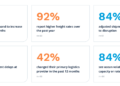
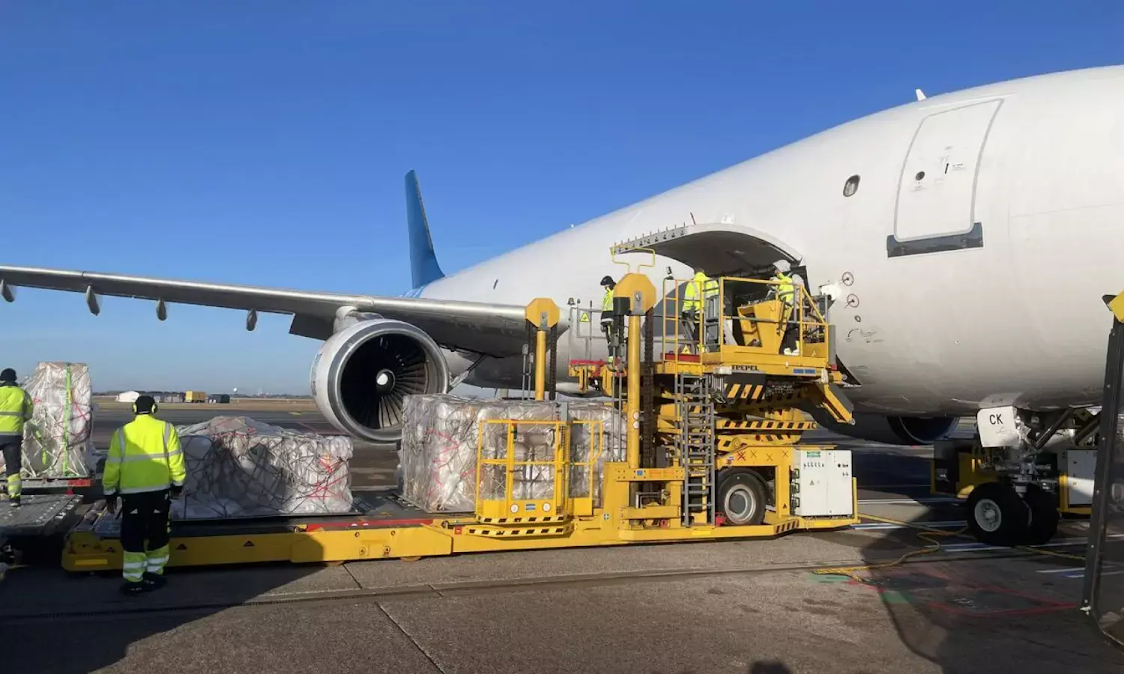
According to Dimerco Express Group’s latest June market outlook, several major Asian export hubs are experiencing increasing pressure on available airfreight capacity, particularly on routes connecting Asia with North America and Europe. While overall market demand remains broadly in line with last year’s levels, the nature of cargo moving through the region has shifted significantly, with high-value technology products dominating available capacity.
AI and Semiconductor Boom Continues to Drive Air Cargo Demand
Taiwan and South Korea remain among the most affected markets, where freight capacity to Europe, North America and intra-Asia destinations continues to tighten.
Dimerco reports that demand is being fueled primarily by exports of semiconductors, AI servers, advanced computing equipment, electronics components and cross-border e-commerce shipments. These sectors increasingly rely on air freight to meet accelerated production cycles and global distribution requirements.
The continued expansion of artificial intelligence infrastructure worldwide has emerged as a major driver of air cargo demand. Manufacturers and technology companies are rushing to move high-performance computing equipment, processors and data centre components to key markets, creating intense competition for available air cargo space.
As a result, freight rates from several Asian origins have continued to rise, particularly on major transpacific and Europe-bound routes.
Jet Fuel Costs Restrict Effective Capacity
While demand remains strong, Dimerco notes that rising jet fuel costs are having a direct impact on airline operations and available cargo capacity.
To manage fuel consumption and operational efficiency, some carriers have reportedly reduced payload allowances on existing services, while others have replaced larger Boeing 747 freighters with more fuel-efficient Boeing 777 freighters. Although the newer aircraft offer significant fuel savings, they generally provide lower cargo capacity compared with the larger 747 fleet.
This operational shift is effectively reducing available cargo space across the market.
According to Dimerco, the tightening capacity environment is not solely demand-driven. Instead, a growing proportion of the pressure stems from airline efforts to manage operating costs in response to elevated fuel prices and broader market uncertainty.
Industry analysts note that fuel remains one of the largest cost components for air cargo operators, making fleet optimisation and payload management critical strategic decisions amid volatile energy markets.
US-China Trade Developments Reshape Cargo Flows
Recent progress in trade discussions between the United States and China is also influencing cargo routing patterns across Asia.
Dimerco reports that a number of high-tech exporters have resumed direct airfreight services between China and the United States, reducing the need for transshipment through regional hubs such as Singapore, Thailand and Taiwan.
Earlier trade restrictions and policy uncertainties had prompted many shippers to reroute cargo through alternative Southeast Asian gateways. However, as trade conditions stabilise, some of these volumes are returning to direct China-US services.
Despite this shift, capacity pressures remain acute.
Kathy Liu, Vice President of Global Sales and Marketing at Dimerco Express Group, noted that while direct China-US cargo flows are gradually recovering, strong demand from AI and semiconductor sectors continues to absorb available capacity throughout Asia.
The development highlights how geopolitical decisions and trade policies continue to influence freight flows, network planning and capacity allocation across global supply chains.
Southeast Asia Faces Growing Congestion Challenges
Beyond capacity constraints, operational congestion at major Southeast Asian airports is creating additional challenges for logistics providers and exporters.
Thailand has emerged as one of the most affected markets, with ongoing bottlenecks reported at Bangkok’s Suvarnabhumi Airport. Dimerco indicates that cargo handling facilities operated by Thai Airways and Bangkok Flight Services are experiencing significant delays, impacting cargo processing, customs clearance and export operations.
In some instances, cargo lead times from airport arrival to final collection are reportedly exceeding seven days.
The congestion is prompting an increasing number of shippers to seek alternative transportation solutions, particularly cross-border trucking services from China and neighbouring Southeast Asian countries into Thailand.
Industry experts suggest that multimodal solutions combining trucking and air freight are becoming increasingly important as companies seek to avoid delays and maintain supply chain reliability.
Capacity Tightening Extends Across Malaysia
The capacity crunch is not limited to Thailand.
Dimerco reports that both Kuala Lumpur International Airport and Penang International Airport are experiencing tight cargo space availability on routes to Europe and other Asian markets. Meanwhile, backlogs on shipments destined for the United States continue to affect exporters operating from Malaysia.
The situation reflects broader regional challenges as airports, airlines and logistics providers attempt to manage growing volumes of high-value technology cargo while navigating infrastructure limitations and operational disruptions.
High-Tech Imports Fuel US Air Cargo Growth
The sustained demand for Asian technology exports is also reflected in import data from the United States.
According to market intelligence provider Aevean, high-tech air cargo imports into the US surged during the first quarter of 2026. Total high-tech volumes increased by approximately 57 percent year-on-year, equivalent to an additional 157,000 tonnes of cargo.
Taiwan and Southeast Asian markets were among the primary contributors to this growth, underlining the strategic importance of the region in supporting global technology supply chains.
The continued expansion of semiconductor manufacturing, AI infrastructure development and electronics production is expected to remain a key driver of air cargo demand throughout 2026.
Industry Outlook
The current market environment highlights the growing complexity facing air cargo stakeholders across Asia.
While demand fundamentals remain healthy, airlines, freight forwarders and shippers must navigate a combination of capacity shortages, fuel-related operational constraints, evolving trade policies and airport congestion. The convergence of these factors is likely to keep freight rates elevated and capacity tight across key trade lanes in the months ahead.
For freight forwarders and supply chain managers, securing capacity early, diversifying routing options and leveraging multimodal transport solutions may become increasingly critical strategies as the industry adapts to a rapidly evolving logistics landscape driven by technology-led demand growth.