
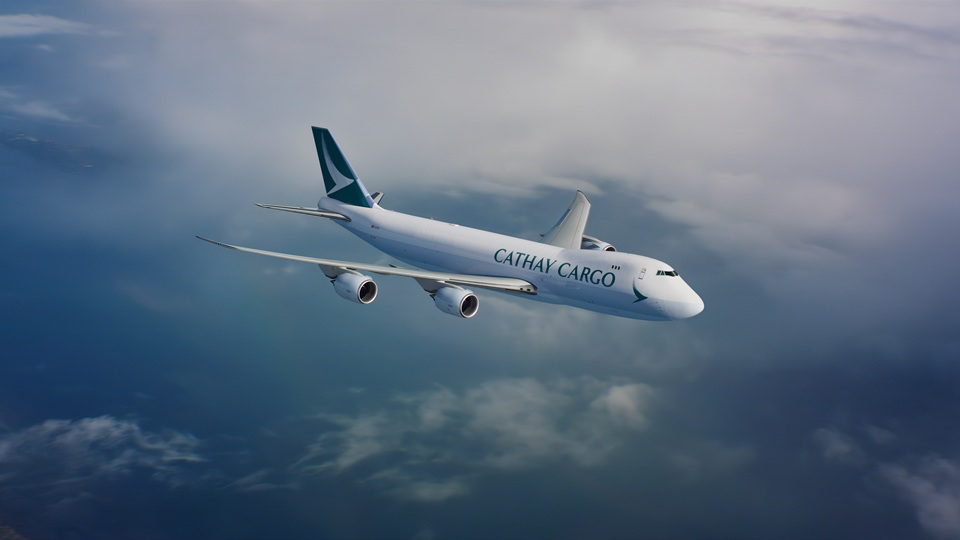
Cathay Cargo has postponed the planned restart of its freighter operations to the Middle East, becoming the latest carrier to delay the resumption of services following renewed escalation in the US-Iran conflict.
The Hong Kong-based airline announced that the planned relaunch of its freighter service to Riyadh would no longer take place on 1 August 2026 as originally scheduled. The carrier said it would continue to monitor developments in the region before determining a revised restart date.
“In view of the latest developments in the Middle East, Cathay has taken the decision to postpone the resumption of its passenger and freighter services to the region,” the airline said in a statement.
Related Post

“The resumption of Cathay Cargo’s freighter service to Riyadh will be postponed from the originally planned 1 August. Cathay Cargo will review the timing for resuming the service.”
The decision follows Cathay Cargo’s announcement earlier in July that it intended to restore freighter operations to the Middle East after suspending services in March following the outbreak of conflict involving the United States and Iran.
Cargolux Also Delays Middle East Freighter Restart
Cathay Cargo is not the only carrier to revise its plans for the region.
European cargo airline Cargolux has also placed plans to restart freighter services to Dubai World Central (DWC) on hold until further notice.
Cargolux had suspended several Middle East operations in early March following the initial escalation of hostilities. While flights to Muscat have continued, services to Kuwait, Dammam, Bahrain, Riyadh and Doha remain suspended.
The latest decisions highlight the continued uncertainty facing airlines operating in the region, where security considerations and airspace conditions remain key factors in network planning.
Conflict Escalation Impacts Aviation Planning
The renewed disruption follows the collapse of a ceasefire between the US and Iran on 8 July 2026, after which tensions escalated with reports of attacks involving commercial vessels in the Strait of Hormuz and subsequent exchanges of airstrikes and missile activity.
For cargo airlines, the situation has created challenges in restoring previously suspended routes while ensuring safe and reliable operations.
Regional Cargo Capacity Continues to Recover
Despite the renewed security concerns, air cargo capacity into and out of the Middle East has continued to show signs of recovery during July.
According to capacity data from aviation consultancy Rotate, cargo capacity from the Middle East to Europe during the first four days of the latest reporting week was 10% higher than during the comparable period at the end of June.
Capacity from Asia to the Middle East also increased by 5% when comparing the same periods.
The data suggests that while airlines remain cautious about restarting dedicated freighter services, overall market capacity is gradually improving as carriers adjust schedules and manage operational risks.
Outlook Remains Dependent on Regional Stability
The timing of further service resumptions by Cathay Cargo, Cargolux and other international carriers will depend on security developments and the ability of airlines to operate safely within the region.
With the Middle East remaining an important transit corridor connecting Asia, Europe and Africa, cargo operators continue to balance market demand with operational resilience and risk management.