
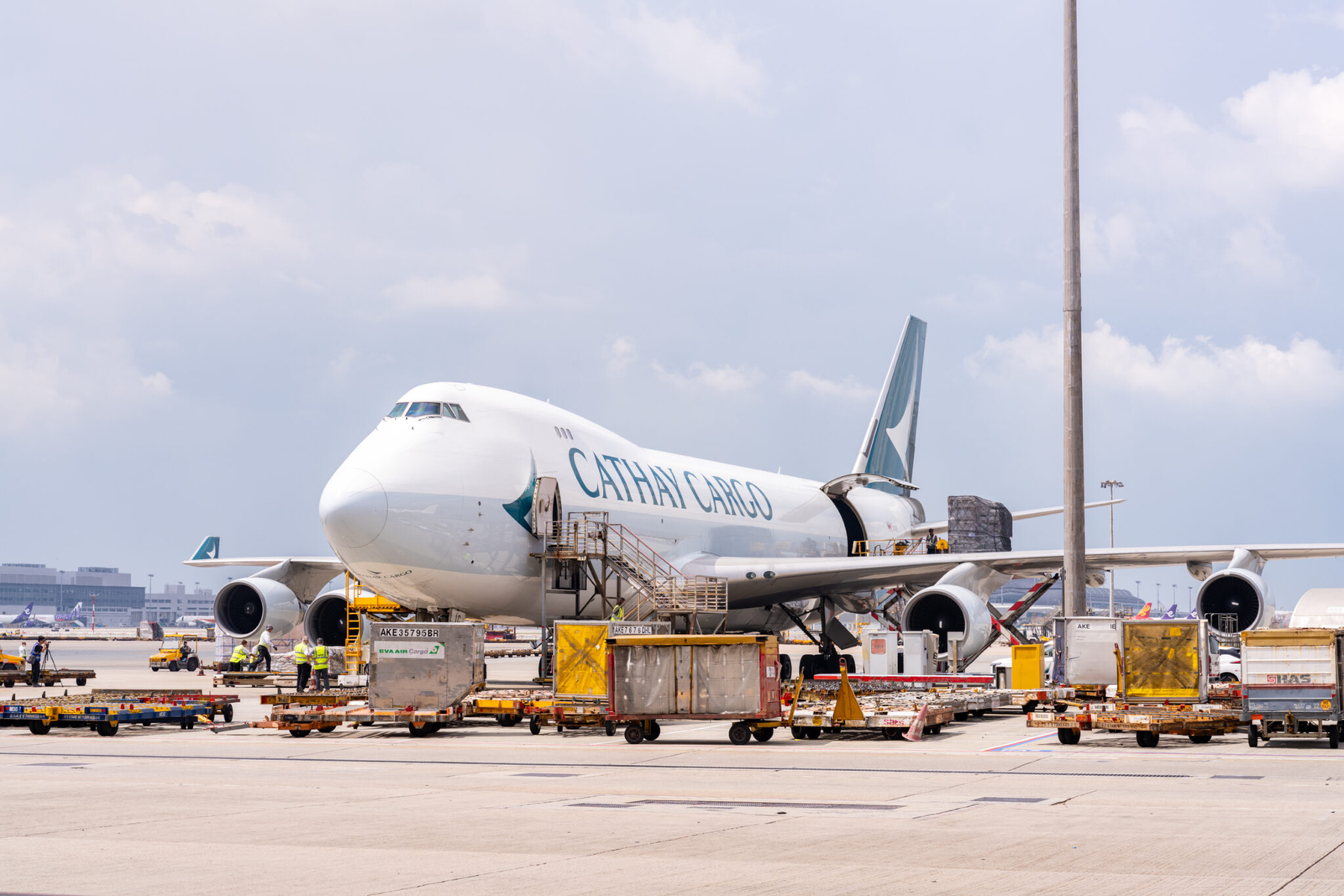
Cathay Cargo handled 148,638 tonnes of freight in July, up 6.1% year on year, as strong semiconductor flows and rising lithium battery shipments helped sustain demand across its network.
Cathay Cargo continued to build momentum in July, with cargo tonnage increasing by more than 6% from a year earlier despite virtually unchanged available capacity.
The cargo division of Cathay Pacific carried 148,638 tonnes during the month, compared with July 2025, while Available Freight Tonne Kilometres (AFTKs) fell marginally by 0.1%. Revenue Freight Tonne Kilometres increased 1.5%, while the cargo load factor improved by 0.9 percentage points to 59.2%.
Related Post

The July performance extended a strong first seven months of the year. Cathay Cargo transported more than 1.017 million tonnes between January and July, an 8.1% increase compared with the same period in 2025. AFTKs during the period increased 3.3%, while RFTKs rose 4.4%.
Technology cargo remains a key growth driver
Cathay said demand remained resilient across its network, with particularly strong growth from Northeast Asia and Southeast Asia.
The airline’s specialist cargo products also benefited from the changing composition of airfreight demand. Cathay Expert, its service for high-value and time-sensitive shipments, continued to benefit from semiconductor flows within Asia, while Cathay Dangerous Goods recorded stronger demand linked to lithium battery shipments originating from Northeast Asia and the Greater Bay Area.
The development reflects the continued importance of technology-related cargo to the airfreight market. Semiconductor supply chains, advanced electronics and other high-value technology products remain heavily dependent on reliable and time-sensitive air connectivity, while the rapid growth of battery-powered technologies is creating additional demand for specialised dangerous-goods handling.
Cathay’s comments suggest that this demand is likely to remain an important feature of the market through the second half of the year.
“Looking ahead, while we expect the summer holiday period will affect demand on certain routes, we anticipate that demand for technology shipments will remain robust,” said Lavinia Lau, Cathay Chief Customer and Commercial Officer.
More freighter capacity planned
Cathay is responding to the continued demand by increasing cargo capacity ahead of the traditional peak season.
The airline plans to deploy additional freighter capacity to the Americas from August, while Air Hong Kong is expected to provide additional freighter capacity on selected regional routes later in the year.
The additional capacity comes as Cathay balances strong cargo demand against a relatively constrained supply environment. In July, freighter flight sectors were down 2.7% year on year, while available freight capacity was broadly unchanged. Despite that, cargo carried increased by 6.1%, indicating stronger utilisation of the available network.
Cathay’s decision to add capacity to the Americas also underlines the importance of transpacific trade flows to its cargo strategy, while additional regional capacity from Air Hong Kong is expected to support intra-Asia movements.
Stronger cargo performance in 2026
The July results build on a positive first half for Cathay Cargo, which has benefited from demand associated with data centres, artificial intelligence and other technology-related supply chains.
The latest figures indicate that the momentum has continued into the third quarter, with specialised cargo products adding further support to overall volumes.
For the broader air cargo market, the performance highlights the continuing influence of Asia’s electronics and technology manufacturing base. Semiconductor shipments are particularly sensitive to transit times and supply-chain disruption, making airfreight a critical component of regional and intercontinental distribution.
Lithium batteries are also becoming an increasingly important specialised cargo category, although their transport requires strict adherence to dangerous-goods regulations and specialised handling procedures. Cathay Cargo and its cargo terminal hold IATA CEIV Lithium Batteries certification, supporting the carrier’s capability in this segment.
Capacity strategy ahead of peak season
Cathay enters the second half of 2026 with cargo tonnage up more than 8% year to date and plans to add freighter capacity as demand develops.
The challenge will be to match additional capacity with evolving trade flows while maintaining yields and operational reliability. Cathay’s July figures suggest that, so far, demand has continued to outpace the modest changes in available capacity.
With semiconductor, electronics and battery-related shipments providing structural support, technology cargo is likely to remain an important component of Cathay Cargo’s growth strategy as the airline moves towards the second half of the year and the traditional airfreight peak season.