
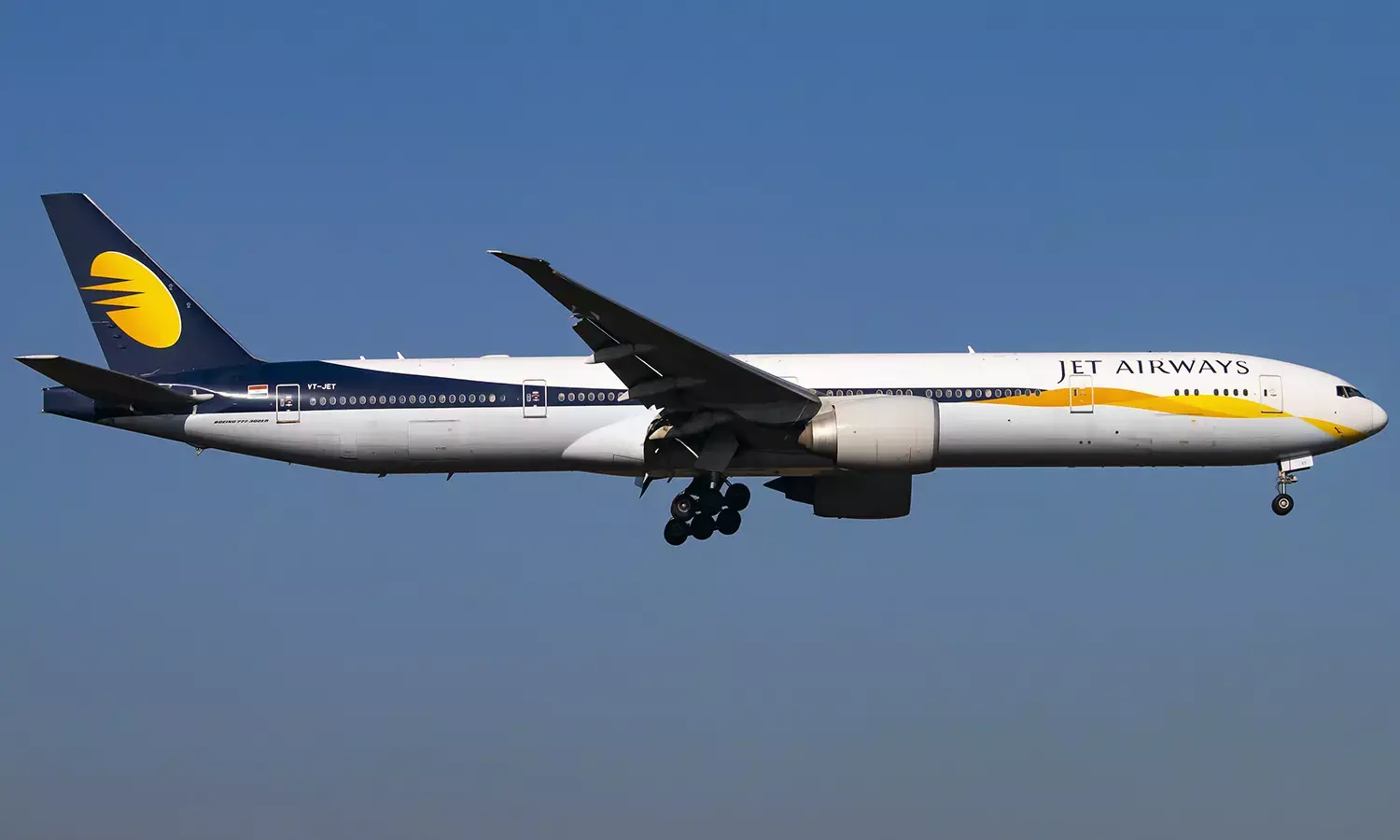
Challenge Group has expanded its long-haul cargo transformation strategy with the acquisition of five former Jet Airways Boeing 777-300ER aircraft, marking one of the most significant widebody passenger-to-freighter (P2F) redeployment programmes currently underway in the global air cargo market.
Through its Malta-based subsidiary Ace Aviation, the European cargo operator has invested more than $107 million to secure the long-grounded widebody fleet, which has been parked since Jet Airways suspended operations in April 2019. The aircraft, each approximately 19 years old, are being repositioned for conversion into dedicated freighters under the Boeing 777-300ERSF programme developed by Israel Aerospace Industries (IAI).
Final tranche acquired via Indian liquidation auction
The latest transaction includes the acquisition of two Boeing 777-300ER aircraft parked at Delhi’s Indira Gandhi International Airport. The pair was purchased for approximately $61.4 million through an e-auction conducted on the BAANKNET platform, managed by Jet Airways’ liquidator in coordination with the Stakeholders’ Consultation Committee.
The sale was executed under Regulation 32 of India’s Insolvency and Bankruptcy Board liquidation framework, with the aircraft sold complete with engines included. The winning bids significantly exceeded the combined reserve price of $38 million, underscoring continued international interest in widebody conversion assets despite their extended storage periods.
The two aircraft acquired in this tranche include MSN 35157 (VT-JET), purchased for around $33 million, and MSN 35160 (VT-JEU), acquired for approximately $27 million.
The remaining three aircraft in the portfolio were previously secured by Challenge Group for roughly $46 million through earlier phases of the liquidation process, following approvals under India’s insolvency proceedings.
From Jet Airways legacy to global cargo redeployment
Jet Airways, once India’s largest private carrier, ceased operations in April 2019 amid financial distress. After multiple restructuring attempts failed, the airline was formally ordered into liquidation by India’s Supreme Court in November 2024, concluding a prolonged insolvency process.
The aircraft now acquired by Challenge Group formed part of that estate, with the latest sale representing one of the final major disposals of the carrier’s widebody assets.
Strategic focus on 777 freighter conversion programme
All five aircraft will be inducted into IAI’s Boeing 777-300ERSF conversion programme, a high-capacity freighter modification initiative designed to transform retired passenger 777-300ER aircraft into aircraft capable of carrying close to 100 tonnes of cargo.
The programme, also known as “The Big Twin,” was launched in 2019 and has faced certification and entry-into-service delays, though industry demand has continued to strengthen amid constrained availability in the large widebody freighter segment.
Challenge Group formally announced its participation in the conversion programme in 2025, aligning the Jet Airways acquisitions with pre-secured conversion slots for 2025 and 2026. The aircraft will undergo full passenger-to-freighter structural modification, including main deck cargo door installation, floor reinforcement, avionics upgrades and certification work.
Complex return-to-service pathway before conversion
Before the aircraft can be ferried to IAI’s facilities in Tel Aviv, they must undergo return-to-service (RTS) procedures in India and be deregistered by the Directorate General of Civil Aviation (DGCA).
Industry estimates suggest RTS preparation alone can cost between $500,000 and $2 million per aircraft, while engine maintenance requirements may add $10–15 million per engine depending on condition. Additional airframe and systems restoration could contribute a further $2–5 million per aircraft, before conversion costs estimated at $35–40 million per unit.
Taken together, total investment per aircraft could approach $70 million or more before entry into commercial service.
Fleet expansion strategy under pressure points in global capacity
The acquisition strengthens Challenge Group’s position in the evolving widebody cargo segment, where structural capacity constraints are expected to persist as production of factory-built freighters remains limited.
With demand for Boeing 777-300ER feedstock remaining strong—driven in part by engine scarcity and high conversion yields—the aircraft type has become a key strategic asset class in long-term cargo fleet planning.
Once fully converted, the aircraft will significantly expand Challenge Group’s long-haul lift capability and reinforce its transition toward a predominantly widebody freighter-led fleet structure.
At present, the group operates a mixed fleet of 18 aircraft, including Boeing 747-400Fs, 767-300Fs and 777-300ERs, with only part of its converted widebody fleet currently in active service.
Long-term bet on structural cargo demand
Despite delays in conversion programme timelines and the technical complexity of returning long-grounded aircraft to service, Challenge Group’s investment reflects a broader industry shift toward securing future freighter capacity years in advance.
With next-generation production freighters constrained and regulatory pressure mounting on older cargo aircraft, passenger-to-freighter conversions of widebody aircraft such as the Boeing 777-300ER are increasingly forming the backbone of long-term fleet strategies across the cargo sector.