
- NorSAF has secured an exclusive permanent licence from KBR to deploy PureSAF® technology in Europe, paving the way for what could become Europe’s first commercial-scale facility producing 100 percent drop-in SAF/eSAF that can fully replace conventional jet fuel without blending or aircraft modifications.
- The proposed project at the Port of Liepaja will produce up to 100,000 tonnes of SAF and eSAF annually from advanced bioethanol, green hydrogen and captured biogenic CO₂, with projected greenhouse gas reductions of around 83 percent versus conventional jet fuel production.
- Backed by Avia Solutions Group, the project is targeting operations by 2031 to support the EU’s ReFuelEU Aviation mandates, although development and construction remain dependent on securing strategic partnerships, investment and final ASTM certification approvals expected from 2026.
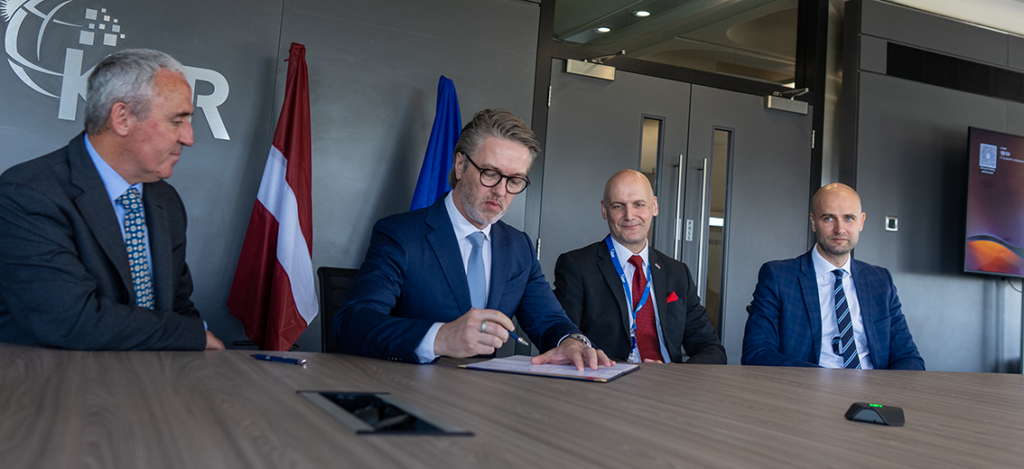
Europe’s sustainable aviation transition has taken a major step forward after Latvian fuel developer NorSAF signed an exclusive permanent licensing agreement with KBR to deploy PureSAF® technology in Europe, paving the way for what could become the continent’s first commercial-scale facility capable of producing 100 percent drop-in sustainable aviation fuel (SAF/eSAF).
The project, planned for development at the Port of Liepaja, represents a potentially transformative milestone for the aviation sector as airlines, airports and governments accelerate efforts to reduce carbon emissions and meet increasingly stringent European climate regulations.
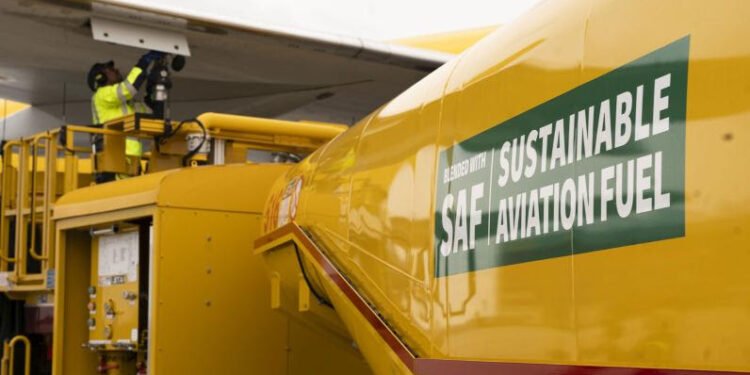
Unlike conventional sustainable aviation fuels currently available in the market, which typically require blending with fossil-based jet fuel before use, PureSAF technology is designed to produce a fully compatible drop-in fuel whose chemical composition closely mirrors traditional kerosene. This means the fuel could eventually be used in existing aircraft engines and airport fuel infrastructure without requiring technical modifications or blending limitations.
Related Post



Industry experts view the development as a significant breakthrough for aviation decarbonisation, particularly as the sector faces mounting pressure to meet ambitious emissions reduction targets under the European Union’s evolving climate framework.
Exclusive Technology Agreement Signals Major Strategic Move
Under the agreement, NorSAF has secured exclusive rights for the commercial deployment of KBR’s PureSAF technology across Europe.
The technology was originally invented and developed by Swedish Biofuels AB and is now exclusively licensed globally by KBR for commercial-scale implementation.
Although current certification standards permit the fuel to be blended at up to 50 percent with conventional jet fuel, industry participants anticipate that regulatory approvals allowing full 100 percent drop-in utilisation could be secured from 2026 onward, subject to final certification approvals by ASTM International.
If achieved, the certification would represent a landmark development for the aviation industry, potentially allowing airlines to transition away from fossil kerosene without requiring fleet modifications or changes to airport fuelling systems.
Latvia Positioned as Emerging Sustainable Aviation Fuel Hub
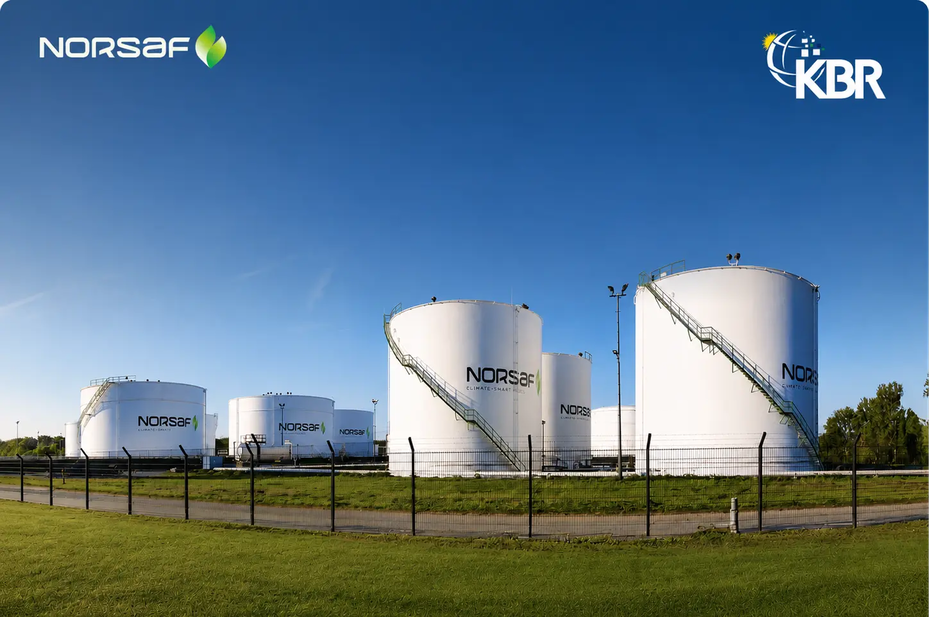
The planned production facility will be located at the Port of Liepaja in western Latvia, strategically positioning the Baltic nation within Europe’s growing sustainable fuel and green energy landscape.
Once operational, the facility is expected to produce up to 100,000 tonnes annually of both sustainable aviation fuel derived from advanced bioethanol and eSAF — a synthetic aviation fuel produced using green hydrogen and captured biogenic carbon dioxide.
According to project developers, the production process will utilise renewable electricity to power electrolysis systems for hydrogen generation, which will then be combined with captured carbon to create low-emission aviation fuel.
The integrated green energy cycle is projected to reduce greenhouse gas emissions by approximately 83 percent compared with the production of conventional fossil-based jet fuel.
Project developers also emphasised that the initiative intends to source feedstocks entirely from within Europe, strengthening regional energy security while reducing dependence on imported fossil fuels and external supply chains.
Industry analysts say the emphasis on European feedstock sourcing aligns closely with broader EU goals surrounding industrial resilience, energy independence and strategic autonomy amid ongoing geopolitical uncertainty.
Supporting Europe’s ReFuelEU Aviation Goals
The NorSAF project is provisionally targeting operational launch by 2031, aligning its timeline with the European Union’s ambitious European Union ReFuelEU Aviation framework.
Under the EU’s long-term decarbonisation strategy, sustainable aviation fuel usage is expected to increase significantly over the coming decades, with SAF adoption targets projected to reach 70 percent by 2050.
The fuel produced at the Latvian facility is intended to supply airlines operating across Europe, helping carriers lower lifecycle emissions and comply with emerging environmental mandates.
As airlines increasingly seek scalable, commercially viable low-carbon fuel alternatives, projects capable of producing fully compatible drop-in SAF are attracting growing interest from investors, airports and aviation stakeholders.
Aviation Sector Backing Adds Strategic Weight
The project is also receiving support from Avia Solutions Group, one of the world’s largest ACMI aviation service providers, which is participating as a strategic partner.
NorSAF is expected to benefit from access to the group’s aviation infrastructure and operational expertise, including capabilities provided through subsidiary Baltic Ground Services, which has established experience in sustainable aviation fuel supply and distribution.
Industry observers say partnerships between SAF developers and established aviation operators are becoming increasingly important as the sector moves toward large-scale commercial adoption of alternative fuels.
Executives Highlight Energy Security and Aviation Transition
Commenting on the agreement, Jānis Kisiels, Board Member of NorSAF, said the project goes beyond sustainability objectives and also addresses broader concerns surrounding Europe’s long-term energy resilience.
“We are delighted to have collaborated with KBR to bring PureSAF technology to Europe,” said Kisiels.
“Recent global events have underscored that energy sovereignty is no longer just an economic goal, but a matter of national and regional security. By producing sustainable, 100 percent drop-in fuels at scale using local, European-sourced feedstocks, we are building a resilient, self-sufficient energy ecosystem that reduces our dependence on external fossil fuel markets and strengthens Europe’s industrial backbone.”
Jay Ibrahim, President of KBR Sustainable Technology Solutions, described the project as an important contribution toward cleaner aviation and sustainable fuel innovation within Europe.
“KBR is committed to providing viable energy solutions and our PureSAF process not only scales SAF production but also offers an opportunity to co-process CO₂ and syngas in the same plant and produce a fungible jet fuel ready for use without the need to blend with traditional jet fuel,” Ibrahim said.
Growing Momentum Behind Sustainable Aviation Fuel
The NorSAF-KBR agreement reflects the accelerating momentum behind sustainable aviation fuel investments globally as governments and airlines seek practical pathways toward decarbonising one of the world’s most difficult-to-abate sectors.
While SAF currently accounts for only a small fraction of global jet fuel consumption, industry forecasts suggest demand will rise sharply over the coming decade as climate regulations tighten and airline sustainability commitments intensify.
Projects capable of producing fully compatible 100 percent drop-in fuel are increasingly viewed as critical to achieving long-term net-zero aviation targets while preserving existing aircraft fleets and airport infrastructure.
If completed as planned, the Liepaja facility could position Latvia as an emerging strategic hub within Europe’s future sustainable aviation fuel ecosystem and strengthen the continent’s efforts to build a more resilient and environmentally sustainable aviation industry.