

The global aviation industry’s sustainability debate is evolving from a focus on curbing air travel demand to accelerating the transition towards lower-emission operations while preserving the economic, social and trade benefits that air connectivity delivers. As governments tighten climate policies and the sector pursues ambitious decarbonisation goals, industry leaders are increasingly advocating for solutions that reduce emissions without restricting access to aviation.
Over the past decade, aviation has come under growing pressure to address its environmental impact as passenger traffic has expanded and countries have strengthened their commitments to achieve net-zero emissions. In response, the industry has launched a range of initiatives aimed at reducing its carbon footprint, including the International Civil Aviation Organization’s (ICAO) Carbon Offsetting and Reduction Scheme for International Aviation (CORSIA), investments in Sustainable Aviation Fuel (SAF), next-generation aircraft technologies and operational efficiency improvements. These initiatives form the backbone of aviation’s long-term decarbonisation strategy and are widely recognised across the industry. (Verified through ICAO, IATA and industry sustainability frameworks.)
Despite these efforts, many of the sector’s sustainability initiatives remain complex and less visible to the travelling public than policy measures such as aviation taxes, emissions levies and travel restrictions. While carbon offsetting mechanisms, alternative fuels and aircraft efficiency programmes require years of investment and international coordination, fiscal measures aimed at reducing flying often attract greater public attention because of their immediate impact on passengers.
Related Post




This contrast has intensified debate over whether reducing demand for air travel should play a larger role in climate policy.
Several mature aviation markets have introduced taxation measures and regulatory policies designed to discourage flying, particularly on short-haul routes where alternative transport options exist. Proponents argue that aviation should more fully reflect its environmental costs, especially as leisure travel continues to grow.
However, the industry maintains that environmental progress must be balanced against aviation’s broader contribution to economic development, employment, tourism and international trade.
For policymakers, the challenge is no longer simply reducing aviation emissions but achieving decarbonisation while maintaining the connectivity that underpins global commerce and social inclusion.
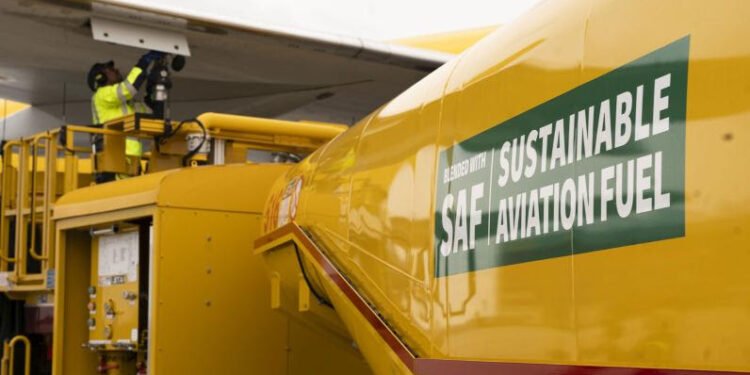
Industry stakeholders increasingly advocate policies that prioritise innovation, investment and technological advancement over measures that limit demand. Sustainable Aviation Fuel remains the most significant near- and medium-term opportunity for reducing lifecycle carbon emissions from commercial aviation, although limited production capacity, high costs and constrained supply continue to slow widespread adoption.
In parallel, aircraft manufacturers continue to develop more fuel-efficient aircraft, airlines are investing in fleet modernisation, and improvements in air traffic management and operational efficiency are expected to deliver further emissions reductions. These initiatives, however, require substantial capital investment, supportive regulatory frameworks and close international cooperation to achieve meaningful long-term results.
The global nature of aviation further complicates sustainability policymaking. Environmental priorities vary considerably between developed economies, emerging markets and island nations, where aviation often provides essential connectivity for tourism, healthcare, trade and economic development. As a result, sustainability policies that may be appropriate in one region may not deliver the same outcomes elsewhere.
Against this backdrop, industry organisations continue to call for a more balanced approach to aviation sustainability—one that recognises environmental responsibility while safeguarding the economic and societal value of global air transport.
As governments refine future aviation strategies, the central policy challenge is becoming increasingly clear: accelerating the transition to cleaner aviation through investment, innovation and collaboration while preserving the connectivity on which businesses, supply chains and communities depend.
For the air cargo sector in particular, maintaining efficient global connectivity will remain critical as international trade continues to rely on aviation for the rapid movement of high-value, time-sensitive and essential goods. The industry’s long-term objective is therefore no longer in question; the focus has shifted to how aviation can decarbonise while continuing to support sustainable global economic growth.