
Strong air cargo demand, higher shipment volumes and persistent capacity constraints in the international air freight market helped DHL Group deliver robust financial results in the second quarter of 2026, prompting the logistics giant to raise its full-year earnings outlook.
The company reported 13% year-on-year revenue growth to €22.4 billion during the quarter, while operating profit (EBIT) increased 30% to €1.9 billion. The EBIT margin improved to 8.3%, up 1.1 percentage points from the same period last year.
According to DHL Group, the performance was primarily driven by higher transported shipment weights at DHL Express, constrained air freight capacity, improved pricing and the pass-through of higher fuel costs. The results have been confirmed through the company’s official second-quarter 2026 financial release.
Related Post

Air Cargo Market Tightness Supports Earnings
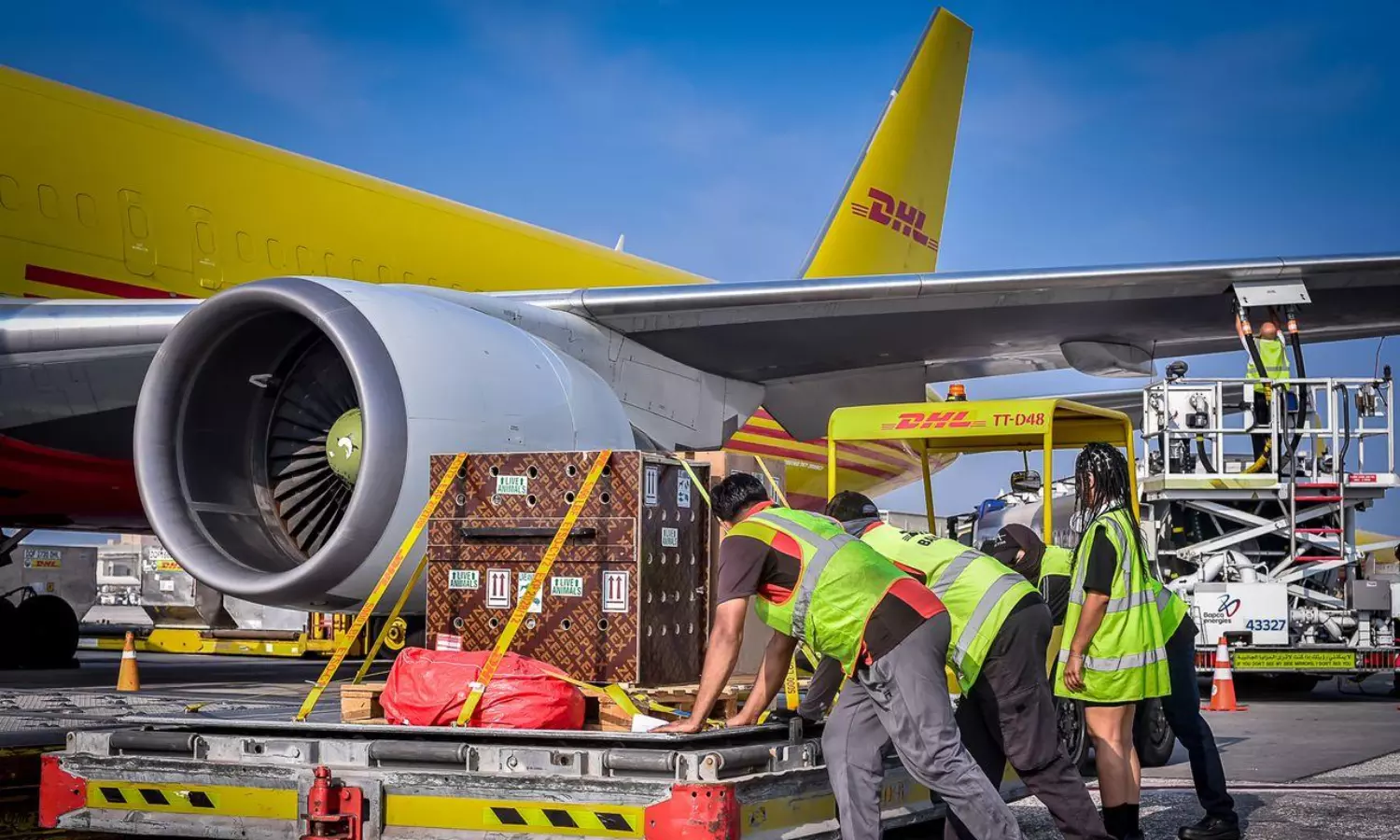
The continued imbalance between demand and available international air cargo capacity provided a significant boost to DHL Express during the quarter.
The company said temporary capacity shortages in the global air freight market contributed approximately €150 million to DHL Express earnings, alongside disciplined yield management and improved network efficiency.
Growing shipment weights also signalled a recovery in customer demand for express logistics services, particularly for high-value and time-sensitive cargo moving through international trade lanes.
Global Trade Shifts Drive Logistics Demand
DHL said geopolitical tensions, changing trade policies and evolving supply chain strategies are encouraging businesses to diversify sourcing and build more resilient logistics networks.
Tobias Meyer, Chief Executive Officer of DHL Group, said customers increasingly rely on DHL’s global network and local expertise to navigate changing market conditions.
“In an environment that continues to be shaped by geopolitical tensions and shifting trade flows, our customers benefit from our global presence, local expertise and operational flexibility. This enables us to support them in adapting their supply chains to changing market conditions while ensuring reliable logistics, even in challenging environments.”
He added that productivity improvements and disciplined execution of the company’s Fit for Growth programme helped convert revenue growth into stronger profitability.
Higher Guidance Reflects Market Confidence
Following its strong first-half performance, DHL raised its full-year 2026 guidance.
The Group now expects:
- EBIT exceeding €6.5 billion for fiscal year 2026, up from the previous forecast of more than €6.2 billion.
- DHL operating divisions to generate more than €5.9 billion in EBIT.
The Board also expanded its ongoing share buyback programme by €500 million, increasing its total value to up to €6.5 billion, with the programme extended through the end of 2027.
Strong Cash Flow and Continued Investment
Free cash flow (excluding mergers and acquisitions) rose to €569 million during the second quarter, compared with €329 million a year earlier.
For the first half of 2026, free cash flow increased to €1.8 billion, supported by stronger operating performance and refunds related to U.S. tariff measures under the International Emergency Economic Powers Act (IEEPA), which DHL said are being passed on to customers.
Net profit attributable to shareholders increased nearly 24% to €1 billion, while basic earnings per share rose 26.9%to €0.91.
Expanding Logistics Infrastructure
DHL continued investing heavily in its long-term growth strategy, with capital expenditure reaching €1.3 billionduring the first half of 2026, representing a 25% increase over the previous year.
The investments support the company’s Strategy 2030, focusing on:
- digitalisation,
- warehouse automation,
- fleet modernisation,
- advanced sorting technologies,
- and specialised logistics infrastructure.
The company is also expanding capabilities in high-growth sectors including:
- Life Sciences & Healthcare,
- New Energy,
- Battery Logistics,
- and Data Centre Logistics.
Recent investments include healthcare logistics facilities in the United States, United Kingdom, Singapore and South Korea, a battery logistics centre in the Netherlands, and expanded data centre logistics capabilities across the Asia-Pacific region.
Global Forwarding Benefits from Volatile Air Freight Market
DHL Global Forwarding also reported improved performance during the quarter as higher air and ocean freight volumes combined with volatile freight rates boosted revenues.
The division leveraged its international network to help customers adjust to changing trade routes and supply chain disruptions while maintaining service reliability.
Supply Chain and E-commerce Continue Growth
DHL Supply Chain maintained steady growth across all regions, with the Americas delivering the strongest performance, supported by demand from Life Sciences, Healthcare, Automotive, Engineering and Manufacturing customers.
Meanwhile, DHL eCommerce continued benefiting from structural growth in online retail despite accounting changes following its merger with Evri. Ongoing network expansion and recent acquisitions are expected to strengthen its long-term competitiveness.
Domestic Parcel Business Remains Resilient
Within Post & Parcel Germany, parcel volumes continued growing in both domestic and international markets, although declining mail volumes and rising transportation and labour costs weighed on profitability.
The division remains focused on improving operational efficiency through productivity initiatives and continued network optimisation.
Air Cargo Outlook Remains Positive
DHL’s second-quarter performance reflects the resilience of the global air cargo market despite ongoing geopolitical uncertainty. Continued capacity constraints, expanding technology supply chains, pharmaceutical logistics and resilient express demand are expected to support premium freight services over the coming months.
While macroeconomic uncertainties and changing trade policies continue to influence global supply chains, DHL believes its diversified network, specialised logistics capabilities and strategic investments position the company to capitalise on long-term growth opportunities across the international air cargo market.