

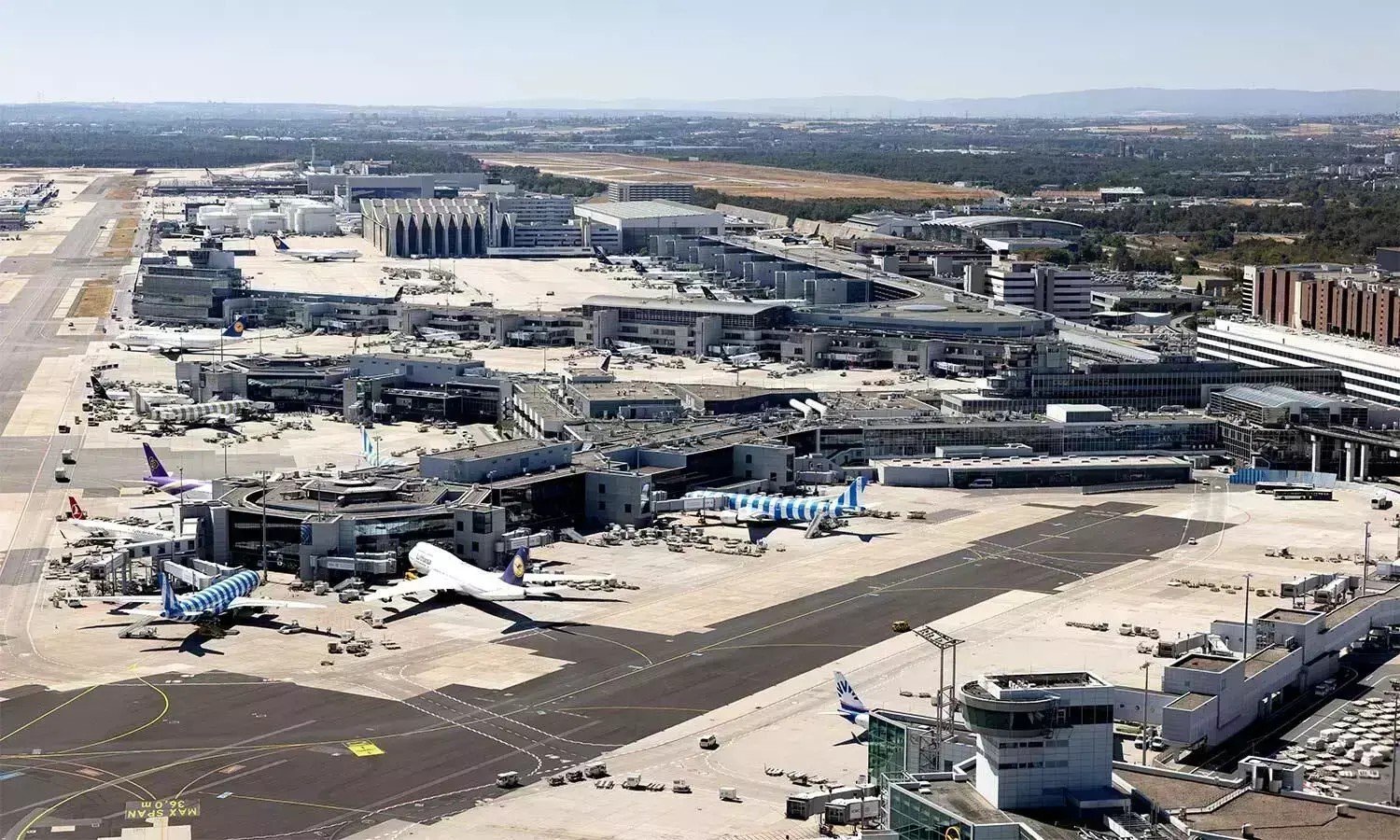
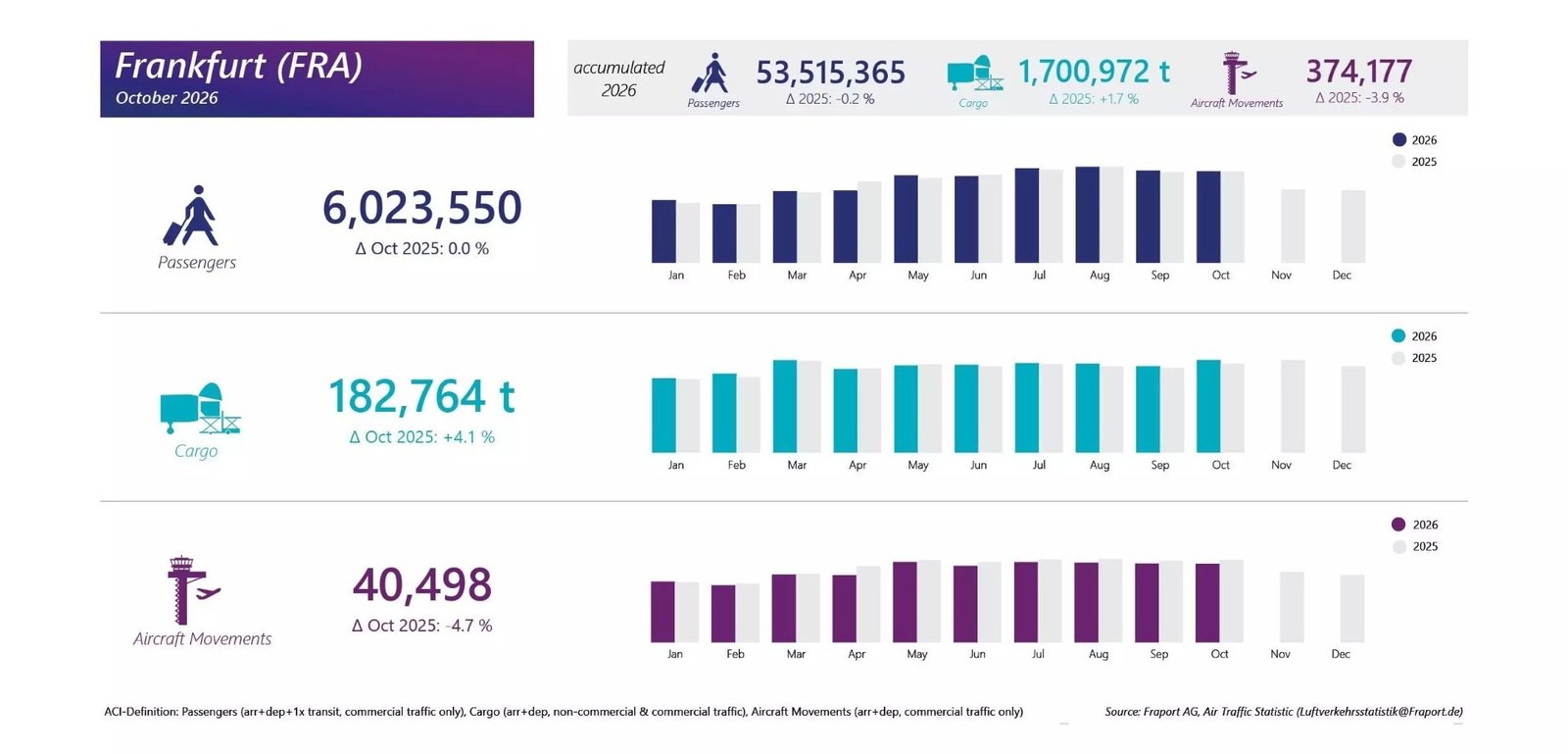
Frankfurt Airport recorded a 4.5% year-on-year increase in cargo throughput to 187,701 tonnes in October 2026, supported by stronger belly cargo volumes and robust outbound shipments. Growth was particularly pronounced across African, North American and selected Asian markets, despite a decline in aircraft movements and maximum take-off weights.
Frankfurt Airport strengthened its position as one of Europe’s leading air cargo gateways in October, handling 187,701 tonnes of cargo, including airfreight and airmail, according to monthly traffic statistics released by airport operator Fraport.
The 4.5% year-on-year increase reflects continued demand across several major international trade lanes, with passenger aircraft belly capacity making a significant contribution to the overall growth.
Related Post




Airfreight accounted for 185,279 tonnes, representing a 4.7% increase compared with October 2025. In contrast, airmail volumes declined by 6.2% to 2,422 tonnes.
The latest performance follows continued growth in the preceding months, reinforcing Frankfurt’s importance as a major European hub for international freight distribution.
Belly Cargo Leads Growth
Passenger aircraft belly cargo emerged as the stronger growth segment during October, increasing by 9.6% year-on-year to approximately 78,100 tonnes.
Cargo transported on dedicated freighter aircraft also recorded an increase, although at a more moderate pace, rising 1.2% to approximately 109,500 tonnes.
The figures underline the continued importance of both passenger and freighter operations in supporting Frankfurt’s cargo throughput, with belly capacity providing a particularly strong contribution during the reporting period.
Outbound shipments were the principal driver of growth. Cargo loadings increased by 10.2% to approximately 94,600 tonnes, while inbound unloadings declined by 1.7% to around 88,100 tonnes.
This resulted in outbound cargo volumes exceeding inbound traffic, reflecting stronger export activity through the German gateway.
Asia-Pacific Markets Deliver Mixed Results
The Far East recorded an overall cargo increase of 6.3%, although performance varied considerably between individual markets.
Cargo loadings from the region increased by 18.8%, while unloadings declined by 2.2%, indicating stronger outbound activity towards Asian destinations.
India emerged as the strongest-performing major market, with cargo volumes increasing by 30.9% year-on-year. South Korea and Japan also recorded substantial gains of 22.5% and 14.9%, respectively.
However, trade with China and Hong Kong remained comparatively weak. Cargo volumes associated with China declined by 4.3%, while Hong Kong registered a 10.1% decrease.
The weakness was particularly evident in inbound shipments from Asia. Unloadings from China fell by 12%, while those from Hong Kong declined by 12.5%.
The contrasting performance across Asian markets highlights the changing composition of air freight demand, with stronger activity in India, South Korea and Japan offsetting softer volumes from some of the region’s traditional export centres.
North American Trade Strengthens
North American cargo traffic recorded a 10.2% increase during October, supported by a 12.1% rise in volumes associated with the United States.
Outbound shipments to the US were particularly strong, with cargo loadings increasing by 15.8%.
Fraport attributed the positive performance to favourable air cargo trading conditions between Europe and North America. Machinery and high-technology products were among the sectors supporting demand, with technology-related shipments benefiting from continued US investment in artificial intelligence and associated equipment.
The performance reinforces the importance of transatlantic trade in Frankfurt’s international cargo network, particularly for high-value industrial and technology shipments.
Africa And Latin America Record Strong Growth
Africa delivered the strongest regional growth among the markets highlighted in the October figures, with cargo volumes increasing by 23.4% year-on-year.
South Africa recorded a 34.3% increase, while traffic associated with Kenya surged by 87.9%, demonstrating particularly strong momentum in selected African trade corridors.
Latin American cargo volumes also advanced, rising 9.5% compared with October 2025. The increase was supported by a 17.5% rise in outbound cargo loadings.
Argentina, however, recorded a 9% decline. Operational restrictions at Buenos Aires Airport from October 25, associated with runway works, affected long-haul traffic and contributed to the weaker performance.
Middle East And European Markets Face Declines
Not all international regions experienced growth during the reporting period.
Cargo volumes associated with the Middle East declined by 13.4%, while European traffic fell by 10.1% year-on-year.
These reductions contrasted with the stronger performance recorded across North American, African and selected Asia-Pacific markets, highlighting the uneven nature of demand across Frankfurt’s international cargo network.
Cargo Growth Despite Fewer Aircraft Movements
The increase in cargo throughput came against a backdrop of reduced aircraft activity at Frankfurt Airport.
Aircraft movements declined by 4.7% year-on-year to 40,498 take-offs and landings in October. Accumulated maximum take-off weights (MTOW) also decreased by 1.6% to approximately 2.5 million tonnes.
The contrasting trends indicate that cargo volumes increased despite fewer aircraft movements and lower aggregate aircraft weight capacity, pointing to stronger cargo throughput relative to overall flight activity.
For airlines, freight forwarders and logistics operators, Frankfurt’s October performance highlights the continued resilience of the airport’s cargo business and the importance of diversified international trade connections.
With strong outbound demand, expanding African trade flows and robust transatlantic activity, Frankfurt continues to play a central role in Europe’s air freight distribution network.