
Hong Kong Air Cargo Industry Services Limited> (Hacis) has introduced a new automated storage control system at its e-commerce fulfilment centre, significantly enhancing its capability to process the growing volume of cross-border online retail shipments moving through Hong Kong International Airport.
The investment reflects the continued expansion of global e-commerce logistics and forms part of Hacis’ strategy to improve warehouse automation, increase processing speed and strengthen supply chain visibility for customers.
Hacis is a wholly owned subsidiary of Hong Kong Air Cargo Terminals Limited> (Hactl), one of the world’s leading independent cargo terminal operators. The development has been confirmed through an official company announcement.
Related Post


Automated ‘Goods-to-Person’ Fulfilment
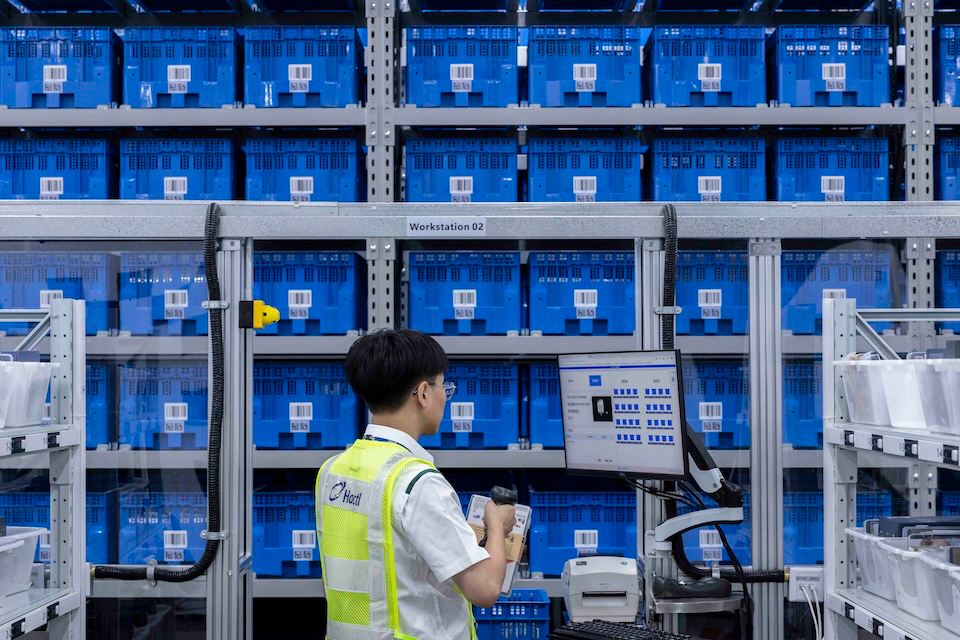
At the centre of the upgrade is the new Hacis Storage Control System (HSCS), which integrates advanced automated storage and retrieval technology with high-speed tote stacker cranes and Automated Guided Vehicles (AGVs).
The system follows a “goods-to-person” operating model, automatically retrieving inventory and delivering it directly to workstations for order processing. This approach reduces manual handling, improves productivity and accelerates fulfilment for time-sensitive e-commerce shipments.
Real-Time Inventory Visibility
The HSCS is fully integrated with Hacis’ warehouse management system, enabling real-time synchronisation of inventory data with customers’ planning platforms and e-commerce systems.
The integration enhances inventory accuracy, improves stock visibility throughout the fulfilment cycle and allows logistics providers to better manage order volumes during periods of peak demand.
By reducing manual intervention and increasing automation, the company expects to improve operational efficiency while supporting increasingly complex cross-border e-commerce supply chains.
Processing Capacity to Double
According to Hacis, the new automation platform will double the daily outbound processing capacity of its E-commerce Fulfilment Centre (HEFC).
The enhanced facility is also expected to reduce turnaround times and enable the company to meet tighter delivery schedules demanded by international online retailers and logistics providers.
The investment comes as global e-commerce continues to drive sustained demand for fast, reliable and technology-enabled air cargo services, particularly across major Asian logistics hubs.
Supporting Evolving E-Commerce Supply Chains
Ringo Chan, Executive Director of Hacis, said customer expectations continue to evolve as e-commerce volumes increase worldwide.
“E-commerce supply chains continue to evolve rapidly, with customers demanding greater speed, visibility and reliability. This new system reinforces our commitment to innovation and enhances our seamless fulfilment-to-flight ecosystem, helping customers connect more effectively with global markets.”
Continued Investment in Cargo Infrastructure
The latest automation initiative builds on Hacis’ ongoing investments in specialised logistics infrastructure.
In 2023, the company expanded its E-commerce Fulfilment Centre with a climate-controlled “one-stop-shop” facilitydesigned to support the growing movement of temperature-sensitive e-commerce shipments through Hong Kong International Airport.
The addition strengthened Hacis’ capabilities in handling cool-chain products, including pharmaceuticals, health supplements, cosmetics and premium food items purchased through online platforms.
Automation Reshaping Air Cargo Logistics
As international e-commerce continues to fuel growth in air freight, logistics providers are increasingly investing in warehouse automation, robotics and digital inventory management to improve efficiency and reduce processing times.
Hacis’ latest technology deployment reflects a broader industry trend towards smart fulfilment centres capable of supporting higher shipment volumes while maintaining speed, accuracy and real-time supply chain visibility.
The investment further reinforces Hong Kong’s position as one of the world’s leading air cargo gateways, supporting the rapid movement of cross-border e-commerce shipments across Asia and global markets.