
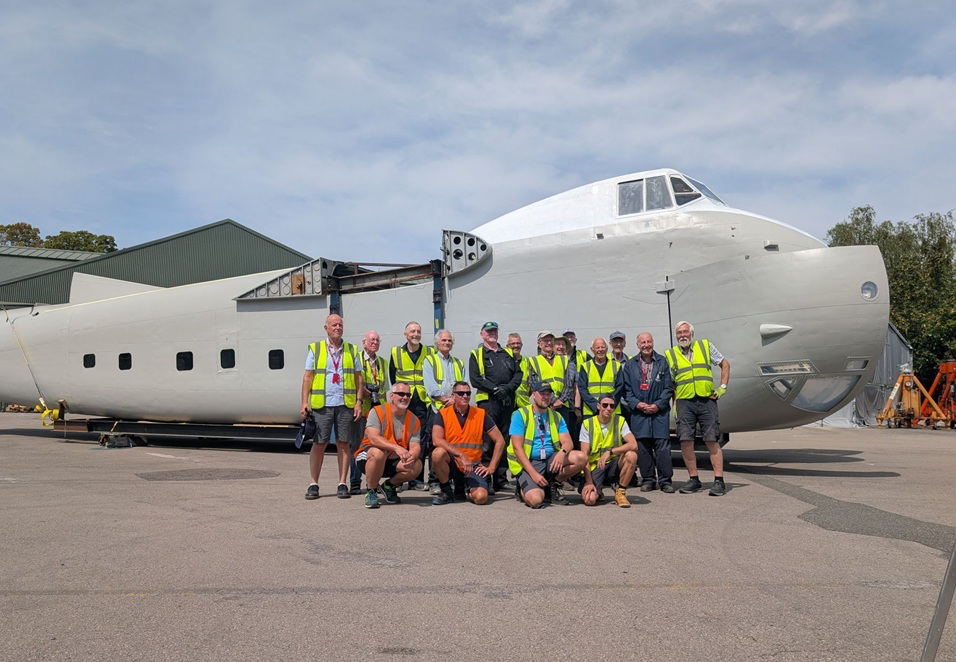
Aerospace Bristol has reached a significant milestone in its effort to preserve one of Europe’s rarest cargo aircraft, with the museum’s Bristol Freighter Type 170 now moved into its permanent outdoor display area.
The aircraft, serial number NZ5911, is the only surviving Bristol Freighter in Europe and one of just 12 examples remaining worldwide. The move marks a major step forward in the museum’s largest-ever conservation programme, which aims to preserve the 70-year-old aircraft while allowing visitors to witness the restoration process as it happens.
Designed and built by the Bristol Aeroplane Company at Filton, near Bristol, the Type 170 Freighter was developed as a pioneering post-war cargo aircraft. Recognised for its distinctive clamshell nose doors and large cargo capacity, the aircraft was capable of transporting vehicles, livestock and other oversized loads. It was later adapted for passenger operations under the name “Wayfarer”.
Related Post




The aircraft’s return to Bristol followed an international recovery effort that saw NZ5911 transported from New Zealand in 2018. The aircraft originally served with the Royal New Zealand Air Force’s No. 41 Squadron from 1955, operating across Southeast Asia during the Cold War era before retirement in 1977.
The latest phase of the conservation programme involved a carefully planned engineering operation to relocate the aircraft from its conservation workshop to its new outdoor home. Aerospace Bristol described the move as the start of the next stage in transforming the rare freighter into the centrepiece of a new exhibition where visitors can observe aviation heritage preservation in real time.
Sally Cordwell, chief executive of Aerospace Bristol, said the project offers visitors a rare opportunity to experience historic aircraft conservation first-hand.
“This is far more than a conservation project, it’s an opportunity for visitors to experience history being preserved before their eyes,” she said.
“Projects of this scale are rarely seen by the public. Visitors won’t just see the aircraft up close; they’ll meet the volunteers conserving it, discover the engineering behind the project and experience a remarkable piece of Bristol’s aviation heritage as it is brought back to life.”
The aircraft will now remain outdoors permanently, allowing engineers and volunteers to continue the next stage of work, including the planned reinstallation of the centre wing box and further conservation activity. The project includes corrosion treatment, weather protection measures and long-term preservation planning to ensure the aircraft remains protected for future generations.
Unlike traditional restoration programmes carried out behind closed doors, Aerospace Bristol’s approach places the conservation work in full view of the public. Visitors will be able to follow the aircraft’s transformation, speak with the volunteer team and gain insight into the engineering expertise required to preserve historic aviation assets.
The Bristol Freighter conservation programme represents a significant effort to safeguard a key chapter in cargo aviation history, bringing one of Britain’s most distinctive transport aircraft back into the spotlight.