
Malaysian carrier’s twice-daily Kuala Lumpur–London services to route through IAG Cargo’s Premia facility
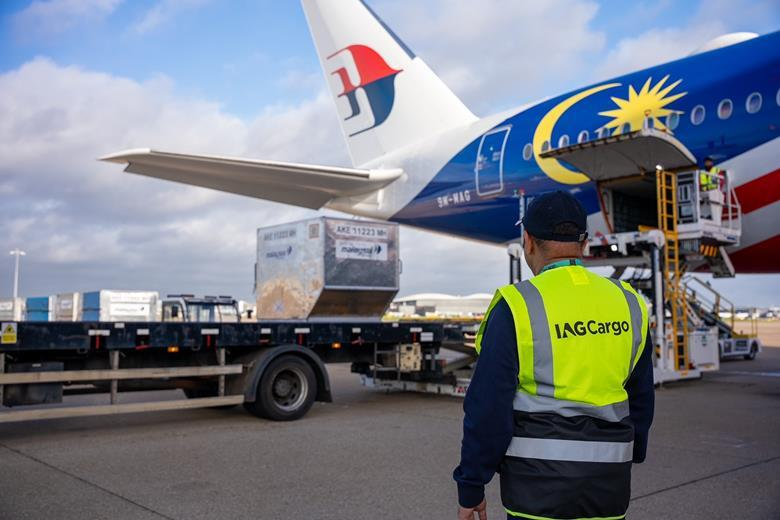
IAG Cargo has expanded its third-party handling portfolio with a new agreement to manage MASkargo shipments at London Heathrow. Under the partnership, all freight carried on the Malaysian carrier’s twice-daily Kuala Lumpur–London services will be processed through IAG Cargo’s state-of-the-art Premia facility.
MASkargo, the cargo arm of Malaysia Aviation Group (MAG), maintains one of the busiest Southeast Asia–UK connections. The move to integrate its London operations into the IAG Cargo ecosystem marks a strategic push to strengthen resilience and efficiency across its European gateway.
Adam Carson, Chief Operations Officer at IAG Cargo, described the collaboration as a significant milestone in the company’s third-party handling ambitions.“Welcoming MASkargo to our London Heathrow hub marks an important step as we continue to expand our third-party handling capabilities,” he said. “With its strategic location, Heathrow is a prime gateway for MASkargo. Our hub offers exceptional airside access and world-class facilities, enabling us to deliver the reliability and service excellence that customers expect.”
MASkargo chief executive Mark Jason Thomas said the partnership enhances the carrier’s ability to deliver a consistent and competitive service proposition in a key market. “Partnering with IAG Cargo at London Heathrow marks another milestone in our journey to enhance global connectivity and service excellence,” he noted. “This collaboration not only reinforces our commitment to delivering reliability and quality for our customers but also strengthens MASkargo’s presence in one of the world’s key cargo hubs. Through Heathrow, we are able to offer smoother transfers and wider access to major destinations across Europe and the Americas via our network of strategic airline partners.”
The development follows the announcement earlier this year of a major joint business between IAG Cargo, MASkargo and Qatar Cargo, slated to launch next year. The three carriers plan to integrate aspects of their operations to deliver a unified product offering, expanded connectivity, faster transits and new routing options across their combined global networks.