
Specialist aviation logistics provider Air Charter Service has successfully coordinated a complex multi-stop rescue operation transporting 208 cats and dogs from Merced, California, to new homes across the United States, reinforcing the growing role of charter aviation in animal welfare logistics.
The operation, conducted last month, moved the animals from Merced to rehoming centres in Salem, Oregon, as well as Arlington and Spokane in Washington. The flight was arranged for a returning charity partner and involved carefully structured routing to ensure rapid delivery while maintaining animal safety and welfare throughout the journey.
According to Thomas Howe, CEO of ACS California, the charter was designed to significantly reduce transit time compared to road transport, particularly critical for younger animals such as puppies included in the shipment. The operation required detailed pre-planning, specialised loading procedures, and close coordination with on-ground teams to ensure efficiency at every stage.
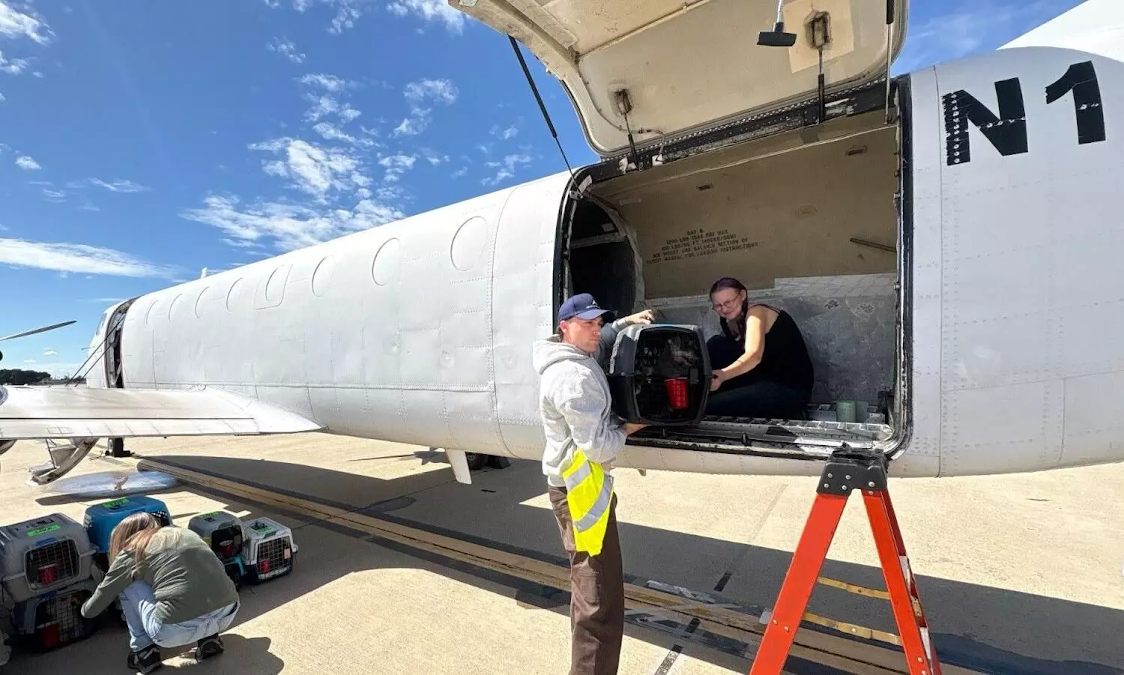
A representative from the charter team was deployed to Merced to oversee loading operations directly. With the support of volunteer teams arranged by the charity, all 208 animals were securely boarded in just over an hour, demonstrating the importance of structured ground coordination in high-volume animal transport missions.
The aircraft executed a three-stage routing plan, first landing in Salem, Oregon, where it remained on the ground for just over 30 minutes to offload the initial group of animals. It then continued to Arlington and Spokane in Washington for the remaining deliveries. Each stop was tightly scheduled to minimise stress on the animals while maintaining operational efficiency across multiple destinations.
Specialist charter logistics played a central role in ensuring safe handling protocols, with tailored procedures in place for animal welfare, cabin preparation, and ground movement coordination. The mission underscores how air charter services are increasingly being used beyond traditional freight applications, extending into humanitarian and welfare-driven logistics.
Beyond transportation efficiency, the operation also highlights the broader impact of aviation-enabled rehoming programmes, allowing animal welfare organisations to expand adoption networks across wider geographic regions and reduce overcrowding in shelters.
Industry observers note that such missions reflect a growing intersection between aviation logistics and social impact initiatives, where speed, precision, and specialised handling capabilities can directly contribute to welfare outcomes.