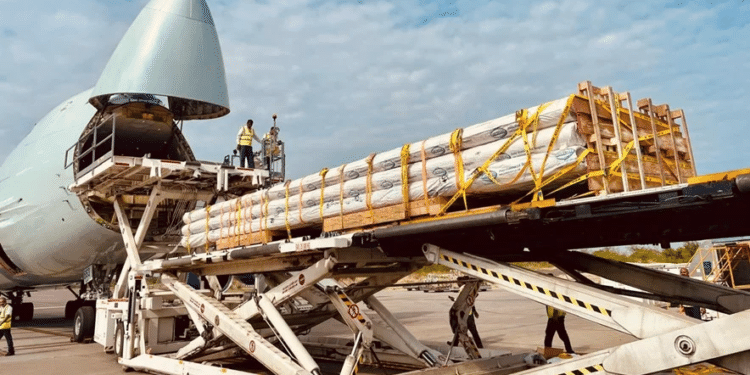

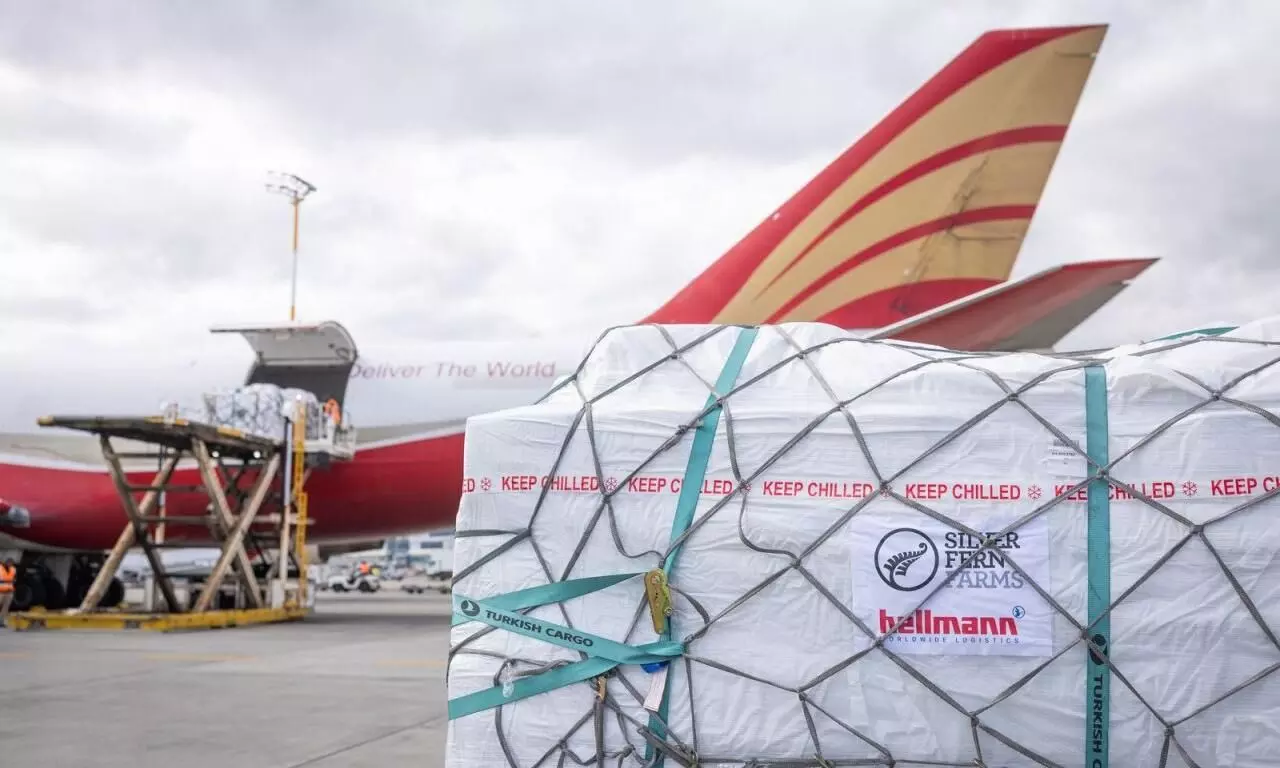
Hellmann Worldwide Logistics New Zealand has successfully completed the transportation of 90 tonnes of chilled meat from Auckland to the United Arab Emirates via a dedicated Boeing 747 charter operation, reinforcing the growing importance of specialized cold chain logistics solutions in international food supply networks.
The shipment, carried out in partnership with Silver Fern Farms, was transported from Auckland Airport to the UAE within a transit time of just 27 hours, highlighting the operational precision required for temperature-sensitive perishables moving across long-haul international routes.
The charter operation comes amid ongoing volatility across global supply chains, where disruptions in ocean freight schedules, constrained air cargo capacity, geopolitical uncertainty, and fluctuating market conditions continue to place pressure on international perishables logistics.
Related Post



Industry observers note that maintaining reliable cold chain integrity for chilled meat exports remains particularly critical due to strict temperature compliance requirements, product shelf-life sensitivity, and increasingly demanding international food safety standards.
Dedicated Boeing 747 Charter Supports Time-Critical Supply Chain
The shipment was transported using a dedicated Boeing 747 freighter charter, enabling the movement of high-volume chilled cargo under tightly controlled temperature conditions.
Air cargo continues to play an essential role in premium chilled meat exports, particularly for long-distance markets where speed-to-market directly impacts product quality, freshness, and commercial value.
The UAE remains a strategically important destination for premium meat imports, supported by strong consumer demand, hospitality sector growth, and expanding food distribution networks across the Gulf region.
By completing the shipment within a 27-hour transit window, Hellmann New Zealand and Silver Fern Farms were able to maintain product integrity while ensuring uninterrupted supply into the Middle Eastern market.
Longstanding Partnership Underpins Operational Reliability
The operation also reflects a partnership spanning more than two decades between Hellmann New Zealand and Silver Fern Farms.
According to the companies, the collaboration has focused on building resilient and flexible logistics solutions capable of adapting to changing market conditions while supporting continuity across export supply chains.
Industry analysts say long-term partnerships between exporters and logistics providers have become increasingly important as global freight markets face recurring operational disruptions and capacity volatility.
The successful movement of large-scale chilled cargo shipments requires close coordination across multiple logistics functions, including:
- Temperature-controlled storage
- Airside cargo handling
- Regulatory compliance
- Customs coordination
- Time-sensitive flight scheduling
- End-to-end cold chain monitoring
Growing Importance of Cold Chain Logistics
The shipment highlights the continued expansion of temperature-controlled air cargo operations globally, particularly within the perishables, pharmaceutical, and food export sectors.
Demand for specialized cold chain logistics has accelerated significantly in recent years as global consumers increasingly expect year-round access to fresh products sourced from international markets.
New Zealand remains one of the world’s leading exporters of premium agricultural and meat products, with air freight serving as a critical transport solution for high-value chilled exports requiring rapid delivery to overseas markets.
The Middle East, meanwhile, continues to represent a major growth market for food imports, supported by rising population demand, tourism growth, and food security strategies across Gulf economies.
Air Cargo Flexibility Remains Critical
The successful charter operation also underlines the continuing importance of flexible air cargo solutions during periods of supply chain instability.
With disruptions affecting both sea freight reliability and international transportation networks, dedicated charter operations are increasingly being used to secure guaranteed uplift capacity for critical or high-value cargo shipments.
Industry experts note that chartered freighter services provide exporters with greater control over scheduling, cargo handling, and transit performance compared with traditional scheduled freight capacity.
As global supply chains continue evolving, logistics providers capable of delivering specialized cold chain expertise and operational flexibility are expected to remain central to supporting international perishables trade.