
India’s fresh mango export season to the United States is unfolding under intensified pressure from air cargo disruptions, with rising freight rates, constrained capacity, and lingering network instability reshaping trade dynamics across one of the sector’s most time-sensitive supply chains.
Despite robust global demand and favourable consumption trends in the US, exporters are grappling with significantly higher logistics costs and reduced operational flexibility following recent disruptions to international airfreight networks.
According to data from the Market Intelligence Cell under the Agricultural and Processed Food Products Export Development Authority (APEDA), US mango imports are projected to rise by around 7% in 2026, supported by strong retail promotions, expanding year-round availability, and per capita consumption estimated between 3.6 and 4 kilograms.
Related Post



However, this demand growth is unfolding against a backdrop of uneven global supply conditions. Peru is expected to record a 10% decline in output due to delayed flowering and adverse weather patterns, while Pakistan’s exports are forecast to fall by approximately 8% amid quality-related rejections. Mexico continues to dominate US supply but faces intermittent production constraints linked to climatic variability and market access limitations.
India, the world’s largest mango producer, is projected to post marginal production growth in 2026, driven by productivity gains in southern states including Karnataka and Andhra Pradesh. Yet its share in global fresh mango exports remains structurally limited, primarily due to the high dependency on rapid, temperature-controlled logistics.
Air Freight Dependency Defines Export Viability
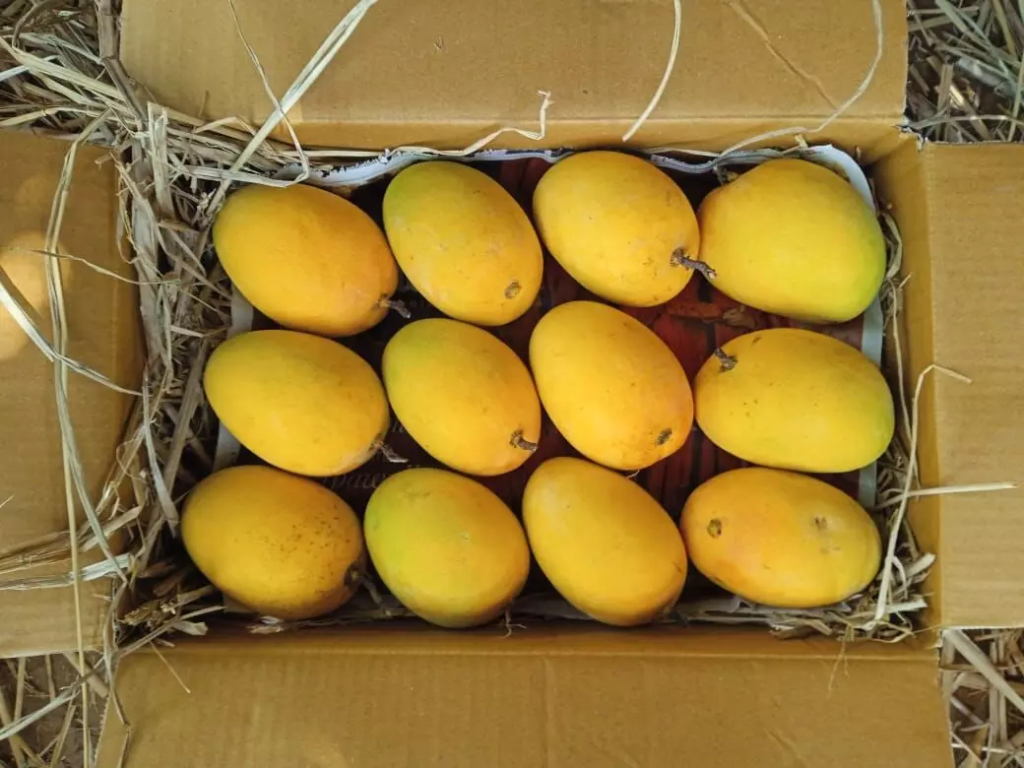
Unlike processed mango products, fresh mango exports operate under extremely narrow logistical tolerances. The fruit’s limited shelf life and sensitivity to temperature fluctuations make air freight the only commercially viable transport mode for long-haul markets such as the United States.
Sea freight remains unsuitable due to extended transit times that compromise product integrity and increase rejection risks upon arrival.
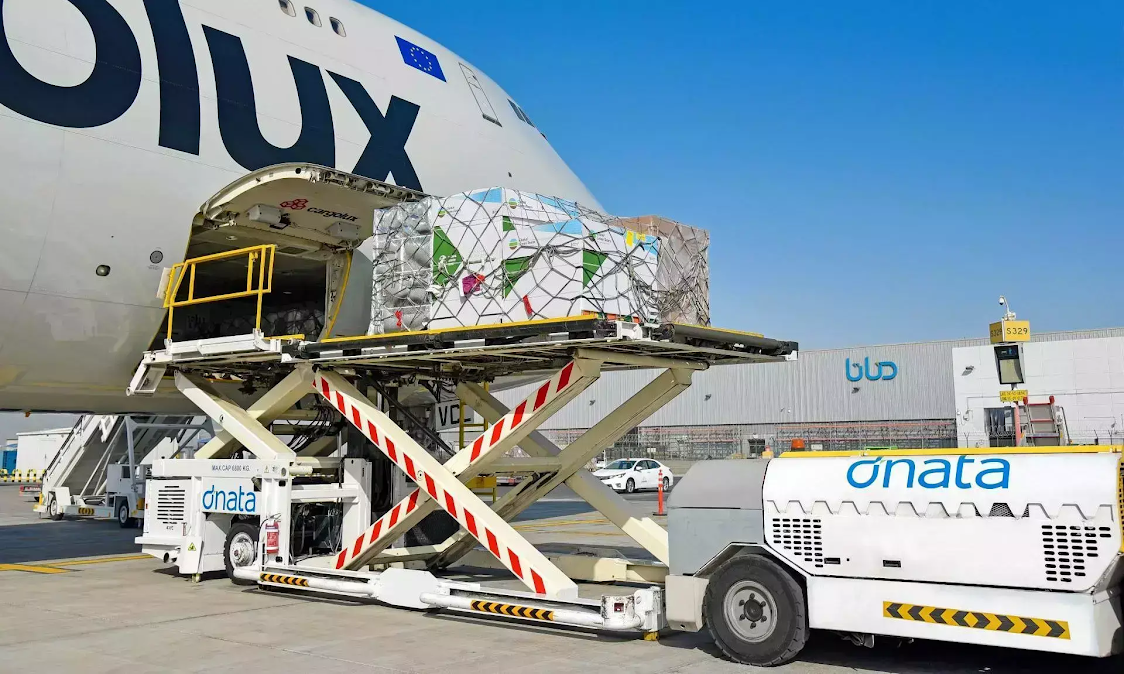
As a result, exporters are heavily exposed to fluctuations in air cargo pricing, capacity availability, and network reliability. India’s long-haul export routes are also structurally dependent on transshipment hubs in the Middle East, which serve as critical connectivity nodes for onward distribution to North America.
Any disruption in these hub systems therefore has an immediate and amplified impact on perishable export flows.
Lingering Impact of Middle East Airspace Disruption
Although recent geopolitical tensions in the Middle East have stabilised, their residual impact continues to affect global aviation networks. During the disruption period, airlines rerouted services to avoid restricted airspace, resulting in longer flight paths, increased fuel consumption, and reduced aircraft efficiency.
These operational inefficiencies translated into higher costs and tighter capacity allocation, particularly on long-haul corridors.
Even after partial normalisation, freight rates have not reverted to pre-disruption levels. Airlines continue to adjust schedules and rebalance networks, leading to ongoing uncertainty in booking availability, transit reliability, and uplift consistency.
For perishable cargo exporters, this environment has increased exposure to delays, rollovers, and last-minute capacity reallocations.
Sharp Freight Rate Inflation Hits Exporters
The impact on India–US mango shipments has been particularly pronounced. Exporters report a sharp escalation in air freight costs, with rates increasing from approximately ₹350 per kilogram last season to between ₹500 and ₹550 per kilogram this year.
Industry participants attribute the increase primarily to elevated fuel costs driven by longer routing structures and reduced network efficiency.
For exporters operating in price-sensitive commodity categories such as fresh fruit, these cost increases represent a significant margin compression.
As one exporter noted, while high-value sectors such as pharmaceuticals can absorb such volatility, mango shipments operate within far tighter pricing thresholds, making freight inflation a critical constraint on export viability.
Capacity Constraints and Priority Shifts
Alongside rising costs, exporters are also facing tightening cargo space availability. Reduced effective capacity—driven by longer routings and schedule adjustments—has intensified competition for uplift on key corridors.
Airlines are increasingly prioritising higher-yield cargo and passenger baggage allocations, particularly on mixed-use aircraft, reducing space available for temperature-sensitive perishables.
This shift has increased the likelihood of shipment rollovers, particularly during peak demand windows, adding further uncertainty to already compressed export timelines.
Reliance on Gulf Hubs Remains Structural
Despite operational disruptions, India’s mango export ecosystem remains heavily dependent on transshipment through Middle Eastern hubs, which continue to serve as the backbone of long-haul connectivity to North America.
While routing flexibility has increased in recent months, these hubs remain central to maintaining frequency and network continuity.
Direct India–US freighter capacity is being explored more actively by exporters, but limited availability means it cannot yet replace hub-based routing at scale.
This structural dependency highlights a persistent vulnerability in India’s perishables export chain, where external transit systems play a decisive role in determining market access.
Exporters Strengthen Cold Chain Controls
In response to increased transit uncertainty, exporters are reinforcing end-to-end handling protocols to protect product integrity. Measures include tighter packhouse controls, enhanced temperature management systems, and accelerated cargo handovers to reduce dwell time exposure.
These interventions are essential in mitigating quality degradation risks but also increase operational complexity and cost intensity across the supply chain.
Kaybee Exports Navigates Volatile Season
Amid these challenges, exporters such as Kaybee Exports have commenced their 2026 mango export cycle, with initial shipments dispatched from Mumbai to San Francisco on 28 March.
The company expects to maintain shipments throughout the season, though volumes will remain sensitive to fluctuations in freight rates and capacity availability.
According to industry feedback, operational uncertainty remains the defining challenge of the current season.
Freight rates, which have surged sharply year-on-year, combined with constrained capacity and unpredictable scheduling, are reshaping export planning cycles, forcing earlier booking decisions and tighter supply chain coordination.
Structural Constraints Limit Market Opportunity
While global demand fundamentals remain positive, particularly in the US market, India’s ability to fully capitalise on this growth is increasingly determined by logistics resilience rather than production capacity.
APEDA data indicates global mango exports are expected to grow by 8–9% in 2026, supported by rising consumption across developed markets.
However, exporters warn that sustained logistics volatility could limit India’s share of this growth opportunity unless capacity stability and cost predictability improve across key long-haul corridors.
Outlook: Demand Strong, Logistics Under Strain
The current export season underscores a widening divergence between strong demand fundamentals and fragile logistics conditions.
While consumption growth in the US and constrained supply from competing origins create favourable market dynamics, the elevated cost and complexity of air freight operations continue to act as a structural bottleneck.
For India’s mango exporters, the 2026 season is increasingly defined not by production capability, but by the resilience of the air cargo ecosystem that connects orchards to overseas retail shelves.