
Air India SATS Airport Services is stepping up efforts to build freighter connectivity at Noida International Airport, with new partnerships aimed at expanding cargo activity at its Multi-Modal Cargo Hub.
Air India SATS Airport Services (AISATS) is seeking to accelerate the development of freighter operations at Noida International Airport as the newly opened gateway begins establishing its role as a cargo hub for northern India.
AISATS has signed a memorandum of understanding with SpiceXpress and Logistics, the cargo arm of SpiceJet, to explore and develop freighter operations at the AISATS Multi-Modal Cargo Hub (MMCH) at Noida International Airport. AISATS confirmed the agreement through its corporate communication, describing the partnership as a step towards developing livestock freighter operations and strengthening domestic and international cargo connectivity.
Related Post




The agreement was signed during the Air Cargo Forum India World Conclave 2026 and is intended to combine the airport’s location and cargo infrastructure with SpiceXpress’ freighter capabilities.
AISATS said the collaboration is designed to lay the foundation for livestock freighter operations, while using the MMCH’s infrastructure and digital capabilities to support faster cargo movement.
AISATS has also announced a separate agreement with GSSA Total Solutions to explore opportunities around cargo and freighter activity at the MMCH. While the partnership has been publicly referenced, detailed operational commitments and the proposed scope of the GSSA’s role have not yet been disclosed in the airport’s official news releases.
Noida builds its cargo proposition
Noida International Airport began commercial operations on 15 June 2026, with IndiGo operating the airport’s first commercial flight. The airport has been developed as a new gateway for the National Capital Region and western Uttar Pradesh, with an explicit focus on supporting both passenger and cargo activity.
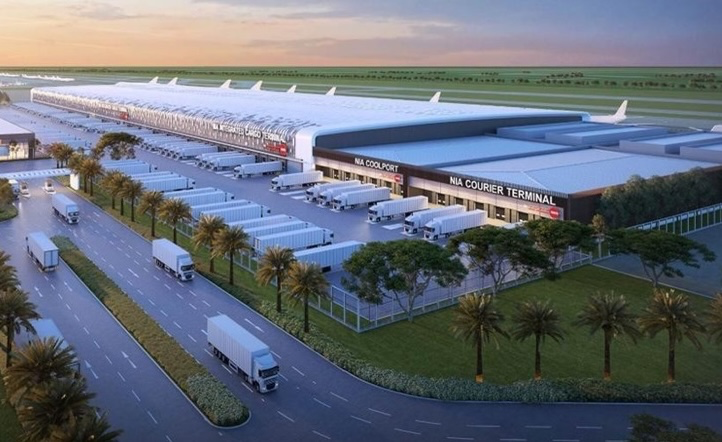
Cargo infrastructure is being developed by AISATS, which operates the Multi-Modal Cargo Hub comprising an Integrated Cargo Terminal and an Integrated Warehousing and Logistics Zone. AISATS describes the MMCH as an integrated cargo ecosystem designed to combine cargo handling, warehousing and logistics functions within the same development.
Noida International Airport says its dedicated cargo facilities have an initial annual handling capacity of 200,000 tonnes, with plans to scale capacity to 1.5 million tonnes. The airport’s cargo proposition also includes digital processes based on the IATA-recommended E-Freight system, end-to-end tracking and paperless cargo movement.
The development is strategically significant for northern India, where the airport is intended to complement existing aviation infrastructure and provide improved access to industrial and consumption centres across the National Capital Region and Uttar Pradesh.
First freighter already handled
The push for additional freighter services follows the successful handling of the first domestic freighter at the AISATS MMCH.
Afcom Holdings operated the inaugural cargo flight, with a Boeing 737-800F arriving from Chennai carrying nearly 20 tonnes of cargo. AISATS said the shipment included commodities ranging from perishables to precision components.
The milestone demonstrated that the new cargo facility is operationally ready to handle dedicated freighter movements only days after the airport’s commercial opening. Afcom subsequently described the Chennai–Noida–Chennai operation as one of the airport’s first cargo movements and said the flight carried domestic e-commerce cargo.
AISATS’ MMCH is spread across an 87-acre integrated ecosystem, combining the cargo terminal with its warehousing and logistics zone. The facility is intended to support faster cargo processing and improve connections between production centres and consumption markets across northern India.
Building a northern India cargo gateway
The early focus on freighter partnerships reflects the wider ambition behind Noida International Airport’s cargo strategy. Rather than relying solely on belly capacity from passenger services, the airport and AISATS are seeking to establish dedicated cargo operations capable of serving specialised and time-sensitive freight flows.
For AISATS, attracting additional freighter operators will be an important step in building cargo volumes at the MMCH and creating a broader ecosystem of airlines, GSSAs, freight forwarders, logistics providers and cargo customers.
The SpiceXpress agreement is particularly relevant to the development of specialised cargo flows, including livestock, while the reported Total Solutions partnership points to an additional commercial channel for developing cargo business.
With its digital cargo infrastructure, integrated warehousing facilities and expanding network of cargo partners, Noida International Airport is now moving from infrastructure development into the more challenging phase of building sustained cargo volumes and regular freighter connectivity.
The first Afcom operation has provided an early proof point. The next phase will depend on converting that initial activity into a broader network of scheduled and charter freighter services and establishing the MMCH as a competitive cargo gateway for northern India.