
- Deutsche Aircraft is showcasing research-driven progress on its D328eco regional turboprop at ILA Berlin 2026, highlighting advancements in sustainable aviation, SAF compatibility, structural testing and noise reduction.
- The company says its work, supported by Germany’s LuFo Klima programme, is helping to accelerate the development of a climate-compatible regional aircraft.
- Deutsche Aircraft is also demonstrating how collaboration with research partners, including DLR, is supporting the industrialisation and certification of the D328eco programme.
D328eco programme demonstrates progress in SAF compatibility, structural testing, acoustic optimisation and climate-focused aircraft development
Deutsche Aircraft used ILA Berlin 2026 as a platform to showcase significant advancements in its next-generation D328eco regional turboprop programme, highlighting a series of research-driven achievements aimed at supporting the future of sustainable regional aviation.
The German aircraft manufacturer presented the latest developments in propulsion technology, sustainable aviation fuels (SAF), structural validation, acoustic optimisation and industrial readiness, reinforcing its commitment to delivering a climate-compatible regional aircraft capable of meeting future environmental and operational requirements.
Related Post



The company’s participation at one of Europe’s leading aerospace exhibitions also underscored the growing role of collaborative research initiatives in accelerating innovation and supporting the aviation industry’s decarbonisation objectives.
Driving Sustainable Regional Aviation Through Research
At the centre of Deutsche Aircraft’s presentation was the D328eco programme, a next-generation regional turboprop aircraft designed to offer enhanced environmental performance while supporting the operational needs of regional air transport operators.
The company highlighted how years of research and validation activities have contributed to measurable progress across several key technology areas, with much of the work supported through Germany’s LuFo Klima aviation research programme.
According to Deutsche Aircraft, the programme integrates scientific research with practical industrial development, ensuring that innovations can be translated into certifiable and commercially viable aviation solutions.
The company’s approach reflects a broader industry trend toward combining sustainability objectives with rigorous testing and regulatory compliance to accelerate the introduction of lower-emission aircraft technologies.
Advancing Sustainable Aviation Fuel Compatibility
One of the most notable developments showcased at ILA Berlin was the D328eco’s progress in alternative fuel research.
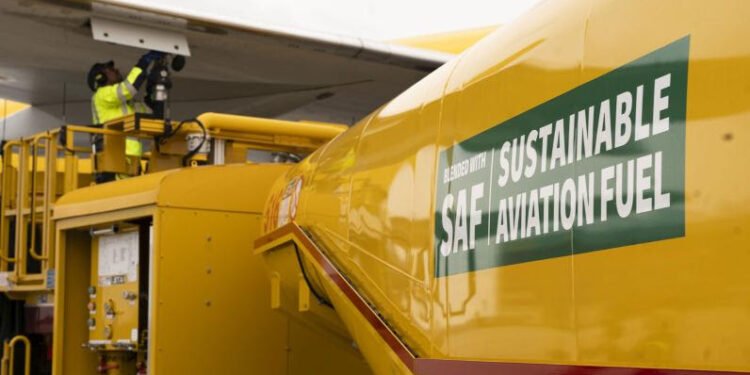
Deutsche Aircraft reported successful demonstration flights using 100% synthetic, zero-aromatic fuel, representing a significant milestone in the aircraft’s sustainable fuel journey.
The company is also continuing its collaboration with engine manufacturer Pratt & Whitney Canada to further advance Sustainable Aviation Fuel (SAF) compatibility, supporting long-term efforts to reduce aviation’s carbon footprint while enabling a smoother transition toward cleaner energy sources.
The initiative aligns with broader global aviation industry goals to increase SAF adoption and reduce lifecycle greenhouse gas emissions without requiring significant changes to existing aircraft operations.
By focusing on SAF readiness from the development stage, Deutsche Aircraft aims to position the D328eco as a future-ready platform capable of supporting evolving environmental regulations and airline sustainability strategies.
Structural Validation Supports Certification Readiness
Alongside fuel-related research, Deutsche Aircraft showcased the extensive testing programmes underpinning the aircraft’s structural integrity and certification pathway.
Comprehensive structural and vibration testing campaigns have generated high-fidelity engineering data that is being used to enhance structural modelling accuracy and optimize aircraft design.
The data also supports systems integration activities, helping engineers validate performance under operational conditions while reducing development risks.
Such testing is a critical component of modern aircraft development, providing regulators and operators with confidence that new aircraft designs can meet stringent safety, reliability and performance requirements.
The company emphasized that these validation efforts form a key part of its strategy to deliver an industrial-ready aircraft capable of entering service on schedule.
Reducing Noise Through Advanced Acoustic Research
Noise reduction remains another major focus of the D328eco development programme.
Deutsche Aircraft revealed that precision acoustic modelling combined with extensive flight-test data is being used to develop a noise certification strategy that aims to exceed current regulatory standards for regional turboprop aircraft.
As communities and regulators place increasing emphasis on reducing aviation’s environmental impact, quieter aircraft designs are becoming an important competitive advantage for manufacturers and operators alike.
The company’s efforts seek to improve airport compatibility while supporting broader sustainability goals related to community acceptance and environmental stewardship.
DLR Research Aircraft Highlights Collaborative Innovation
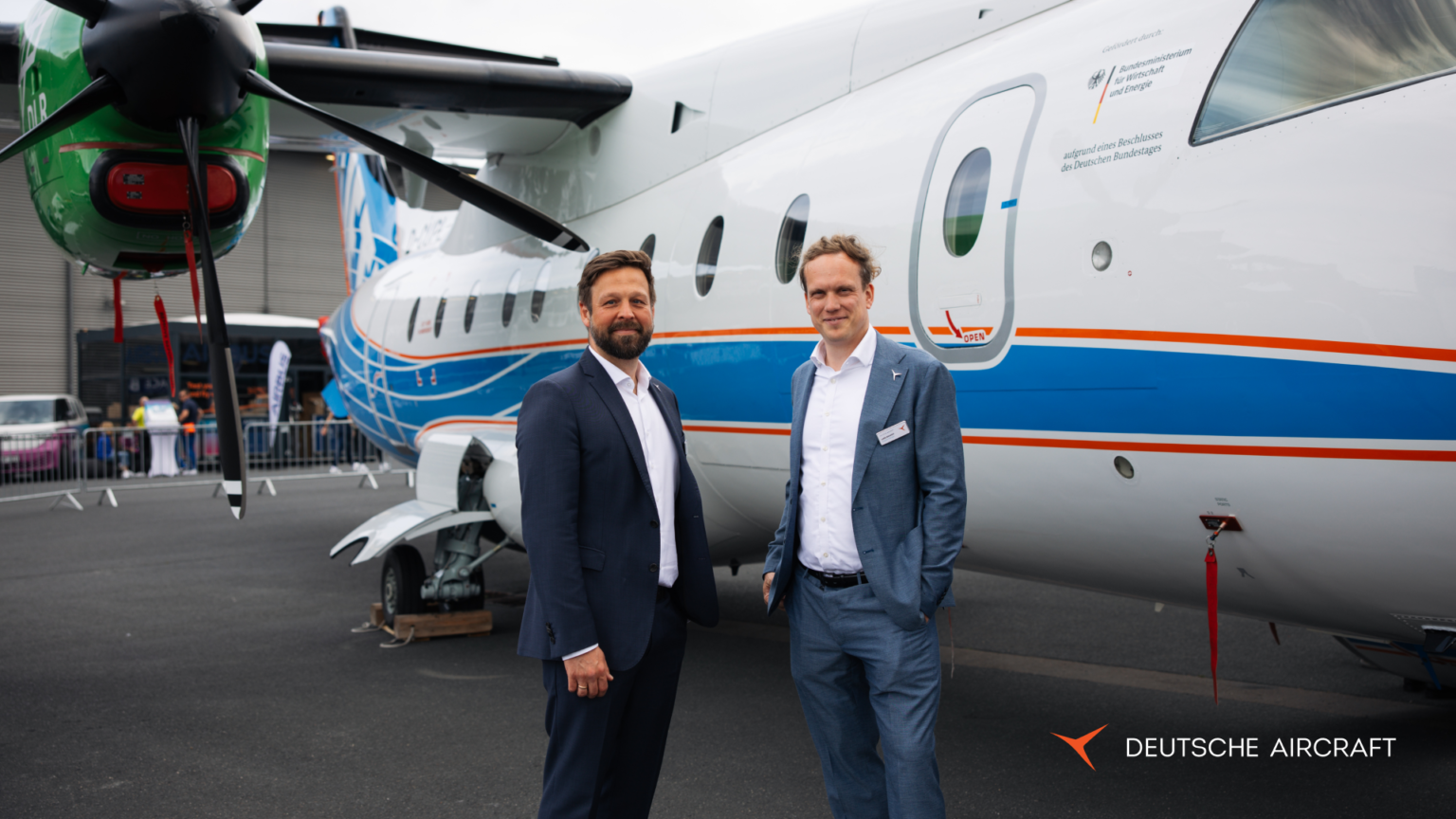
A major attraction at the exhibition was the display of the D328 UpLift research aircraft by the German Aerospace Center (DLR), one of Deutsche Aircraft’s key research partners.
Presented in its current research configuration, the aircraft offered visitors a rare insight into the sophisticated testing and validation activities supporting future regional aircraft development.
The aircraft featured a preliminary research cabin alongside visible external measurement systems, including a nose-mounted air data boom used to collect aerodynamic and environmental performance data during flight testing.
The display illustrated how engineers gather critical information required for aircraft development, systems validation and certification programmes.
It also demonstrated the close relationship between research institutions and industry partners in advancing Germany’s aviation innovation ecosystem.
Simulator Technology Accelerates Development
Another important element of the collaboration between Deutsche Aircraft and DLR is the UpLift-D328-Simulator, which was also showcased during ILA Berlin 2026.
The simulator functions as a ground-based virtual testing environment designed to support flight-test planning, systems integration and mission preparation.
By enabling engineers and pilots to evaluate scenarios in a digital environment before actual flight operations, the platform helps reduce development risks, improve efficiency and accelerate programme maturity.
The technology also supports pilot training and research mission planning, further strengthening Germany’s capabilities in aviation research and innovation.
Building a Climate-Compatible Aircraft for the Future
Speaking at the event, Fredric Fischer, Director Roadmap & Innovation at Deutsche Aircraft, emphasized the importance of combining research excellence with industrial execution to advance sustainable regional aviation.
Company executives highlighted how the integration of flight-test data, structural validation programmes and fuel compatibility research is helping ensure the D328eco remains on track for industrialisation and certification.
The approach reflects Deutsche Aircraft’s broader ambition to transform validated research into practical aviation solutions capable of supporting the industry’s transition toward lower-emission regional air transport.
Strengthening Germany’s Sustainable Aviation Ecosystem
Through its participation at ILA Berlin 2026, Deutsche Aircraft demonstrated how collaboration between manufacturers, research institutions and technology partners can accelerate the development of next-generation aircraft technologies.
The D328eco programme has emerged as one of Germany’s most significant regional aviation projects, combining sustainability, innovation and industrial capability in support of future air mobility requirements.
As the aviation sector intensifies efforts to achieve net-zero emissions, initiatives such as the D328eco highlight the growing importance of regional aircraft platforms designed around environmental performance, operational efficiency and long-term sustainability.
By showcasing its latest research achievements and development milestones, Deutsche Aircraft reinforced its commitment to bringing a climate-compatible regional aircraft to market while contributing to the advancement of Europe’s sustainable aviation ambitions.