
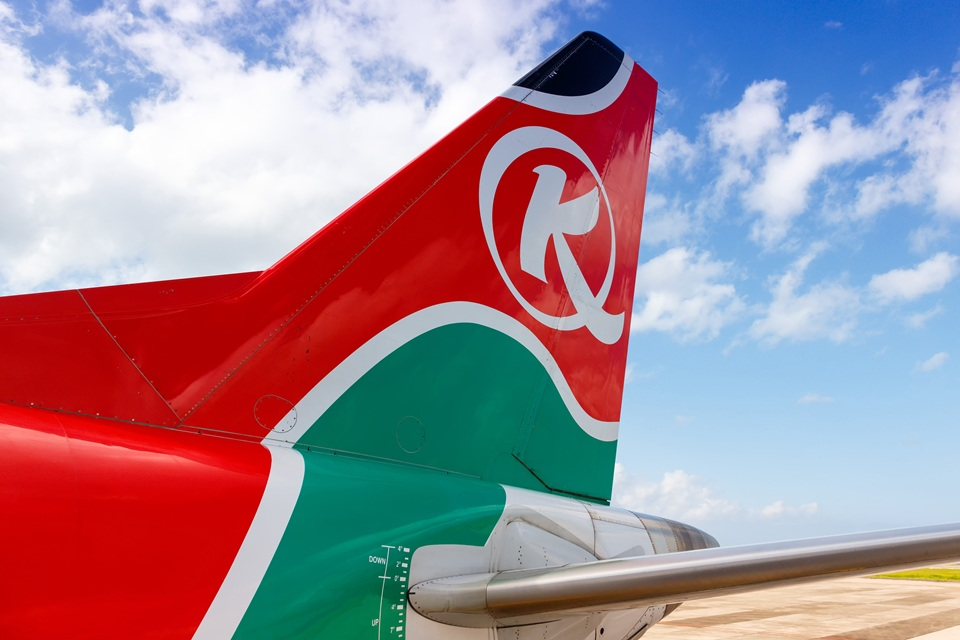
Kenya Airways is nearing an agreement to secure a Boeing 777 freighter on a long-term lease as the airline continues to expand its cargo business and targets a significant increase in its share of the Kenyan air freight market.
Chief executive George Kamal said the airline was in discussions to acquire a 777 freighter with a payload capacity of approximately 100 tonnes. While Kenya Airways has not disclosed the aircraft’s source or specific variant, Kamal said negotiations were close to completion.
“We’re looking for a 777 cargo [aircraft] to come,” Kamal said. “We’re in discussions now. We’re almost there.”
Related Post


The planned freighter acquisition follows the airline’s decision to discontinue a capacity arrangement involving a Boeing 747-400 freighter after a sharp increase in fuel costs made the aircraft economically challenging to operate.
Kenya Airways had used the 747-400, operated by Moldovan carrier Terra Avia as aircraft ER-BYK, for a relatively short period before reassessing the arrangement.
Kamal described the 747 as a large aircraft whose operating economics became increasingly difficult following the rise in fuel costs.
“That really became a burden because [we had] to fly cargo at the right cost,” he said. “This aircraft is not the right one for us.”
The move towards a 777 freighter represents a shift towards a larger but more modern cargo platform as Kenya Airways seeks to build sustainable long-haul freighter capacity.
The airline has previously outlined plans to introduce Boeing 767 freighters as an intermediate step before developing a larger dedicated freighter fleet. Its longer-term ambition is to operate three Boeing 777 freighters by the end of the decade.
Kenya Airways currently has four converted freighters in its fleet, comprising two Boeing 737-800 passenger-to-freighter aircraft and two Boeing 737-300 converted freighters. Together, these aircraft provide approximately 70 tonnes of cargo capacity.
Despite constraints on belly capacity from its passenger fleet, the airline’s cargo business has continued to grow. Cargo revenues increased 18% during the first six months of the year to approximately KSh8.8 billion (US$68 million).
The performance has strengthened Kenya Airways’ confidence in expanding its dedicated freighter operation and increasing the contribution of cargo to the airline’s overall business.
Kamal said freight represented a significant growth opportunity for the carrier and maintained an ambitious target of increasing Kenya Airways’ cargo market share from its current level of approximately 11% to 40%.
The proposed 777 freighter would provide substantially more capacity than the airline’s existing converted narrowbody aircraft, potentially allowing Kenya Airways to serve longer-haul markets and consolidate cargo flows through its Nairobi hub.
The planned aircraft also aligns with Kenya Airways’ broader strategy of developing Nairobi as a regional cargo gateway connecting East Africa with international markets.
The airline’s cargo strategy is focused not only on increasing aircraft capacity but also on improving the efficiency and commercial performance of its freight operation. Cargo executives have previously identified technology investment and network development as important elements of the carrier’s longer-term growth plans.
For Kenya Airways, securing a 777 freighter would represent a major step in that strategy, giving the airline access to a larger dedicated freighter platform while providing the capacity required to pursue its ambitious market-share target.
The proposed long-term lease remains subject to the conclusion of negotiations, but Kamal’s comments indicate that Kenya Airways is moving closer to its first 777 freighter acquisition as it seeks to turn strong cargo demand and rising revenues into sustained network growth.