
Airhub Aviation has expanded its base maintenance capabilities to include the Airbus A320neo and Boeing 737 MAX aircraft families, strengthening its technical support offering for airlines, aircraft lessors and aviation aftermarket businesses.
The expansion follows the successful completion of a regulatory audit by Lithuania’s Transport Competence Agency (TKA). The revised maintenance scope covers Airbus A320neo aircraft equipped with either CFM LEAP or Pratt & Whitney geared turbofan (GTF) engines, alongside Boeing 737 MAX aircraft.
The development marks a further step in the Lithuania-based company’s efforts to extend its maintenance, repair and overhaul (MRO) capabilities to newer-generation aircraft, as operators face increasing demand for specialised technical support and more complex maintenance requirements.
Related Post
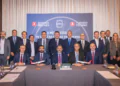


“The aviation market is evolving rapidly, and technical capabilities must evolve with it,” said Oleg Novak, managing director of Airhub Aviation.
He said the expanded scope responds to growing demand from lessors, operators and aftermarket businesses for specialised maintenance support across newer aircraft platforms. It also strengthens the company’s focus on technical asset management and preserving aircraft residual values.
Rising Demand for Complex Maintenance Checks
Airhub Aviation expects demand to increase for both routine 24-month inspections and the first 12-year maintenance checks on A320neo aircraft.
As early-generation A320neo aircraft approach these longer-term maintenance milestones, operators may face extended ground times while maintenance providers undertake inspections being performed for the first time at this stage of the aircraft’s operational life.
Managing these events efficiently requires specialised engineering expertise, careful planning and sufficient MRO capacity to minimise disruption to fleet availability.
For airlines and lessors, the duration and cost of scheduled maintenance can influence aircraft utilisation, lease planning and asset economics. Access to additional maintenance providers may help improve scheduling flexibility as more next-generation aircraft enter these inspection cycles.
Airhub Aviation’s expanded scope is intended to position the company to support these requirements while continuing to provide technical services throughout the aircraft lifecycle.
Aircraft End-of-Life Management Gains Importance
The company is also observing changes in the end-of-life market for newer-generation aircraft.
According to Novak, a Boeing 737 MAX 8 entered an end-of-life management process during the preceding 12 months, while the dismantling of A320neo aircraft is gaining momentum following airline insolvencies in 2025 and 2026.
These developments highlight the growing importance of lifecycle planning as newer aircraft types move through different stages of ownership and operation. End-of-life management can involve assessing component recovery opportunities, coordinating aircraft disassembly and managing the remaining value of aircraft assets.
For lessors and operators, such decisions require detailed technical assessments and consideration of maintenance status, component demand and the commercial viability of continued operation.
Airhub Aviation provides asset management, component repair management, aircraft transition and end-of-life services alongside its maintenance activities.
Airbus A220 Capabilities Under Development
Alongside the A320neo and 737 MAX expansion, Airhub Aviation is progressing plans to extend its technical services to the Airbus A220.
The company said it is working through the relevant approval process and developing capabilities covering line maintenance, aircraft transitions and end-of-life asset management in cooperation with an established industry partner.
The proposed expansion remains subject to the necessary approvals and development work.
Fleet Modernisation Creates New MRO Requirements
Airhub Aviation said the expansion reflects wider pressures affecting the aviation aftermarket, including supply-chain constraints, limited engine shop capacity and delays in new aircraft deliveries.
These challenges can keep aircraft in service longer than planned and increase the need for flexible maintenance capacity. At the same time, operators must balance the cost of keeping existing aircraft operational against the investment required to introduce newer, more efficient models.
“Despite ongoing fleet modernisation, the industry continues to face supply-chain constraints, limited engine shop capacity and delays in new aircraft deliveries,” Novak said, adding that these pressures were increasing demand for solutions that maintain aircraft availability while preserving long-term asset value.
Airhub Aviation operates a five-bay MRO facility with aircraft parking capacity and provides technical services across multiple stages of the aircraft lifecycle. Its activities include base and line maintenance, continuing airworthiness management, component support, aircraft transitions and end-of-life solutions.
The addition of the A320neo and 737 MAX to its base maintenance scope broadens the company’s support for next-generation narrowbody aircraft, as airlines and lessors seek greater flexibility in managing maintenance schedules, operational availability and asset value.