

IBA forecasts a market value of US$197 million to US$198 million for a new A350F scheduled for delivery in 2027, with monthly lease rates projected to exceed US$1.5 million.
The projected value of Airbus’ A350F freighter is approaching US$200 million, highlighting the aircraft’s anticipated position in the large-capacity air cargo market as it moves through flight testing ahead of its planned entry into service.
Aviation advisory firm IBA estimates that a new A350F delivered in 2027 will have a market value of between US$197 million and US$198 million. The firm also forecasts monthly lease rates of US$1.53 million to US$1.55 million.
Related Post




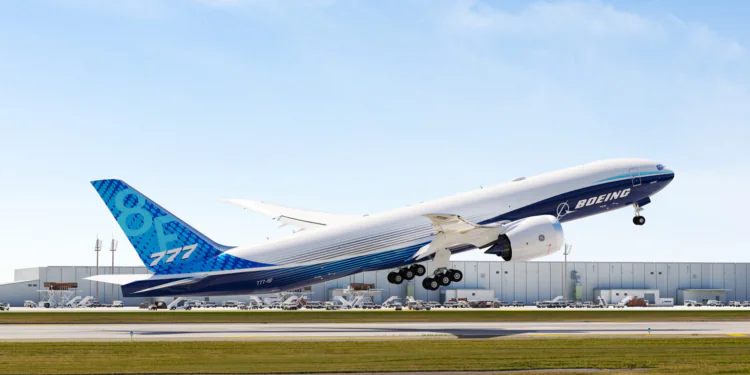
For comparison, IBA values a newly delivered Boeing 777F in 2026 at approximately US$170 million, with monthly lease rates of around US$1.35 million.
The A350F completed its maiden flight on 29 September 2026, beginning a flight-test programme expected to last more than nine months. Airbus has targeted entry into service in the second half of 2027, subject to certification and programme progress.
The aircraft is designed to carry a payload of up to 111 tonnes and offers commonality with the A350 passenger family in areas including crew, systems and parts. It also features a main-deck cargo door measuring 4.3 metres wide, designed to accommodate large and outsized shipments.
IBA’s latest data shows that Airbus has secured 115 firm orders for the A350F from 14 disclosed customers. Its closest new-production competitor, the Boeing 777-8F, has 89 firm orders from nine disclosed customers, according to IBA.
The A350F’s orderbook includes Cathay Pacific, Korean Air, Atlas Air and Silk Way West Airlines. IBA expects demand for large-capacity freighters to remain supported by e-commerce, shipments of bulky and time-sensitive goods, high-tech cargo and growth in Asia-Pacific markets.
The valuation and lease-rate figures are forecasts rather than confirmed transaction prices. Actual aircraft values and leasing terms may vary according to delivery conditions, financing, market demand and individual contract arrangements.