
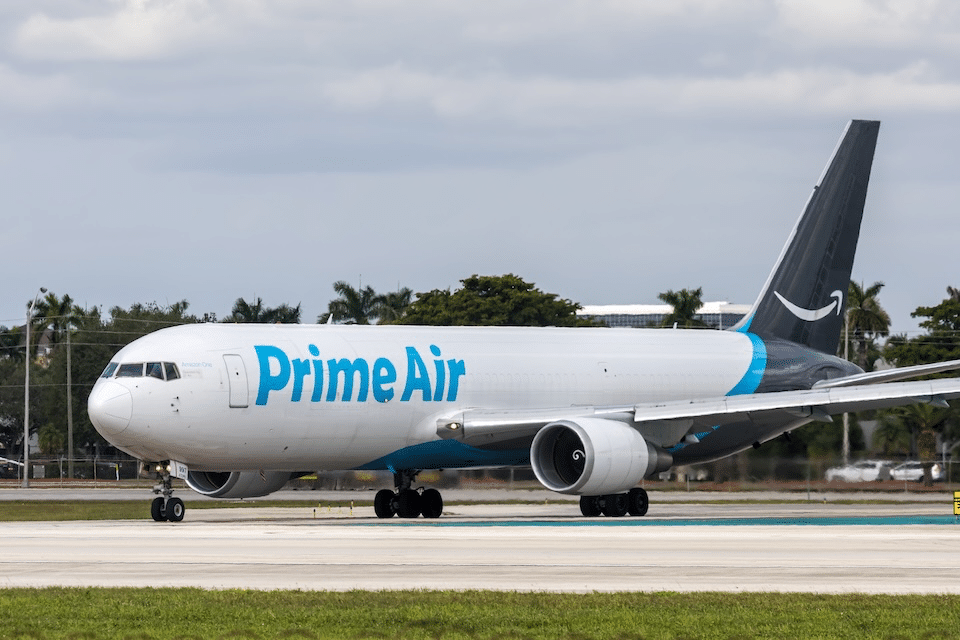
Air SMP and Economy Air give sellers more control over inventory placement and a choice between faster replenishment and lower-cost air transport ahead of the year-end peak.
Amazon is expanding its logistics offering with two new air freight services connecting China and the United States, giving sellers additional options to replenish stock, position inventory closer to customers and respond to changing demand.
Introduced through Amazon Global Logistics (AGL), the new services—Air Seller Managed Placement (Air SMP) and Economy Air—are designed to meet different shipping priorities. Air SMP focuses on regional inventory distribution and faster transit, while Economy Air offers a lower-cost alternative to Amazon’s standard air freight service.
Related Post



The launch comes as online retailers prepare for the year-end shopping period, when demand can rise sharply and delays in replenishing popular products can lead to missed sales. Amazon says the new options are intended to help sellers prepare for peak season, recover from stockouts and support time-sensitive product launches when ocean freight may take too long.
Air SMP combines speed with inventory control
Air SMP allows sellers to divide inventory at origin and ship it by air directly to a designated Amazon fulfilment centre within one of five US regions. The service operates with daily flights from Shanghai and Hong Kong, with shipments expected to arrive within an estimated seven to 10 calendar days after pickup.
The model gives sellers greater control over where their products enter Amazon’s fulfilment network. Instead of sending inventory to a single destination and arranging distribution later, sellers can split shipments in China and direct stock towards regional fulfilment locations.
This can be particularly useful for businesses managing demand across several parts of the United States. Positioning inventory closer to the market where it is needed can help support replenishment planning and reduce the need for additional distribution movements after arrival.
Amazon says Air SMP carries no Fulfilment by Amazon (FBA) inbound placement service fees. The company also says there are no additional surcharges for apparel, electronics or lithium battery products under the service. Sellers will need to review the programme’s terms and shipment requirements when booking.
The service builds on Amazon’s existing Seller Managed Placement concept, extending inventory-splitting capabilities to air freight. Its appeal lies in combining air transport speed with greater control over the initial placement of goods within the fulfilment network.
Economy Air targets cost-conscious shipments
The second option, Economy Air, is aimed at sellers who need faster replenishment than ocean freight can typically provide but want to keep transport costs below those of standard air cargo.
The service offers an estimated transit time of 11 to 15 days from Shanghai or Shenzhen to Los Angeles. Amazon says its rates are lower than those of its standard Global Logistics air freight offering, although it has not publicly disclosed specific prices in the announcement.
The longer transit time makes Economy Air a different proposition from Air SMP. Rather than prioritising the fastest available replenishment, it offers sellers a middle ground between cost and speed.
For businesses with inventory that is running low but does not require the quickest possible arrival, this option could provide additional flexibility. It may also help sellers respond to changes in demand without committing every urgent shipment to a premium air freight service.
The two offerings therefore address different needs within the same supply chain. Air SMP combines faster transit with regional inventory placement, while Economy Air places greater emphasis on transport cost.
Expanding Amazon’s logistics role
The launch is part of Amazon’s broader effort to develop logistics services beyond its own retail operations. Amazon Global Logistics provides cross-border freight services that connect suppliers in China and Vietnam with fulfilment and warehousing facilities in key markets, including the United States, the United Kingdom, the European Union and Japan.
The programme offers ocean and air freight, along with related services such as origin pickup, customs clearance and delivery into Amazon’s fulfilment network. By bringing more of these activities under a single platform, Amazon aims to simplify the process for sellers moving inventory internationally.
Earlier in 2026, the company introduced Amazon Supply Chain Services, bringing together freight, distribution, fulfilment and parcel shipping capabilities. Amazon has also been expanding the range of transport options available through its logistics platform, including a direct rail service for moving inventory from the US West Coast towards the East Coast.
The additional air freight services strengthen that wider offering by giving sellers more choice over how they balance transit time, cost and inventory positioning.
A practical choice ahead of peak season
For cargo and logistics providers, Amazon’s move reflects the continuing demand for flexible transport options as e-commerce businesses seek to manage inventory more precisely. Air freight remains more expensive than ocean shipping, but it can provide a valuable alternative when stock levels, product launches or seasonal demand leave little room for long replenishment cycles.
The new services will not remove the underlying trade-off between speed and cost. Instead, they give sellers another way to match transport choices to the urgency of individual shipments.
The effectiveness of the options will depend on their rates, booking conditions, available capacity and the seller’s destination requirements. Amazon has directed customers to its Global Logistics portal for service details and booking information.
As retailers enter the busiest part of the shopping calendar, the ability to move inventory quickly and place it strategically can be as important as the transport mode itself. With Air SMP and Economy Air, Amazon is seeking to make that choice more flexible for sellers shipping goods from China to the United States.