
Twice-weekly Boeing 767 freighter flights to strengthen China–Africa trade, supporting e-commerce, pharmaceuticals and perishables
African cargo carrier Astral Aviation has announced the resumption of its dedicated Haikou–Johannesburg freighter service in partnership with Fly Noor Aviation Services, reinforcing air cargo connectivity between China and Africa and supporting the growing demand for cross-border trade.
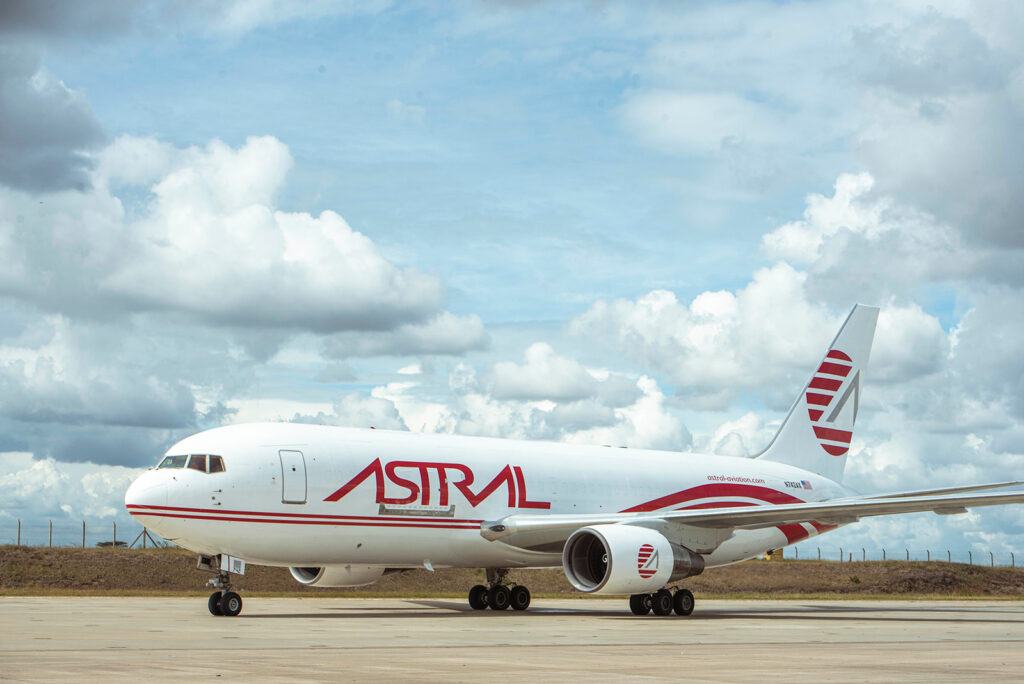
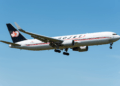
The new agreement, signed during Air Cargo China 2026 in Shanghai, will see Astral Aviation operate twice-weekly scheduled Boeing 767-300F freighter flights linking Haikou, China, with Johannesburg, South Africa, via its Nairobi hub. Each flight will offer a 50-tonne payload capacity, providing customers with reliable lift across one of the world’s fastest-growing trade corridors.
The relaunched service is expected to play a key role in facilitating the movement of e-commerce shipments, electronics, consumer goods, textiles, automotive components, pharmaceuticals and general cargo from China into Africa. In the opposite direction, it will support exports of fresh produce, perishables, agricultural products and other high-value African commodities destined for Asian markets.

The partnership agreement was signed by Sanjeev Gadhia, Chief Executive Officer of Astral Aviation, and Damanpreet Singh, Chief Executive Officer of Fly Noor Aviation Services, reflecting the two companies’ shared commitment to expanding logistics connectivity between the two regions.
“We are delighted to partner with Fly Noor Aviation Services in restarting the Haikou–Johannesburg freighter service,” said Sanjeev Gadhia.
“The agreement signed at Air Cargo China 2026 reflects our shared vision of building stronger logistics bridges between China and Africa. This dedicated twice-weekly service will provide customers with reliable capacity, faster transit times and seamless access to one of the world’s fastest-growing trade corridors.”
Damanpreet Singh said the collaboration combines the strengths of two customer-focused cargo operators committed to supporting international trade.
“Our partnership with Astral Aviation brings together two organisations dedicated to delivering dependable, customer-focused air cargo solutions. We are excited to introduce a scheduled service that meets the growing demand for efficient transportation between China and Africa while supporting the continued expansion of trade between both regions.”
Strategic Gateways for Regional Distribution
Under the new operation, Johannesburg will serve as Astral Aviation’s primary distribution hub for Southern, Eastern and Central Africa through its well-established regional network. Meanwhile, Haikou, located in China’s Hainan Province, provides strategic access to one of the country’s rapidly expanding manufacturing, logistics and e-commerce centres.
The resumed service reflects increasing trade flows between China and Africa, where demand continues to grow for reliable air cargo capacity capable of handling both high-value industrial products and temperature-sensitive shipments.
Supporting Astral’s African Expansion
The latest route expansion follows Astral Aviation’s continued investment in strengthening intra-African and international cargo connectivity. Earlier this year, the airline launched a weekly freighter service between Nairobi and Asmara, Eritrea, further enhancing logistics links across the Horn of Africa.
Headquartered at Jomo Kenyatta International Airport (NBO) in Nairobi, Astral Aviation currently operates a fleet comprising a Boeing 767-300 Passenger-to-Freighter (P2F), a Boeing 767-200P2F, and a Boeing 737-400P2F, serving an extensive network across Africa, the Middle East and selected international destinations.
The restart of the Haikou–Johannesburg service underscores the airline’s strategy of developing specialised freight corridors that connect African exporters with global markets while providing importers with reliable access to Asia’s manufacturing and e-commerce supply chains.
As trade between China and Africa continues to accelerate, dedicated freighter services such as this are expected to play an increasingly important role in supporting economic growth, supply chain resilience and the efficient movement of time-sensitive cargo across both regions.