
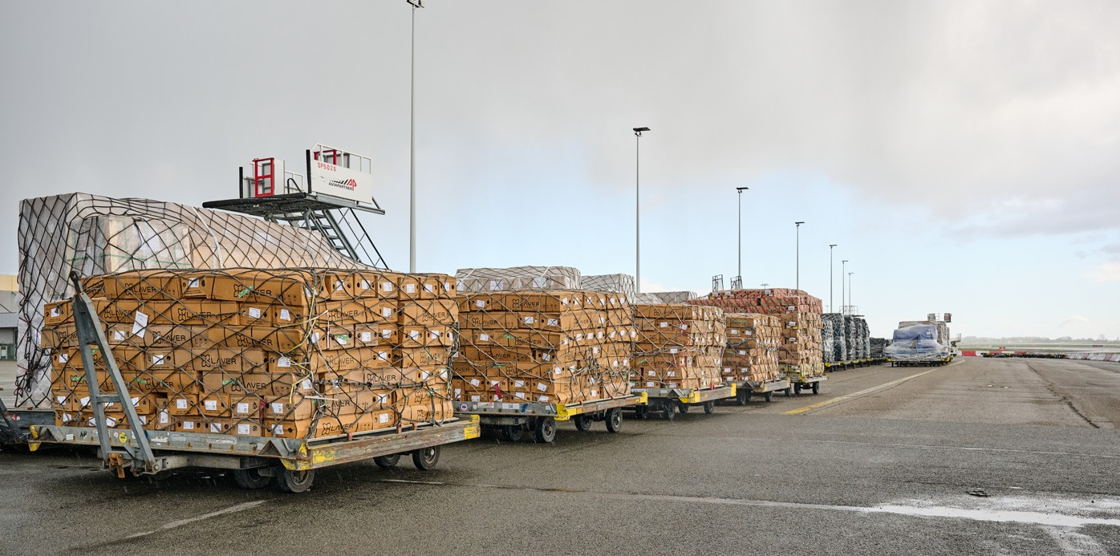
Belgium’s leading cargo gateways — Brussels Airport, Liege Airport and Ostend-Bruges Airport — have launched a landmark collaboration to standardise and digitise air cargo customs processes, reinforcing the country’s ambition to strengthen its position as a major European logistics and trade hub.
The initiative will establish a common customs data exchange framework across the three airports, enabling cargo stakeholders to exchange import, export and transit declarations with Belgian customs authorities through harmonised airport community platforms. The project is being coordinated by Air Cargo Belgium in partnership with LGG Connectand is expected to become operational before the end of 2026.
The move represents one of the most significant examples of inter-airport cooperation within the Belgian aviation sector, bringing together competing cargo hubs under a unified digital customs strategy designed to simplify compliance, reduce administrative complexity and improve operational transparency across the national air freight ecosystem.
Related Post



Transition Towards Unified Digital Customs Operations
Currently, air cargo stakeholders still exchange part of their customs-related electronic messages through Belgium’s existing Paperless Customs and Excise system. However, with the implementation of MASP-C — the European Union’s Multi-Annual Strategic Plan for Customs modernisation — airports and logistics operators are increasingly required to migrate towards more integrated and digitally connected customs procedures.
Under the new Belgian framework, cargo companies will be able to process Temporary Storage Declarations digitally through airport data platforms including BRUCloud at Brussels Airport and LGG Tracking at Liege Airport. Both systems will operate using identical interfaces and operational principles while remaining independently connected to Belgian customs systems for declaration processing and status monitoring.
The harmonised digital environment is expected to streamline customs messaging, accelerate cargo handling workflows and create a consistent operating model for freight forwarders, airlines, handlers and logistics providers operating across Belgian airports.
Industry observers view the initiative as particularly important for international operators managing multi-airport cargo flows, as the standardised approach could significantly reduce duplication, training requirements and system fragmentation.
Strengthening Belgium’s Competitive Cargo Position
Belgium has long positioned itself as one of Europe’s most strategic logistics gateways due to its central geographic location and dense multimodal transport infrastructure. The integration of customs digitalisation across multiple airports is expected to further enhance that competitiveness at a time when supply chains are becoming increasingly data-driven and compliance-intensive.
Liege Airport, which handled more than 1.3 million tonnes of cargo in 2025 and remains among Europe’s largest dedicated cargo airports, has aggressively pursued digital cargo innovation in recent years through its CargoLand and LGG Connect initiatives.
Similarly, Brussels Airport has invested heavily in digital cargo infrastructure through BRUCloud, an open data-sharing platform developed to enable more transparent, paperless and collaborative cargo operations across the BRUcargo community.
Arnaud Feist, CEO of Brussels Airport, said the project aligns closely with the airport’s long-term cargo strategy focused on innovation and efficiency.
“Brussels Airport has been committed to the digitalisation of cargo processes for years. The development of this new digital integration is fully in line with our strategy to further strengthen the efficiency of air cargo operations through innovative and digital solutions,” Feist stated. “At the same time, we are contributing to a unified approach at the Belgian level, making Brussels Airport and our country even more interesting as a logistics hub for international trade.”
Freek De Witte, Director at Air Cargo Belgium, highlighted the growing collaboration between the air cargo sector and customs authorities, noting that the project builds upon previous industry agreements focused on unified digital customs development.
“Thanks to its unique relationship with our operational stakeholders, Air Cargo Belgium enjoys the full confidence of both the General Administration of Customs & Excise and our members,” De Witte said. “This builds upon the cooperation agreement of 2023 and the MoU signed with handlers in 2024, each time focusing on uniform, digital customs development for the entire air cargo sector.”
Laurent Jossart, CEO of Liege Airport, described the collaboration as a concrete step towards more transparent and digitally enabled cargo operations nationwide.
“This collaboration reflects our shared ambition to strengthen Belgium’s position as a leading European logistics hub,” Jossart said. “At Liege Airport, we strongly believe in digital innovation and seamless cooperation across the cargo ecosystem to improve transparency, efficiency and compliance in international trade flows.”
A Wider Shift Towards Smart Cargo Ecosystems
The initiative also reflects a broader transformation underway across global air cargo, where airports are increasingly investing in cargo community systems, real-time shipment visibility and digital customs integration to meet growing e-commerce demand and rising regulatory complexity.
Industry stakeholders believe Belgium’s collaborative model could emerge as a benchmark for other European cargo gateways seeking to align airport systems and customs infrastructure under common digital standards.
By creating a unified customs environment across multiple airports, Belgium is positioning itself to offer cargo operators a more seamless, predictable and digitally connected logistics ecosystem — an increasingly critical factor in global supply chain competitiveness.