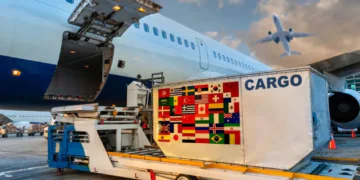

Navi Mumbai International Airport has marked a significant milestone in India’s aviation and logistics development by handling its first international export cargo shipment, opening a new gateway for time-sensitive exports from western India.
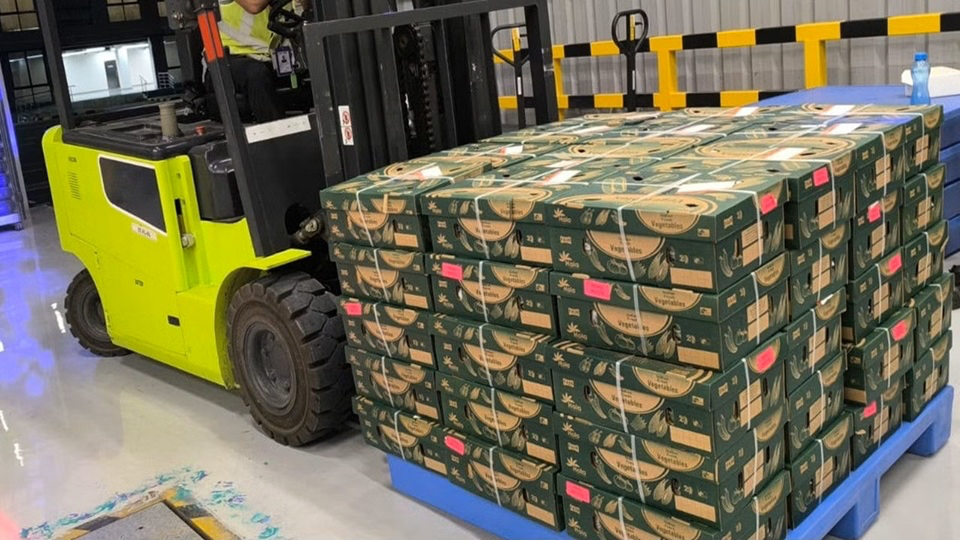
The inaugural shipment, transported by Air India Cargo, consisted of 1.79 tonnes of freshly harvested guavas and Drumstick Moringa (Moringa oleifera pods) and was carried on an Air India Express passenger flight to Abu Dhabi on 15 July 2026, coinciding with the start of international flight operations from the new airport.
The service marks the beginning of a new air cargo connection between the Mumbai metropolitan region and the Gulf market, creating additional opportunities for exporters of agricultural produce and other temperature-sensitive commodities.
Related Post



New Air Route Supports Perishable Export Growth
Air India Express is currently operating the Navi Mumbai–Abu Dhabi route three times weekly using a Boeing 737-8 aircraft, offering approximately 2.5 tonnes of belly-hold cargo capacity per flight.
The available cargo space is expected to support the movement of fresh produce and other time-sensitive shipments from Maharashtra and neighbouring regions to the UAE and wider Gulf markets.
Air India Cargo estimates that the route could handle approximately 25 tonnes of cargo per month, providing exporters with a faster and more reliable alternative for accessing international buyers.
Ramesh Mamidala, Head of Cargo at Air India, said the first export shipment demonstrated the importance of new international connectivity.
“Every new route presents an opportunity. This first export shipment from Navi Mumbai connects growers, traders and businesses in western India directly with one of the region’s most important international markets.”
“Fresh produce is highly time-sensitive, and reliable air connectivity plays a critical role in helping Indian exporters reach global consumers while preserving product quality.”
Cold Chain Capability Supports High-Value Cargo
Air India Cargo said it has continued to strengthen its handling capabilities to support the growing movement of perishables, pharmaceuticals and temperature-sensitive goods across its network.
The airline’s cargo operations are supported by specialised equipment, including cool dollies and thermal blankets, designed to maintain shipment integrity and reduce temperature variations during the transfer between warehouse facilities and aircraft.
Mamidala highlighted the importance of maintaining product quality throughout the logistics journey.
“Cargo is often the unseen enabler of trade. When we transport perishable products such as fruits, vegetables or temperature-sensitive pharmaceuticals, speed alone is not enough.”
“Maintaining the integrity of the shipment from origin to destination is equally important. Investments in cold-chain infrastructure and globally certified handling processes are helping us support exporters with the reliability they need.”
Strengthening India’s Agricultural Export Network
For exporters across Maharashtra and western India, improved air connectivity provides access to international markets where premium fresh produce demand continues to grow.
The Gulf region has traditionally been one of the strongest overseas markets for Indian agricultural products, and the addition of capacity from Navi Mumbai is expected to improve supply chain efficiency for farmers, traders and logistics providers.
“The Gulf has long been a strong market for Indian produce,” Mamidala said.
“By making additional capacity available from Navi Mumbai, we are creating faster and more efficient pathways for exporters while strengthening India’s agricultural export ecosystem. Every shipment represents the efforts of farmers, traders, freight forwarders and logistics partners, and our role is to connect them to opportunities beyond India’s borders.”
Navi Mumbai Emerges as a New Cargo Gateway
Developed by Adani Airport Holdings and CIDCO, Navi Mumbai International Airport began domestic commercial operations on 25 December 2025, with international services following in July 2026.
The airport is expected to play an increasingly important role in expanding aviation capacity in the Mumbai region, complementing existing infrastructure and supporting passenger, cargo and logistics growth.
The airport’s cargo potential has already attracted attention from international operators. Cathay Cargo recently announced plans to shift its freighter operations to Navi Mumbai International Airport from Mumbai’s Chhatrapati Shivaji Maharaj International Airport during infrastructure upgrade works and the temporary suspension of freighter operations there.
The first international export shipment represents an important step in establishing Navi Mumbai as a strategic cargo hub, strengthening India’s role in global supply chains and creating new opportunities for exporters across the region.